



JAN
1
JAN
1
IoT eSIMs for product leaders: Scale, Uptime, CRA Compliance
January 1, 1970
5:00 AM
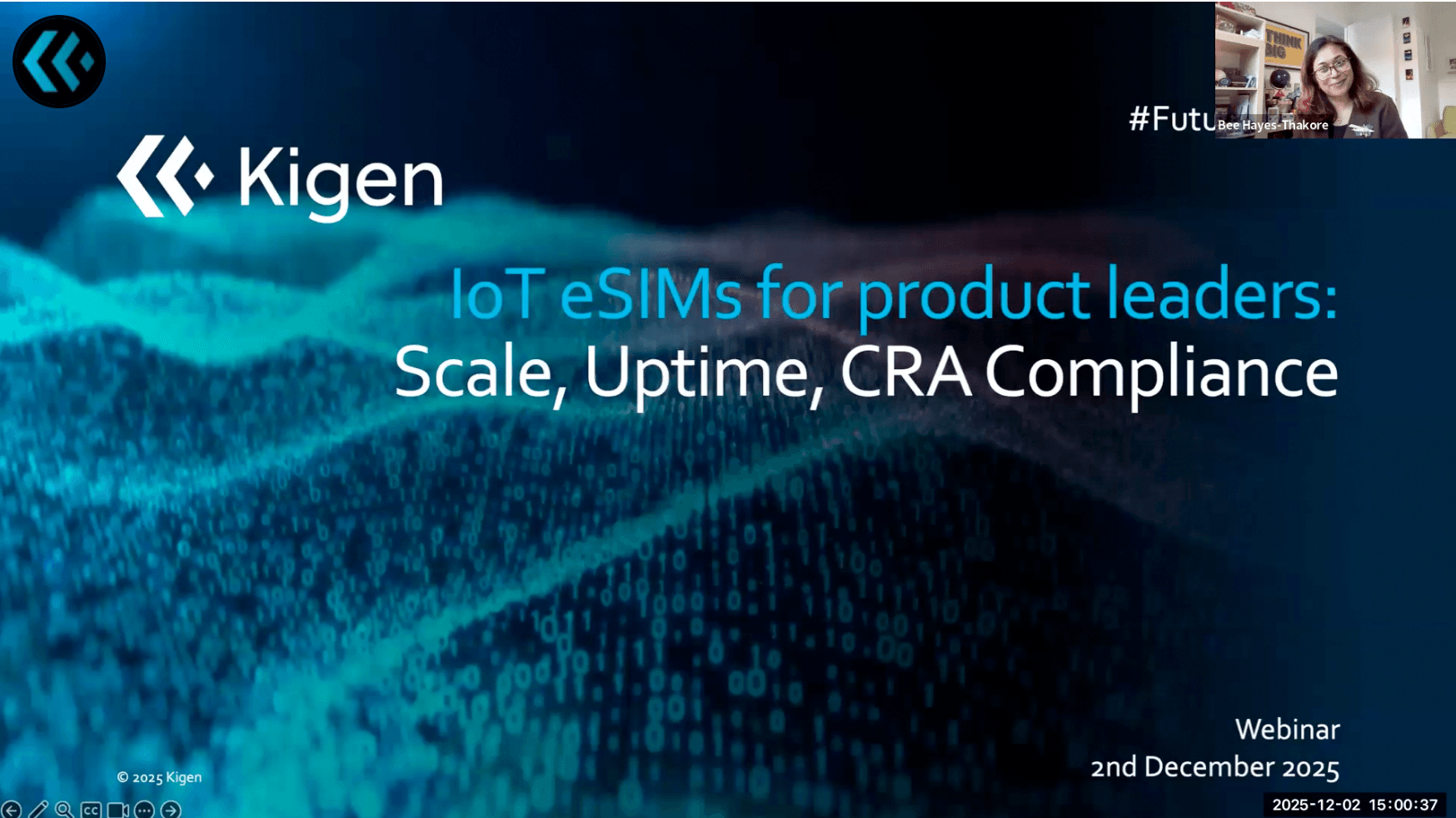
In this on-demand webinar, we explored what lies ahead for the connected device ecosystem as the industry looks toward CES 2026, with a particular focus on the operational and regulatory impact of the EU Cyber Resilience Act (CRA) on manufacturers, distributors, and importers of connected products.
As regulatory expectations continue to rise, the session examined how organisations can prepare for CRA compliance without slowing innovation or disrupting product roadmaps. The discussion highlighted the importance of building security, resilience, and lifecycle management into connected products from the outset—especially as fleets scale and devices remain in the field for longer periods.
A key focus of the webinar was the new IoT eSIM standard, SGP.32, and what it enables for resilient, multi-network connectivity at scale. Speakers unpacked how SGP.32 changes the way IoT connectivity can be deployed and managed, particularly for existing device fleets where physical SIM replacement is costly, disruptive, or impractical. The conversation explored how standards-based IoT eSIM can support retrofit strategies, enable remote provisioning, and deliver improved uptime across global deployments.
Industry leaders from NuvoLinQ and Robustel shared real-world insights from implementing eSIM retrofit across their portfolios, spanning payments automation and industrial router deployments. They discussed the architectural decisions and trade-offs they encountered, including hardware constraints, firmware considerations, and integration complexity. The speakers also explained how adopting standards-compliant eSIM solutions helped them accelerate device and eSIM integration, reduce operational friction, and future-proof their platforms against evolving regulatory and connectivity requirements.
The session covered:
• CRA compliance-readiness: A clear overview of CRA requirements and what device makers need to consider to meet compliance obligations while maintaining delivery timelines and competitive differentiation.
• eSIM at scale: How IoT eSIM (SGP.32) supports multi-network availability, enables retrofit viability for devices already deployed, and improves total cost of ownership across the device lifecycle.
• Smarter eSIM operations: Practical playbooks for standards-compliant provisioning—both at manufacturing and remotely in the field—alongside multi-profile strategies and best practices for managing large-scale IoT fleets.
Attendees also learned how Kigen’s enablement tools, including the C-SDK, can help minimise integration risk, simplify eSIM adoption, and accelerate time to market. The session demonstrated how smarter eSIM lifecycle management can support compliance, resilience, and operational efficiency across diverse IoT use cases.
This webinar is now available on demand for those looking to better understand the intersection of CRA compliance, IoT eSIM standards, and scalable connectivity strategies for next-generation payments systems and industrial edge routers.
Speakers
Mori Tersign
Mori has spent over 20 years with Rogers Wireless and Bell Canada honing his craft in account management and wireless technology.
David Evans
David has 20 years of experience specialising in wireless automation products, particularly IoT / M2M projects across various vertical markets.
Bee Hayes-Thakore
Bee leads marketing and partnerships at Kigen, nurturing business initiatives with the fast companies in advanced connectivity and security.
Jean-Louis Carrara
Jean-Louis is a global leader in eSIM enablement, securing connected devices with iSIM (integrated form factor) and eSIM (subscription management).
Hosts

Kigen
We're making the future of securing connectivity simple. Together with our partners and customers, we are unlocking new opportunities as eSIM becomes the cornerstone of connected device security. Our industry-leading SIM OS products enable over 2 billion SIMs. Our remote SIM provisioning and eSIM services place us amongst the top 5 SIM vendors globally.




Related Solutions

Service Intelligence for Auto Service Providers
Gain insights into bay utilization, crew performance, and improve customer satisfaction
Gain insights into bay utilization, crew performance, and improve customer satisfaction
Leverege
Leverege


Lot Management for Dealerships
Helping dealers with quicker theft recovery, more efficient reporting, and enhanced customer experience
Helping dealers with quicker theft recovery, more efficient reporting, and enhanced customer experience
Leverege
Leverege

Yard Management for Auto Manufacturers
Enabling workers to Instantly locate vehicles, reduce labor costs and better detection of bottlenecks to improve efficiency
Enabling workers to Instantly locate vehicles, reduce labor costs and better detection of bottlenecks to improve efficiency
Leverege
Leverege

Energy Monitoring for Grocery Stores
Helping retailers reduce and audit energy consumption while eliminating equipment downtime and lost inventory
Helping retailers reduce and audit energy consumption while eliminating equipment downtime and lost inventory
Leverege
Leverege

Inventory Visibility for Retailers
Equipping retailers with highly accurate inventory cycle counting to help increase sales and reduce theft
Equipping retailers with highly accurate inventory cycle counting to help increase sales and reduce theft
Leverege
Leverege

Related Solutions
Automotive
Service Intelligence for Auto Service Providers
Gain insights into bay utilization, crew performance, and improve customer satisfaction
Leverege
Automotive
Lot Management for Dealerships
Helping dealers with quicker theft recovery, more efficient reporting, and enhanced customer experience
Leverege
Automotive
Yard Management for Auto Manufacturers
Enabling workers to Instantly locate vehicles, reduce labor costs and better detection of bottlenecks to improve efficiency
Leverege
Retail
Energy Monitoring for Grocery Stores
Helping retailers reduce and audit energy consumption while eliminating equipment downtime and lost inventory
Leverege
Retail
Inventory Visibility for Retailers
Equipping retailers with highly accurate inventory cycle counting to help increase sales and reduce theft
Leverege