



Can Patients Trust AI in Healthcare? What Providers Need to Get Right
Can Patients Trust AI in Healthcare? What Providers Need to Get Right

- Last Updated: May 12, 2026
Thryve
- Last Updated: May 12, 2026

In healthcare, artificial intelligence goes hand in hand with the saying “overpromising and underdelivering.” For the last couple of years, we have been sold the idea that, with AI, we can fix the issues in our current healthcare system. And as good as it sounds on paper, implementing AI in healthcare is not a one-size-fits-all solution.
AI can be an amazing assistance tool in the medical environment, but even in an assisting role, AI needs to be reliable and safe. With personal health data and raising political issues about data safety, trust is becoming a greater challenge than ever.
Many patients are uncertain about how AI is used in their treatment. Unlike traditional medical tools, AI often operates as a “magical ball,” making it difficult for patients to understand how conclusions are reached. This lack of clarity can create hesitation, even when the technology itself is highly advanced.
Today, we will go through the main challenges of AI integration in healthcare and the key implementation steps digital health providers should know. Step by step, we will discover which practices build patients' trust in AI, because without it, even the most innovative solutions risk low adoption and limited impact.
The Trust Gap: What Causes Patient Skepticism
There are many opinions about why the majority find it hard to accept AI into their healthcare routine. If we look at the EU Commission's statistics, we are facing a major aging population problem. According to the data, in 2026, there are approximately 450 million people over the age of 65, which implies a huge strain on the European healthcare system in caring for senior patients.
According to a study by the Institute of Healthcare Policy and Innovation, 46% of older adults reported having very little to no trust in AI-generated information. If we translate this general conclusion about AI into the healthcare environment, it is fair to say that the majority of the patients, aka persons older than 65, have a hard time trusting AI-generated results.
This uncertainty is closely tied to the fear of so-called “black box” decisions. When patients cannot see or understand the reasoning behind an AI-generated recommendation, whether it’s a diagnosis or a treatment suggestion, they may question its reliability, even if it is highly accurate. In healthcare, where decisions directly affect people’s lives, transparency becomes critical.
To add to the problem, data privacy concerns continue to grow. The recent EU AI Act classifies AI in health as "high-risk," imposing strict safety, transparency, and human oversight requirements to prevent, for example, failures in robot-assisted surgery. Patients are increasingly aware that their health data, including sensitive and personal information, is being collected, analyzed, and potentially shared across systems. Without clear communication about how this data is stored and protected, trust can quickly erode.
Finally, we should not underestimate the loss of the human touch. Healthcare has always been built on relationships between patients and providers. The introduction of AI can create the impression that care is becoming more automated and less personal.
Why Trust Is Critical for AI Success
To determine why trust is so important when implementing AI, we need to consider several aspects. According ot the Journal of Medicine, Surgery, and Public Health, one of the most immediate effects of trust is on patient engagement. When patients trust AI-driven tools, they are more likely to actively use them, whether for monitoring, symptom tracking, or receiving recommendations.
Trust directly influences several key areas:
- Patient engagement: We are more likely to interact with and rely on AI-powered tools when they understand and trust how they work.
- Treatment adherence: Confidence in AI-driven insights increases the likelihood that patients will follow recommended care plans.
- Adoption of digital health tools: Trust determines whether patients are willing to use AI-enabled platforms, apps, and monitoring solutions in their daily lives.
For example, patients ignoring AI-generated alerts or recommendations, such as early warnings about potential health risks, can miss opportunities for early intervention, leading to poorer outcomes.
Overall, trust determines whether AI remains a promising innovation or becomes a truly impactful part of everyday healthcare.
AI Integration Guide: The Main Steps
1. Make AI Explainable
One of the biggest barriers to trust is the lack of transparency in how AI systems make decisions. If patients and clinicians cannot understand how a recommendation is generated, they are far less likely to rely on it. Explainability helps transform AI from a “black box” into a supportive clinical tool.
Providers should focus on:
- Providing clear, interpretable outputs that explain why a certain recommendation was made
- Highlighting key data points that influenced the decision
- Avoiding overly complex or opaque interfaces that obscure understanding
Making AI friendly not only builds trust but also supports better clinical decision-making.
2. Prioritize Data Privacy
Healthcare data is among the most sensitive types of personal information. As AI systems rely heavily on large datasets, concerns about how data is collected, stored, and shared are central to patient trust.
To address this, providers should:
- Ensure explicit and informed patient consent
- Clearly communicate how data is used and who has access to it
- Implement strong security measures, including encryption and access controls
Transparent and responsible data practices are essential for maintaining confidence in AI-driven care.
3. Keep Human Touch
AI should enhance clinical workflows, not replace human judgment. Patients are more likely to trust AI when they know that qualified healthcare professionals remain involved in decision-making.
This means:
- Using AI as a decision-support tool, not a decision-maker
- Maintaining clinician oversight for all critical recommendations
- Ensuring accountability remains with healthcare professionals
4. Communicate Clearly with Patients
Trust cannot be assumed; it must be built through clear and consistent communication. Many patients are unfamiliar with how AI is used in healthcare, which can lead to uncertainty or skepticism.
Providers can improve this by:
- Explaining when and where AI is used in the care process
- Outlining both the benefits and limitations of AI systems
- Using simple, non-technical language to make concepts accessible
Effective communication helps patients feel informed and in control of their care.
5. Use High-Quality, Reliable Data
AI systems are only as effective as the data they rely on. Poor-quality, incomplete, or biased data can lead to inaccurate recommendations and undermine trust.
To ensure reliability, providers should:
- Use accurate, validated, and up-to-date data sources
- Leverage continuous data streams, such as those from connected devices and wearables, enabled through platforms like Thryve that aggregate and standardize real-world health data
- Ensure data is structured and standardized for consistent analysis
High-quality data not only improves AI performance but also strengthens confidence in its outputs.
What Are The Main Opportunities of AI in Healthcare
As healthcare systems face increasing pressure from rising costs, workforce shortages, and growing burdens of chronic disease, AI offers a powerful way to address these challenges.
At its core, AI unlocks value by analyzing vast and complex datasets, combining clinical records, behavioral data, and real-world inputs to generate actionable insights.
A recent review published in the Future Healthcare Journal highlights that key opportunities include:
- More accurate and efficient diagnostics: AI can analyze medical images and patient data at scale, sometimes matching or even exceeding human performance in areas such as radiology and disease detection.
- Continuous and connected care: Through wearable devices and remote monitoring, AI enables real-time tracking of patient health and early detection of potential deterioration.
- Advancement of precision medicine: By integrating genomic, clinical, and lifestyle data, AI helps tailor treatments to individual patients, improving effectiveness and outcomes.
- Improved operational efficiency: AI can automate time-consuming administrative tasks, allowing healthcare professionals to focus more on direct patient care.
- Shift toward predictive and preventive care: Instead of reacting to illness, AI enables earlier intervention by identifying risks and patterns before conditions worsen.
Future: Trust as a Competitive Advantage
Even after successfully implementing AI into your digital health services, trust remains a big issue. We can see that regulatory frameworks become stricter, placing greater emphasis on how patient data is used, how algorithms are validated, and how decisions are communicated. However, compliance alone will not be enough.
Patients will begin to actively choose providers they trust, and we are talking not only about clinical expertise but also about how responsibly and transparently technology is used in their care. Trust will shift from being a regulatory requirement to a true competitive differentiator, and this is where it gets interesting.
AI undoubtedly holds a huge potential to improve clinical outcomes, increase efficiency, and enable more personalized care. Yet its success will ultimately depend on whether patients are willing to engage with and rely on it. This means healthcare providers must take an active role in building trust through clear communication, ethical data practices, and human-centered implementation.

The Most Comprehensive IoT Newsletter for Enterprises
Showcasing the highest-quality content, resources, news, and insights from the world of the Internet of Things. Subscribe to remain informed and up-to-date.

New Podcast Episode

Building Real-Time Voice AI Experiences

Related Articles



Related Solutions

Infant Security for Hospitals
Enable immediate alerts, automated security responses, and mother-baby matching to reduce abduction risk.
Enable immediate alerts, automated security responses, and mother-baby matching to reduce abduction risk.
Vizzia Technologies
Vizzia Technologies
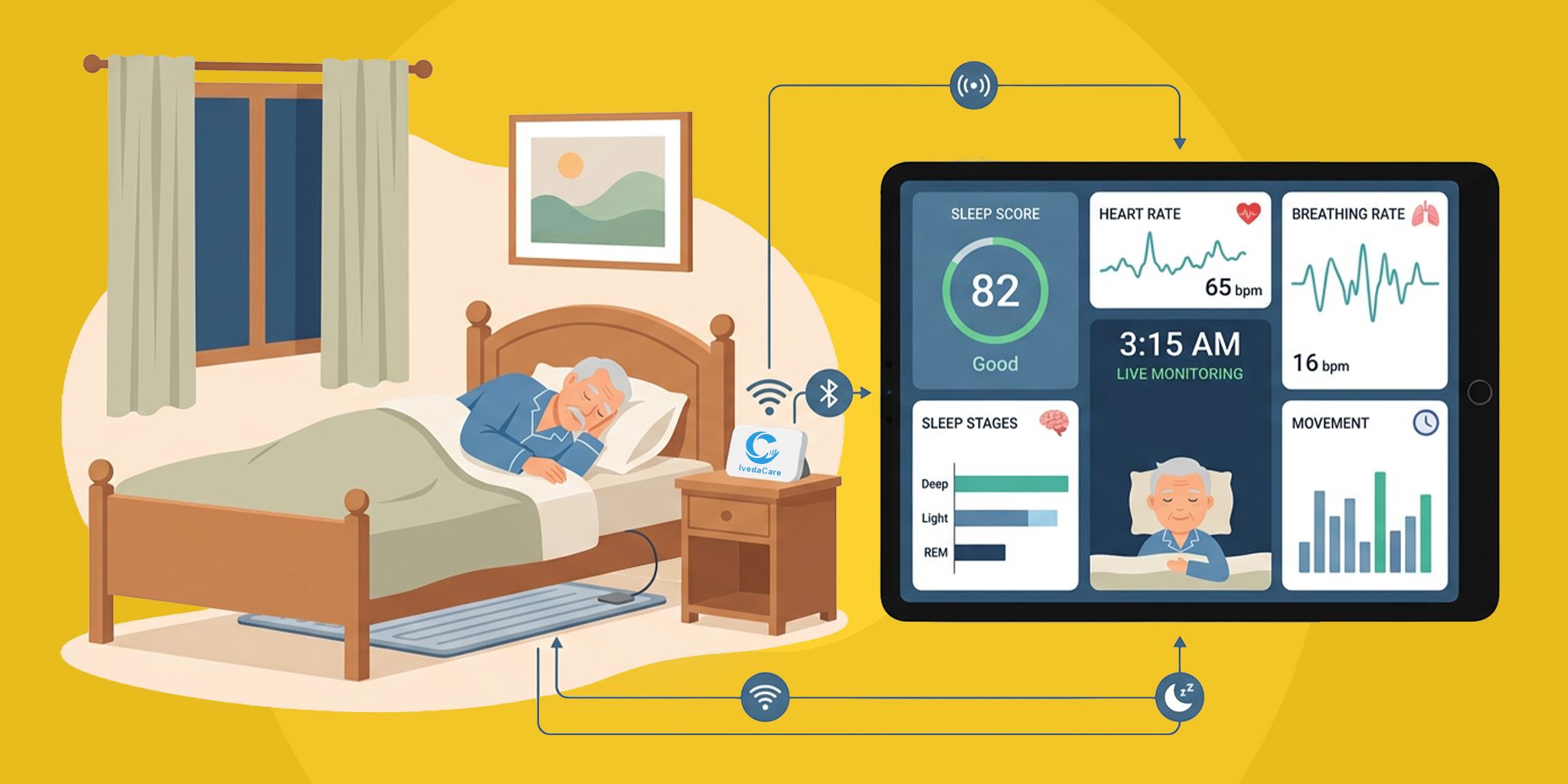
Overnight Health Monitoring
Health insights without cameras or wearables, enabling caregivers to detect issues early and improve resident well-being.
Health insights without cameras or wearables, enabling caregivers to detect issues early and improve resident well-being.
Iveda
Iveda

Hand Hygiene Compliance Monitoring
Detect hand hygiene events and ensure compliance to reduce infections and promote a culture of patient safety.
Detect hand hygiene events and ensure compliance to reduce infections and promote a culture of patient safety.
CenTrak
CenTrak

Related Solutions
Healthcare
Infant Security for Hospitals
Enable immediate alerts, automated security responses, and mother-baby matching to reduce abduction risk.
Vizzia Technologies
Healthcare
Overnight Health Monitoring
Health insights without cameras or wearables, enabling caregivers to detect issues early and improve resident well-being.
Iveda
Healthcare
Hand Hygiene Compliance Monitoring
Detect hand hygiene events and ensure compliance to reduce infections and promote a culture of patient safety.
CenTrak