



The New Enterprise AI Battleground: Model Selection Versus Harness Strategy
The New Enterprise AI Battleground: Model Selection Versus Harness Strategy

- Last Updated: August 11, 2026
Santoshkalyan Rayadhurgam
- Last Updated: August 11, 2026
Enterprise artificial intelligence (AI) conversations tend to start with the wrong question: Which model should the company use? While that question matters, it is no longer the one that determines whether an AI initiative can survive production. As agents move beyond demos into customer records, financial workflows, internal knowledge bases, and service processes, the more important issue is the harness engineering system built around the model.
Experience in building production AI systems reveals a simple conclusion: reliability is increasingly a harness-design problem, not just a model-selection challenge. The model supplies reasoning capability. The harness turns that capability into a safe, useful, measurable business outcome.
The demo gap
A controlled demo can make an AI agent appear more mature than it is. The agent receives curated information, predictable tools, and limited edge cases. Production is different. The same agent is tasked with handling a variety of critical factors: incomplete records, changing workflows, outdated documentation, permission boundaries, exceptions, escalation paths, and customers who expect the right answer the first time.
Consider an anonymized support example. A company pilots an AI agent that summarizes cases and recommends responses. It performs well in the demo. It reads the issue, retrieves a relevant help article, and drafts a response in seconds. But when tested against real customer situations, weaknesses appear. Several articles are outdated. Some customers have contract-specific entitlements. Certain issues require escalation because the account is regulated or of high value. In a few cases, the agent marks a case “resolved” because it generated a plausible answer, even though it did not fix the customer’s problem.
A stronger model might improve the wording but would not solve the operating problem. The system still needs current knowledge, account-aware rules, escalation logic, permission checks, and a method to measure whether the customer outcome improved. That is harness work.
What the harness does
A useful shorthand is agent = model + harness. The model is one component. The harness is the surrounding layer that manages prompts, retrieval, context, tool access, permissions, validation, evaluations, approvals, logging, and governance.
The distinction matters because models are becoming more interchangeable. Enterprises may switch models as price, latency, accuracy, privacy requirements, or vendor strategies change. The harness is harder to replace because it reflects how the business operates. It encodes policies, workflows, customer commitments, risk thresholds, compliance requirements, and definitions of success.
That is why a harness strategy is a durable source of enterprise advantage. A company can swap a model. It cannot easily swap the operational knowledge, evaluation history, governance logic, and workflow design embedded in a mature harness.
The inner and outer harness
Leaders need two separate harnesses. The first is the inner harness built by frontier model providers: the companies developing the most capable foundation models. These providers increasingly offer native support for tool use, memory, safety behavior, context handling, agent frameworks, and evaluation features within their platforms. The outer harness connects AI to the company’s actual data, systems, policies, customer workflows, identity controls, and compliance obligations.
A vendor can provide a general tool-calling framework. It cannot know that a refund above a certain amount requires manager approval, a specific customer has a contractual exception, or a regulated service interaction requires a particular documentation trail. Those rules live inside the organization.
Where production agents fail
Enterprise AI failures, while prevalent, are often less dramatic than expected. They are not always obvious hallucinations. More often, failures are small system gaps that create customer, operational, or compliance risk, such as these occurrences:
- Permission leaks. The agent calls a tool but does not preserve who initiated the request and what that person is allowed to access.
- Schema drift. Business systems change, and the agent continues to reason against an outdated structure.
- Stale context. The agent retrieves old policies, implementation notes, or troubleshooting articles.
- Weak evaluations. Teams assess whether the agent completed a surface task, rather than whether the outcome was correct.
The result is that these technical gaps become customer-experience problems. A customer receives an outdated answer. A service representative receives a generic recommendation rather than an account-aware next step. A case is closed even though the issue remains unresolved. A regulated interaction moves too quickly without necessary controls.
How harness design improves outcomes
A mature harness narrows the agent’s action space. Instead of providing the agent with open-ended access to every internal application programming interface (API) or workflow, the enterprise wraps capabilities in smaller, well-defined tools. Each tool has conditions, permissions, and expected outputs. Fewer paths create fewer failures.
The harness also curates context. A simple customer question should not require the agent to search every document the company has ever created. The system needs to retrieve the current, relevant, authorized information required for the task. Better context improves accuracy, reduces cost, and prevents obsolete material from entering customer interactions.
Sidecar agents help keep that context fresh. In practical terms, a sidecar is a smaller monitoring process that watches documentation repositories, Jira tickets, shared drives, or customer records, so the working context reflects recent changes.
The harness can also separate planning from action. The agent may propose the next step, but the harness decides whether to proceed. Low-risk tasks may run automatically. Higher-risk actions, such as sending a customer email, changing a record, or updating a production system, may require a sandbox, an approval checkpoint, or human review.
What leaders need to watch for now
Leaders benefit from being cognizant of these priorities in this order:
- Identity-aware AI. Every meaningful action preserves who made the request, the person’s role, the data the person may access, and the actions permitted.
- Evaluation. In mature environments, evaluations become versioned, auditable artifacts tied to business outcomes. In customer support, that may include first-contact resolution, escalation accuracy, repeat-contact rate, compliance adherence, customer satisfaction, and agent-assist usefulness.
- Portability. Vendor-provided harness components can accelerate development, but it’s crucial for enterprises to avoid embedding workflow logic, tests, policies, and customer processes inside a proprietary runtime. Portable tool schemas, exportable evaluations, and clear separation between business logic and vendor infrastructure preserve leverage.
- Simplicity. As models improve quickly, overly heavy orchestration frameworks can become a form of migration debt. Narrow tools, clear workflow boundaries, lightweight evaluations, and simpler interfaces may be easier to govern and adapt.
Reliable AI is a systems discipline
Harness engineering reframes enterprise AI as a systems discipline rather than a model race. Model selection still matters, but the more enduring question is whether the enterprise has built a harness strong enough to turn model capability into reliable customer outcomes.
The companies that win with AI will not simply be the ones that pick the strongest model this quarter. They will be the ones who build the outer harness around the model: the layer that understands permissions, data, workflows, customer obligations, compliance requirements, evaluation standards, and cost limits. That is the battleground for enterprise AI. The model may make the agent intelligent, but the harness determines whether customers, employees, auditors, and business leaders can trust it.
Santoshkalyan (Tosh) Rayadhurgam is head of advanced AI at a financial services platform. Previously at Meta, he led foundational AI efforts, specializing in building AI models, production-grade AI agents and systems at scale. He has more than 12 years of experience spanning Stripe, Meta, Lyft, and Amazon Lab126. Rayadhurgam holds a master’s degree from Cornell University and a bachelor’s degree from the National Institute of Technology in India.

The Most Comprehensive IoT Newsletter for Enterprises
Showcasing the highest-quality content, resources, news, and insights from the world of the Internet of Things. Subscribe to remain informed and up-to-date.

New Podcast Episode

Building Real-Time Voice AI Experiences

Related Articles


Related Solutions

Smart Community Management for HOAs
AI-powered community monitoring with real-time visibility into entrances, parking, and shared spaces.
AI-powered community monitoring with real-time visibility into entrances, parking, and shared spaces.
Iveda
Iveda
Construction Site Safety Monitoring
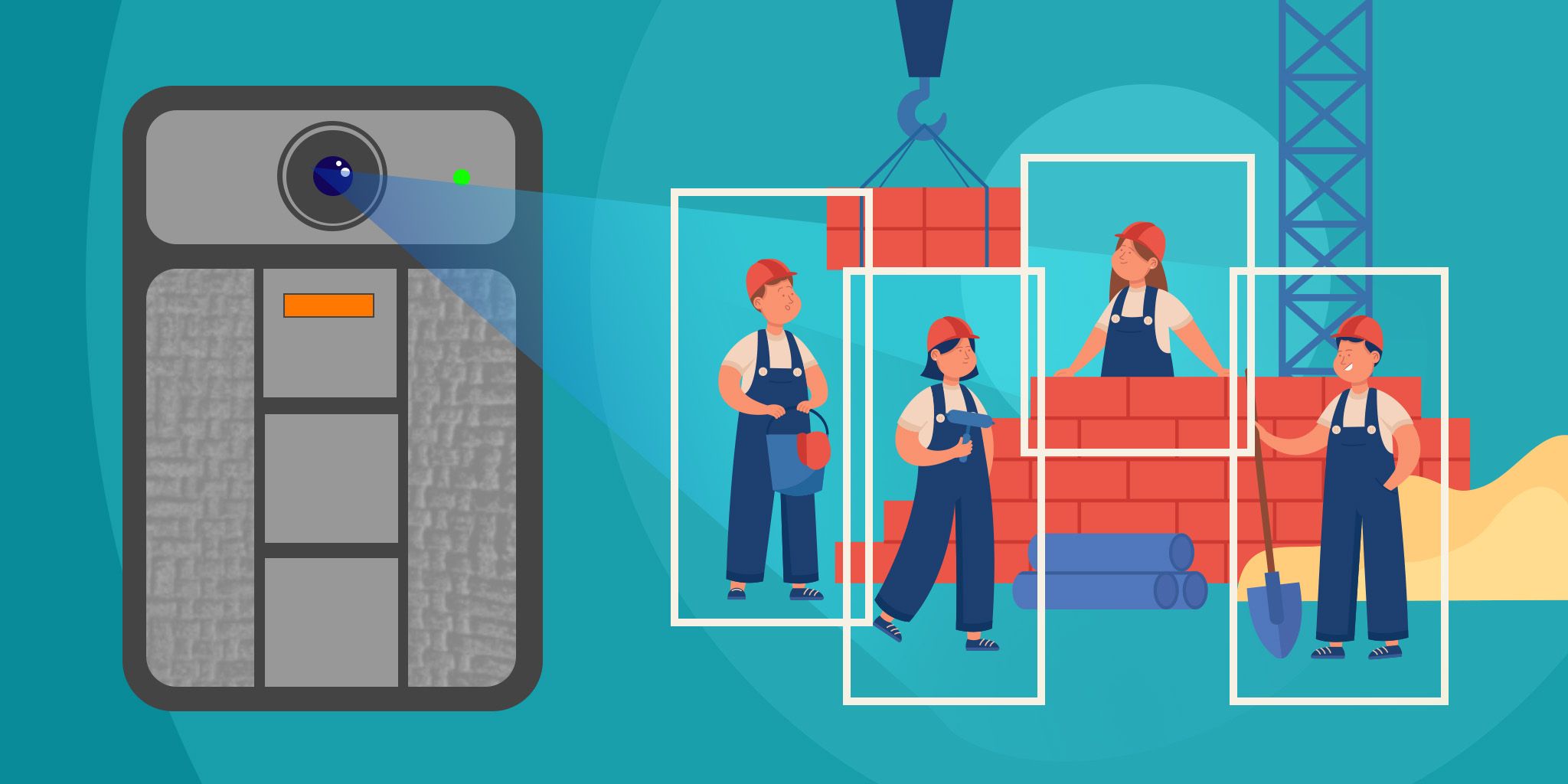
AI-powered wearables for real-time PPE compliance monitoring, hazard detection, and incident documentation.
AI-powered wearables for real-time PPE compliance monitoring, hazard detection, and incident documentation.
Iveda
Iveda

Workers' Compensation Fraud Prevention
Quickly verify claims, reduce investigation time, and protect your bottom line with AI-powered video surveillance and analytics.
Quickly verify claims, reduce investigation time, and protect your bottom line with AI-powered video surveillance and analytics.
Iveda
Iveda

Related Solutions
Buildings & Facilities
Smart Community Management for HOAs
AI-powered community monitoring with real-time visibility into entrances, parking, and shared spaces.
Iveda
Construction
Construction Site Safety Monitoring
AI-powered wearables for real-time PPE compliance monitoring, hazard detection, and incident documentation.
Iveda
Construction
Workers' Compensation Fraud Prevention
Quickly verify claims, reduce investigation time, and protect your bottom line with AI-powered video surveillance and analytics.
Iveda