


How Cellular IoT Connectivity Is Transforming Smart Cities: Market Trends and Forecast to 2035
How Cellular IoT Connectivity Is Transforming Smart Cities: Market Trends and Forecast to 2035

- Last Updated: January 28, 2026
Sandeep Gade
- Last Updated: January 28, 2026
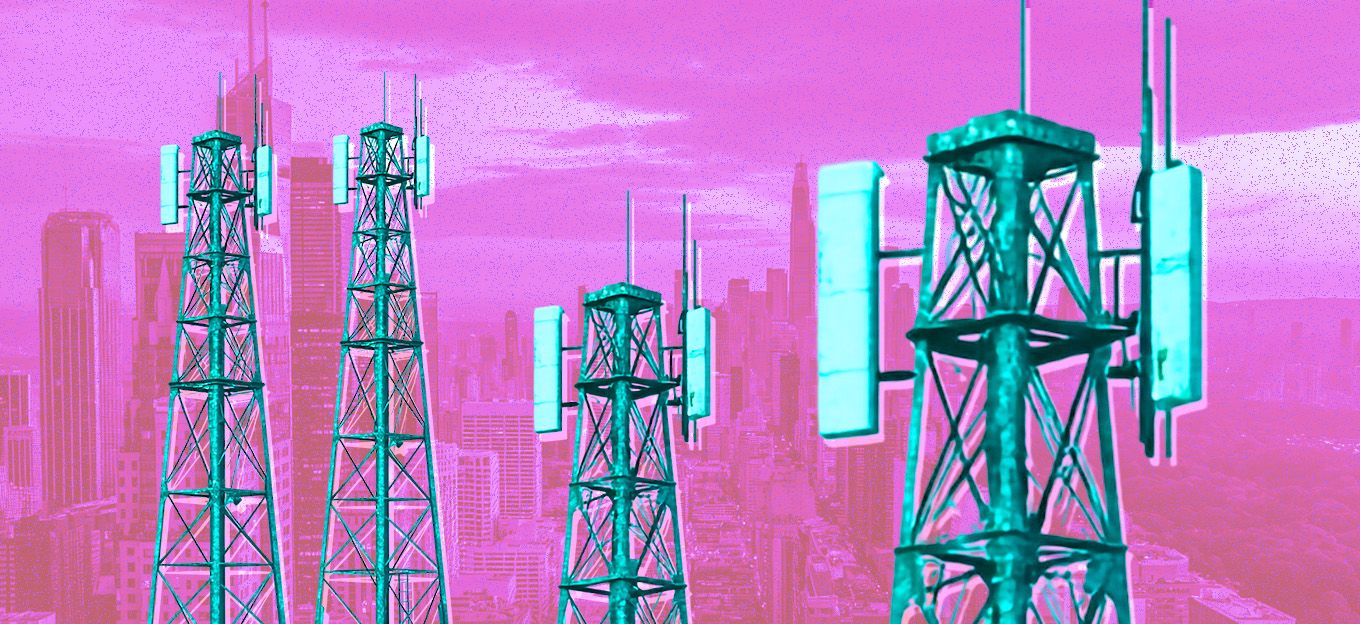
The Cellular IoT Connections and Connectivity Market is entering a phase of exponential expansion, driven by the convergence of next-generation cellular networks, rapid digitization across industries, and the global push toward smart infrastructure. Valued at US$ 6.7 Bn in 2024, the market is projected to surge to US$ 126.7 Bn by 2035, registering an impressive CAGR of 30.7 percent from 2025 to 2035. This remarkable growth trajectory reflects the rising dependence on reliable, wide-area, and secure connectivity solutions to support billions of connected devices worldwide.
Cellular IoT connectivity underpins a wide range of applications—from smart cities and industrial automation to healthcare monitoring, logistics, and energy management—making it a foundational technology for the digital economy of the next decade.
Market Size and Key Highlights
The global cellular IoT connections and connectivity market reached US$ 6.7 Bn in 2024 and is forecast to climb rapidly as enterprises and governments scale up connected infrastructure. By 2035, total market revenue is expected to exceed US$ 126.7 Bn, reflecting the massive deployment of IoT devices across sectors.
Key highlights shaping the market include:
- 30.7 percent CAGR (2025–2035), one of the highest growth rates across digital infrastructure markets
- North America emerged as the leading region in 2024, accounting for 35.8 percent of global revenue
- 5G technology dominated by network type, holding 37.5 percent market share in 2024
- Strong presence of global technology leaders such as Semtech Corporation, Verizon, Microsoft, Telefonaktiebolaget LM Ericsson, and Huawei Technologies Co., Ltd.
Analysts’ Viewpoint: Drivers, Challenges, and Opportunities
According to analysts, the cellular IoT connections and connectivity market is primarily propelled by the need to connect large volumes of devices efficiently and securely over wide geographic areas. This requirement is especially critical for smart cities, industrial automation, smart grids, transportation, and healthcare systems, where uninterrupted connectivity and low latency are essential.
Key Growth Drivers
- Rising adoption of smart devices and connected infrastructure
- Expanding deployment of 5G, LTE-M, NB-IoT, and 5G RedCap
- Government-led digitization and smart infrastructure initiatives
- Growing demand for real-time monitoring, automation, and predictive analytics
Market Challenges
Despite strong growth prospects, the market faces notable challenges. Cybersecurity risks are increasing as billions of IoT devices come online, making data protection, device authentication, and regulatory compliance critical concerns. Additionally, the high cost of deploying cellular IoT infrastructure, particularly for small and medium enterprises, can limit adoption. Fragmented global standards and complex regulatory frameworks further slow seamless global deployment.
Emerging Opportunities
Significant opportunities are emerging through hybrid connectivity models that integrate terrestrial cellular networks with satellite communications, extending IoT coverage to remote and underserved regions. The rise of mid-tier 5G RedCap devices is opening new use cases in wearables, healthcare monitoring, and industrial sensors. Moreover, API-driven and usage-based pricing models are enabling operators to offer flexible services, encouraging innovation and broader adoption.
Market Introduction: Understanding Cellular IoT Connectivity
The cellular IoT connections and connectivity market encompasses technologies that enable IoT devices to communicate over cellular networks such as 2G, 3G, 4G/LTE, 5G, NB-IoT, and LTE-M. Unlike short-range technologies like Wi-Fi or Bluetooth, cellular IoT offers wide coverage, strong mobility support, enhanced reliability, and carrier-grade security.
The market includes hardware components such as IoT modules, gateways, and sensors, as well as software platforms and managed connectivity services. These solutions are widely deployed across smart cities, agriculture, logistics, healthcare, industrial automation, and energy & utilities.
Advancements in Cellular Network Technologies Driving Market Growth
Rapid innovation in cellular network technologies is fundamentally reshaping the IoT connectivity landscape. 5G stands at the forefront, offering ultra-low latency, high bandwidth, and massive device density—capabilities essential for industrial automation, autonomous systems, and smart city infrastructure.
5G RedCap (Reduced Capability) is emerging as a cost- and power-efficient solution for mid-range IoT applications such as wearables, surveillance systems, and industrial sensors. It leverages existing 5G infrastructure while reducing device complexity and extending battery life.
Meanwhile, NB-IoT and LTE-M continue to dominate low-power, massive IoT deployments, including smart metering, environmental monitoring, and asset tracking. The integration of edge computing further enhances cellular IoT by reducing latency and bandwidth requirements, enabling faster decision-making and real-time analytics for mission-critical applications.
Smart Cities and Building Automation Fueling Demand
The expansion of smart cities and building automation projects is a major catalyst for cellular IoT market growth. Smart cities rely on IoT-enabled solutions for traffic management, public safety, energy optimization, waste management, and water distribution. Cellular IoT provides the scalable, secure, and low-latency connectivity required to support these complex, data-intensive applications.
In building automation, IoT devices enable centralized control of HVAC systems, lighting, security, and energy management, improving operational efficiency, reducing costs, and enhancing occupant comfort and safety. Government policies promoting energy efficiency, sustainability, and digital urban development further accelerate adoption.
5G Segment Leading Market Expansion
By network type, the 5G segment is expected to witness the fastest growth and remain the dominant contributor to market revenue through 2035. Compared to earlier generations, 5G supports significantly higher data speeds, ultra-low latency, and massive device connectivity, making it indispensable for real-time and mission-critical IoT applications.
The rollout of 5G Standalone (SA) networks enhances performance by enabling uninterrupted machine-to-machine communication without reliance on legacy 4G infrastructure. As industries accelerate digital transformation initiatives, 5G’s scalability and reliability position it as the backbone of future cellular IoT deployments.
Regional Outlook: North America at the Forefront
North America led the global cellular IoT connections and connectivity market in 2024 with a 35.8 percent revenue share. The region benefits from advanced telecommunications infrastructure, early adoption of 4G, LTE-M, NB-IoT, and 5G networks, and the strong presence of leading technology providers.
Significant public and private investments in digital transformation, automation, asset tracking, and remote monitoring continue to drive demand. The United States plays a pivotal role through government initiatives, robust R&D ecosystems, and widespread deployment of connected devices across automotive, healthcare, manufacturing, and smart city projects.
Competitive Landscape and Recent Developments
The market features a highly competitive landscape with global telecom operators, semiconductor manufacturers, and connectivity platform providers. Alongside established leaders, emerging players are introducing innovative connectivity models and regional solutions.
Notable recent developments include the launch of cost-effective high-bandwidth cellular connectivity solutions for logistics in Sub-Saharan Africa and new agreements enabling global 5G roaming for NB-IoT by integrating terrestrial and non-terrestrial networks. These advancements highlight the industry’s focus on coverage expansion, cost optimization, and global interoperability.
Conclusion
The Cellular IoT Connections and Connectivity Market is poised for transformative growth through 2035, fueled by rapid advancements in cellular technologies, expanding smart infrastructure projects, and rising demand for reliable wide-area connectivity. With a projected valuation of US$ 126.7 Bn and a 30.7 percent CAGR, the market represents one of the most dynamic segments of the global digital ecosystem.

The Most Comprehensive IoT Newsletter for Enterprises
Showcasing the highest-quality content, resources, news, and insights from the world of the Internet of Things. Subscribe to remain informed and up-to-date.

New Podcast Episode

Building Real-Time Voice AI Experiences

Related Articles



Related Solutions
Smart License Plate Recognition
Automate parking enforcement and access control with real-time vehicle identification to improves revenue collection.
Automate parking enforcement and access control with real-time vehicle identification to improves revenue collection.
Conure
Conure
Mobile Networking for Public Safety
Enable data sharing, enhanced situational awareness, and secure communication across vehicles, devices, and command centers.
Enable data sharing, enhanced situational awareness, and secure communication across vehicles, devices, and command centers.
Digi
Digi
Smart Permit Management
Digitize and automate parking operations with real-time visibility to simplify permitting, enforcement, and payments.
Digitize and automate parking operations with real-time visibility to simplify permitting, enforcement, and payments.
Conure
Conure

Related Solutions
Smart Cities
Smart License Plate Recognition
Automate parking enforcement and access control with real-time vehicle identification to improves revenue collection.
Conure
Smart Cities
Mobile Networking for Public Safety
Enable data sharing, enhanced situational awareness, and secure communication across vehicles, devices, and command centers.
Digi
Smart Cities
Smart Permit Management
Digitize and automate parking operations with real-time visibility to simplify permitting, enforcement, and payments.
Conure