



How Generative AI Development Is Reshaping IoT and Enterprise Applications
How Generative AI Development Is Reshaping IoT and Enterprise Applications
- Last Updated: March 30, 2026
vitarag shah
- Last Updated: March 30, 2026
Generative AI is no longer a subject confined to academic research. It has moved into production environments, powering real applications across industrial IoT, healthcare monitoring, supply chain management, and enterprise automation. Understanding how AI development works — and what goes into building trustworthy, scalable AI systems — is essential for any organization navigating this shift.
This article explores the core disciplines behind generative AI development, the role AI plays in IoT ecosystems, and what businesses should understand when evaluating AI development partnerships.
Why Generative AI Matters for IoT
IoT generates enormous volumes of sensor data — temperature readings, device health metrics, location signals, and operational logs — all in real time. On its own, this data is underutilized. Generative AI changes the equation.
By training models on historical IoT data, organizations can generate predictive scenarios, simulate edge cases, and create synthetic datasets for testing that would be impossible or dangerous to produce in real-world conditions. A smart irrigation system, for example, can be tested against AI-generated data simulating sensor malfunctions or power spikes — without exposing actual hardware to failure conditions.
Beyond testing, generative AI is being applied to anomaly detection, predictive maintenance, and natural language interfaces for IoT dashboards. The convergence is creating a new class of intelligent connected systems.
The Core Disciplines in AI Development
Building a production-ready generative AI system requires expertise across several interconnected domains. Organizations evaluating AI development partners should understand what these disciplines involve.
Machine Learning and Model Development
At the foundation is the ability to design, train, and fine-tune AI models for specific use cases. General-purpose large language models (LLMs) are rarely deployed out of the box — they typically require domain-specific fine-tuning, retrieval-augmented generation (RAG) architectures, or custom training pipelines. A capable development team understands not just model architecture, but also how to evaluate model performance and manage model drift over time.
Data Engineering
AI systems are only as good as the data they learn from. Effective AI development requires robust data pipelines that can clean, label, and structure large volumes of training data. In IoT contexts, this includes working with time-series sensor data, which presents unique challenges around irregular sampling, noise, and real-time ingestion.
Cloud Infrastructure and Scalability
Deploying AI at scale means building on infrastructure that can handle variable compute demands. This involves cloud-native architectures, containerization, and often edge computing components — particularly relevant when IoT devices generate data at the edge and need low-latency inference without sending everything to a central server.
Integration with Existing Systems
Most enterprises already operate complex software environments. AI solutions need to connect with ERP systems, existing databases, customer platforms, and IoT management layers. Integration capability is a practical requirement, not just a technical nicety.
AI Governance and Responsible Deployment
As AI systems take on higher-stakes decisions, governance becomes critical. This includes explainability — being able to understand why a model made a particular prediction — as well as bias detection, audit logging, and compliance with data privacy regulations. Industries like healthcare and financial services have especially rigorous requirements here.
Types of Organizations Working in Generative AI Development
The generative AI development landscape includes several distinct categories of organizations, each with different strengths.
Global Consulting and Technology Firms
Large consulting organizations often bring broad enterprise experience and the ability to scale AI programs across geographies. Their strengths typically lie in integration, change management, and regulatory compliance. They tend to work best with enterprises undergoing large-scale digital transformation where AI is one component of a broader initiative.
Product Engineering Companies
Smaller, specialized product engineering firms often focus on building AI-powered software products end-to-end. They tend to work closely with clients from prototype through deployment, which can be valuable when an organization wants to build a proprietary AI product rather than deploy an off-the-shelf solution.
AI-Specialized Consultancies
Firms that focus specifically on emerging technologies — AI, data engineering, and cloud infrastructure — can offer deep technical expertise and experience with a wider variety of AI architectures. These organizations are often well-suited to projects requiring custom model development or complex integrations.
Talent Platforms
Some organizations provide access to AI engineering talent rather than complete solutions. This model works well for companies that have internal technical leadership but need to scale their engineering capacity quickly.
What to Evaluate When Choosing an AI Development Partner
The generative AI vendor landscape has expanded rapidly. Choosing the right partner requires looking beyond marketing materials and evaluating practical, implementation-relevant factors.
Relevant Industry Experience
Has the team built AI systems in your sector? A company with experience in manufacturing IoT will understand the operational constraints — latency requirements, safety criticality, legacy equipment — that a generalist firm might miss.
Approach to Data Privacy and Security
Any AI system that processes business data needs to be built with security in mind from the start. Ask how partners handle data governance, what their practices are around model training data, and whether they can support on-premises or private cloud deployments if regulatory requirements demand it.
Post-Deployment Support
AI models degrade over time as the world changes. A partner should offer monitoring, retraining pipelines, and ongoing support — not just a one-time deployment. This is especially relevant for IoT applications where device ecosystems and operating conditions evolve continuously.
Transparency About Limitations
No AI system is perfect. Partners who are transparent about what generative AI can and cannot do — and who proactively flag risks — are generally more reliable than those who overpromise outcomes.
Scalability Roadmap
Starting with a pilot project is common, but the goal is usually enterprise-wide deployment. Evaluate whether a potential partner has demonstrated the ability to scale AI from proof-of-concept to production at meaningful volume.
The Trajectory of Generative AI in Enterprise and IoT
Enterprise spending on generative AI reached approximately $37 billion in 2025, up significantly from the prior year, reflecting a shift from cautious pilots to genuine production deployments. More than half of that spending went toward AI applications — tools that deliver direct productivity value rather than underlying infrastructure.
For IoT specifically, the most promising near-term applications include predictive maintenance (using AI to anticipate equipment failures before they happen), intelligent edge computing (running inference locally on IoT devices to reduce latency and bandwidth costs), and natural language interfaces that allow non-technical users to query and interact with IoT data.
As models become more capable and infrastructure costs decline, the barrier to building production AI systems continues to fall. Organizations that invest now in understanding the technical foundations — and in building relationships with capable development partners — will be better positioned to adapt as the technology evolves.
Key Takeaways
Generative AI development is a multidisciplinary effort. Successful implementations require expertise across machine learning, data engineering, cloud infrastructure, systems integration, and AI governance — not just model building in isolation.
For organizations operating IoT systems, generative AI offers particularly high-value opportunities: richer predictive analytics, safer edge-case testing, and more intuitive interfaces for complex data. The challenge is finding development partners who understand both the AI and the operational realities of connected device environments.
Evaluating partners based on relevant experience, transparency, and long-term support capability will serve organizations better than selecting based on brand recognition alone.

The Most Comprehensive IoT Newsletter for Enterprises
Showcasing the highest-quality content, resources, news, and insights from the world of the Internet of Things. Subscribe to remain informed and up-to-date.

New Podcast Episode

Building Real-Time Voice AI Experiences

Related Articles



Related Solutions

Smart Community Management for HOAs
AI-powered community monitoring with real-time visibility into entrances, parking, and shared spaces.
AI-powered community monitoring with real-time visibility into entrances, parking, and shared spaces.
Iveda
Iveda
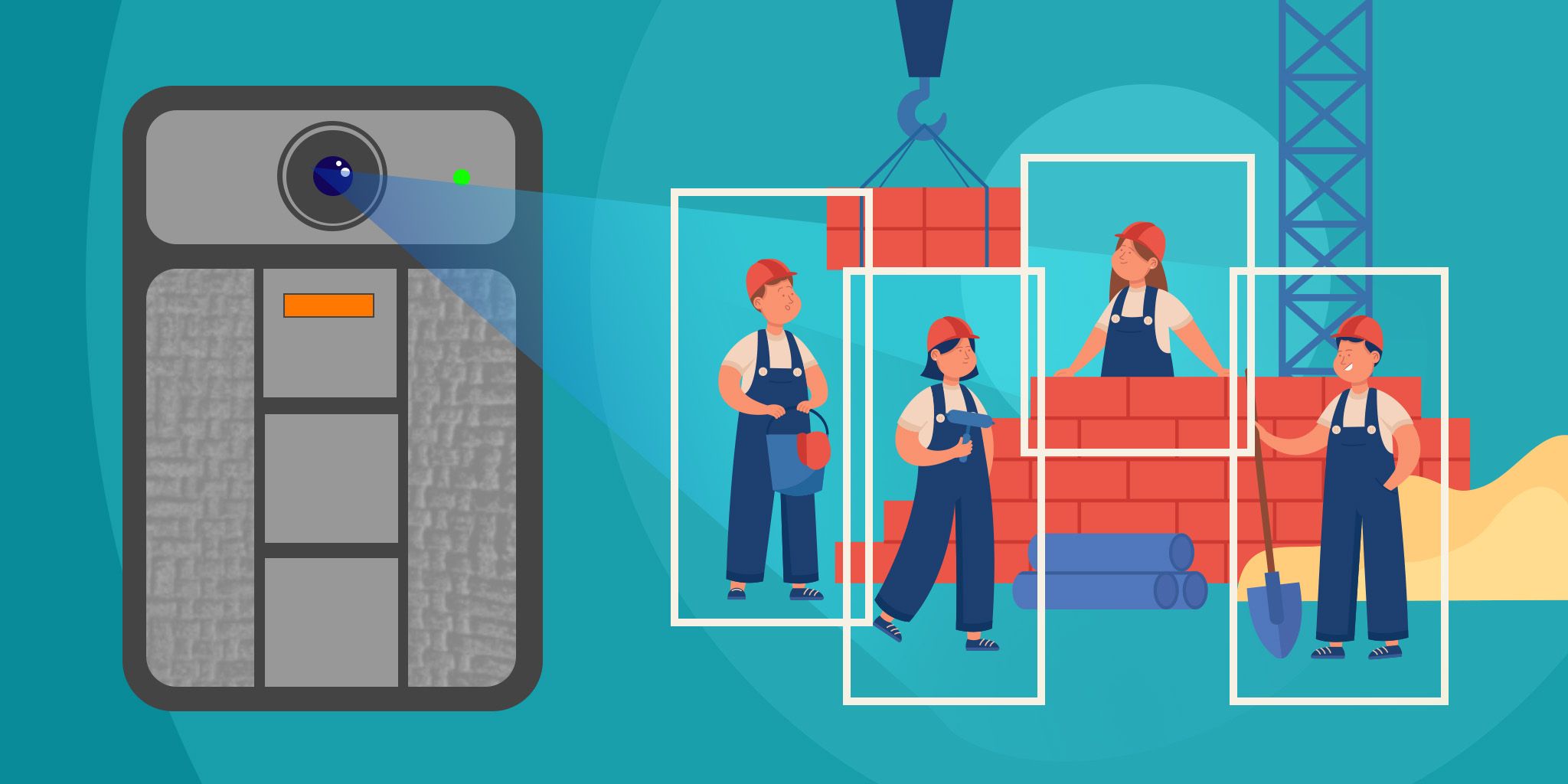
Construction Site Safety Monitoring
AI-powered wearables for real-time PPE compliance monitoring, hazard detection, and incident documentation.
AI-powered wearables for real-time PPE compliance monitoring, hazard detection, and incident documentation.
Iveda
Iveda

Workers' Compensation Fraud Prevention
Quickly verify claims, reduce investigation time, and protect your bottom line with AI-powered video surveillance and analytics.
Quickly verify claims, reduce investigation time, and protect your bottom line with AI-powered video surveillance and analytics.
Iveda
Iveda

Related Solutions
Buildings & Facilities
Smart Community Management for HOAs
AI-powered community monitoring with real-time visibility into entrances, parking, and shared spaces.
Iveda
Construction
Construction Site Safety Monitoring
AI-powered wearables for real-time PPE compliance monitoring, hazard detection, and incident documentation.
Iveda
Construction
Workers' Compensation Fraud Prevention
Quickly verify claims, reduce investigation time, and protect your bottom line with AI-powered video surveillance and analytics.
Iveda