


The Human-in-the-Loop Isn't Working the Way You Think
The Human-in-the-Loop Isn't Working the Way You Think

- Last Updated: July 21, 2026
Gershon Goren
- Last Updated: July 21, 2026
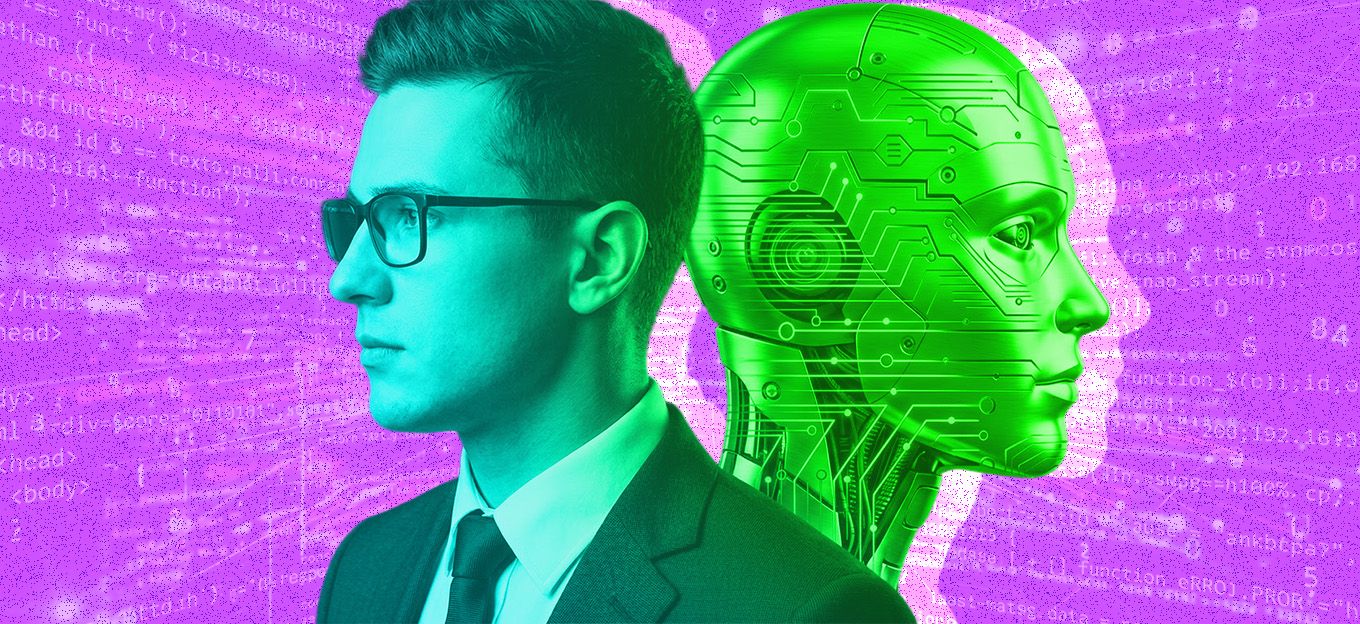
Every serious AI implementation plan includes some version of the same safeguard: keep humans in the loop. Review the outputs. Don't let the machine have the final word. It makes sense, and it's become the standard answer to the question of how organizations use AI responsibly.
But there's a question underneath that rarely gets asked: are the humans in the loop actually equipped to catch what AI misses?
New research suggests the answer is more complicated than most implementation plans assume.
The Partnership That Isn't
The premise behind most AI workforce strategies is that AI and humans are complementary. AI handles execution, humans handle judgment. Each covers what the other can't.
In practice, that division of labor depends entirely on whether humans can hold up their end. And when you actually measure what the incoming workforce brings to that partnership, the picture shifts.
Cangrade mapped 71,747 Gen Z and Millennial skills assessments against the five soft skills that appear most consistently in AI-era job postings, based on an analysis of 200 AI-related roles across industries, functions, and seniority levels. The skills AI-related roles require were remarkably consistent: communication, strategic thinking, critical thinking, attention to detail, and creative problem-solving.
How Gen Z and Millennials measure up against those skills is where it gets interesting.
Where the Workforce Is Strong
Gen Z and Millennials scored 14 percent above average in Communication, ranking 8th out of 40 measured competencies. That's a real strength, and a relevant one.
As AI takes over content generation and information retrieval, human communication shifts toward higher-value work like clarifying ambiguity, aligning stakeholders, interpreting AI outputs for decision-makers, and directing AI systems with precise prompts. The incoming workforce is well-positioned for those demands.
Strategic thinking came in just under average, 1 percent below the baseline, ranking 24th out of 40. Not a weakness, not a strength. But worth looking at more closely, because AI is quietly raising the bar on what "adequate" means here.
AI is good at processing information at scale and surfacing patterns within existing data. What it can't do is understand what that information means in context, weigh competing priorities, or set direction.
As AI handles more of the analytical legwork, the human contribution to strategy becomes less about gathering information and more about deciding what to do with it. For most roles, average strategic thinking holds. For leadership and consultative positions where strategy is the primary job, "average" is the bare minimum.
These are the relative bright spots. The gaps are harder to ignore.
Where the Gaps Become Risk
Critical thinking ranked 37th out of 40 competencies, 18 percent below average. Attention to detail ranked 36th, 17 percent below average. Creative problem-solving ranked 29th, 10 percent below average.
Those numbers would be notable on their own. What makes them harder to dismiss is their consistency. The critical thinking gap has held steady over two years, despite an 113 percent increase in sample size. At that scale, it's a structural characteristic of the workforce entering AI-augmented roles right now.
The Compounding Problem
Here's why this matters specifically for organizations that have invested in AI implementation.
Large language models generate confident output without self-evaluation. They don't flag uncertainty. They don't identify their own errors. They produce a plausible answer and present it with the same authority, whether it's correct or not. It's not a criticism, simply how the technology works. And a constraint organizations need to design around when they build human review into their workflows.
Critical thinking is what catches a confident wrong answer and refuses to accept it at face value. Attention to detail is what finds the error in AI output before it gets acted on. These are the specific functional capabilities that make human oversight meaningful rather than ceremonial.
Creative problem-solving plays a different but equally important role. AI excels at pattern recognition within known boundaries — it can identify trends, generate variations on existing approaches, and optimize within defined parameters.
What it can't do is approach a problem from an angle that wasn't in its training data, or reframe a question in a way that reveals a solution that doesn't follow established patterns. That's the human contribution.
A workforce that scores 10 percent below average in creative problem-solving isn't just less innovative. It's more likely to default to whatever the AI suggests, because generating a genuinely novel alternative requires exactly the capability that's in short supply.
The result is a partnership that looks complementary on paper but doesn't function that way in practice. AI generates a confident but wrong or incomplete answer. The human reviewer lacks the critical thinking to challenge it and the creative problem-solving to propose something better.
The output moves forward. And because AI accelerates every workflow it touches, errors and missed opportunities that get through travel faster and further than they would have before.
This is the scenario where human-in-the-loop becomes a formality rather than a safeguard. The review step exists on the org chart. It just isn't functioning the way anyone designed it to.
Why Scale Makes This Worse
This gap is manageable when AI adoption is limited, and teams are reviewing outputs carefully. The problem is that AI adoption doesn't stay limited.
As AI gets embedded in more workflows, the volume of output requiring human review grows. Pressure to accept AI outputs without scrutinizing them increases. That's when the shortfall in critical thinking, attention to detail, and creative problem-solving stops being a background concern and starts showing up in outcomes.
The failures are recognizable: marketing teams publishing AI-generated content with factual errors, analysts acting on AI-surfaced data that doesn't hold up, hiring teams advancing candidates based on AI recommendations that were never properly validated.
In each case, the sequence is the same. The AI moved fast. The human didn't catch it. The organization paid the cost. Speed without accuracy isn't efficiency. It's just fast failure.
What to Do About It
This isn't an argument against human-in-the-loop frameworks. The data also shows the incoming workforce is genuinely strong where AI most needs human support: communication, stakeholder alignment, and interpreting AI outputs for decision-makers.
The foundation for effective human-AI collaboration is there. The question is whether organizations are building on it deliberately or just assuming it will work.
Three things make the difference.
Measure before assuming. Critical thinking, attention to detail, and creative problem-solving can't be reliably inferred from resumes, credentials, or unstructured interviews. The data shows significant variation in these competencies across candidates. For roles where the human is responsible for reviewing AI output or generating solutions AI can't, assess these skills directly. Don’t assume they're present because the candidate is otherwise strong.
Design roles around where gaps actually live. Not every role needs every AI-era skill at the same level. Communication matters broadly. Critical thinking and attention to detail matter most in roles where AI output gets reviewed before it has downstream consequences. Creative problem-solving and strategic thinking matter most where AI handles the data and humans are expected to decide what it means. Match the oversight responsibility to measured capability, not assumed capability.
Build teams with complementary strengths. Individual gaps matter less when teams are built deliberately. Pair analytically strong team members who will push back on AI output and catch errors with strong communicators and creative thinkers who can propose what the AI didn't. Design teams to cover the full spectrum of human-AI collaboration rather than expecting every hire to cover all of it.
The organizations that get human-AI collaboration right won't be the ones that deploy fastest. They'll be the ones that understood what their workforce actually brings before designing a partnership around assumptions that don't hold up.
The human-in-the-loop is only as strong as the human.

The Most Comprehensive IoT Newsletter for Enterprises
Showcasing the highest-quality content, resources, news, and insights from the world of the Internet of Things. Subscribe to remain informed and up-to-date.

New Podcast Episode

Building Real-Time Voice AI Experiences

Related Articles


Related Solutions

Smart Community Management for HOAs
AI-powered community monitoring with real-time visibility into entrances, parking, and shared spaces.
AI-powered community monitoring with real-time visibility into entrances, parking, and shared spaces.
Iveda
Iveda
Construction Site Safety Monitoring
AI-powered wearables for real-time PPE compliance monitoring, hazard detection, and incident documentation.
AI-powered wearables for real-time PPE compliance monitoring, hazard detection, and incident documentation.
Iveda
Iveda
Workers' Compensation Fraud Prevention
Quickly verify claims, reduce investigation time, and protect your bottom line with AI-powered video surveillance and analytics.
Quickly verify claims, reduce investigation time, and protect your bottom line with AI-powered video surveillance and analytics.
Iveda
Iveda

Related Solutions
Buildings & Facilities
Smart Community Management for HOAs
AI-powered community monitoring with real-time visibility into entrances, parking, and shared spaces.
Iveda
Construction
Construction Site Safety Monitoring
AI-powered wearables for real-time PPE compliance monitoring, hazard detection, and incident documentation.
Iveda
Construction
Workers' Compensation Fraud Prevention
Quickly verify claims, reduce investigation time, and protect your bottom line with AI-powered video surveillance and analytics.
Iveda