
The Hidden Bottleneck in Wearable IoT: Battery Design, Not Chip Design
The Hidden Bottleneck in Wearable IoT: Battery Design, Not Chip Design

- Last Updated: September 25, 2026
Shradha Puri
- Last Updated: September 25, 2026
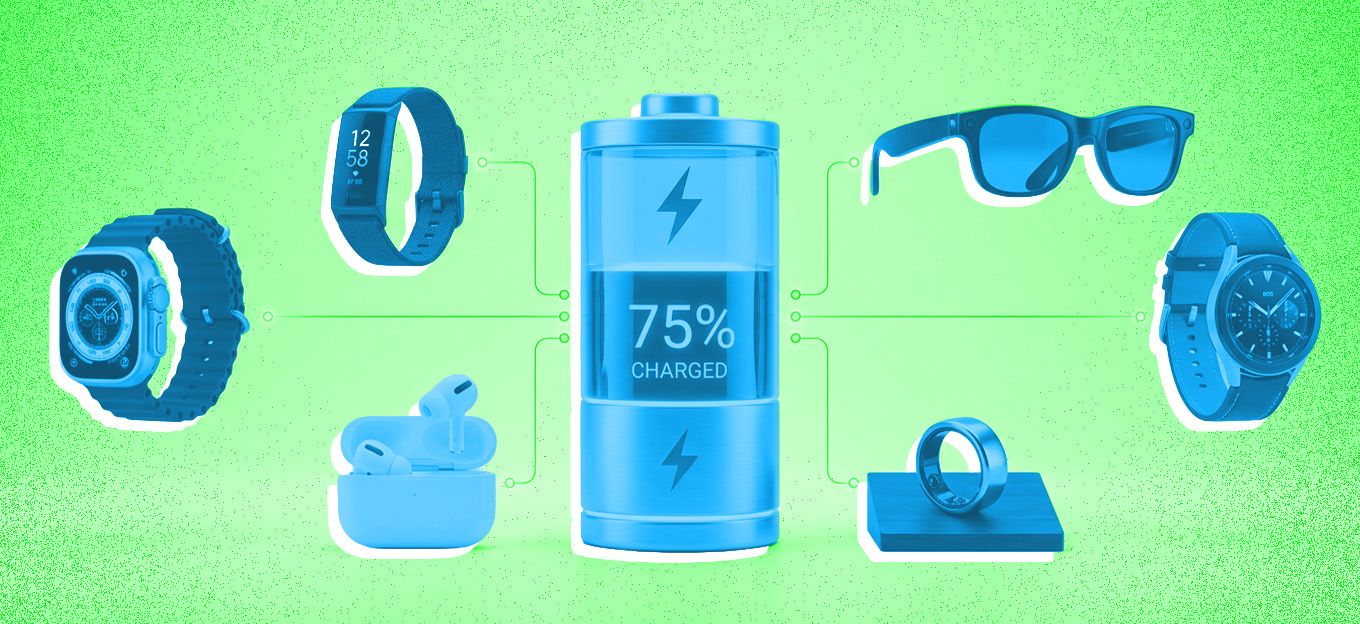
Every few months there's a new wearable launch and the headline is always about how smart its chip is. Faster processor, more sensor fusion, AI capabilities, and so forth. I've covered enough of these launches to tell you that the chip was never the limiting factor. The battery always was.
I use an Oura ring, WHOOP, and switch between my Apple Watch and Ultrahuman ring at work. The amount of energy these devices have compared to each other, how warm they get, and their thickness and comfort have very little to do with how smart their respective chips are. These factors depend on the physical capacity of a particular shape to hold power and deliver it.
Processing Power Stopped Being the Constraint Years Ago
Chips are getting absurdly efficient. Today's microcontrollers running wearables will easily last days on a single charge using a tiny coin cell to sample sensors. Modern Bluetooth Low Energy radio chips will use less energy in comparison to what they used just a few years ago. If you were to strip a modern smart ring down to silicon, it would hardly pull any current at idle.
But the efficiency of silicon chips is improving faster than batteries' capacity. According to the research conducted by MIT tracking lithium-ion cells from 1991 to 2018, the energy density has been rising from about 200 Wh/L to over 700 Wh/L, which is about a 5 percent yearly increase, and the majority of industry projections for future advances lie somewhere close to 4 percent per year.
That is consistent and reliable progress, but definitely not the one that people expect to hear when somebody says that "batteries are progressing". In the meantime, the load on batteries keeps increasing because of new features such as continuous heart rate tracking, SpO2 monitoring, skin temperature sensing, always-on display, and on-device AI processing. Chips can handle it, but batteries struggle to provide a sufficient amount of energy for more than one or two days.
So the bottleneck moved. It is not compute anymore. It is how much energy you can store in your smart ring, a temple arm, or a wristband in a compact and comfortable manner.
Why This Doesn't Show Up in Marketing
Companies don't lead with "our battery team solved a packaging problem". It's not as exciting as a "new chip". But go check out the real changes that took place between any generation of wearables, and most likely the change will be either battery capacity or battery design, with a chip update being the marketing feature.
For instance, sensor accuracy improvement was the marketing angle for Oura Ring 4, but the real mechanical changes were equally interesting. The company reduced the size of internal sensors to 0.3 mm from 1.3 mm and recessed them into the ring, which allowed for some extra room and increased battery life from 5-7 days on Oura Ring 3 to 5-8 days on Ring 4.
Meta Ray-Ban Display glasses allegedly have a bespoke ultra-narrow steel can cell located inside the temple arm, designed specifically to fit that curve rather than modifying a regular flat battery cell. In both cases, there's nothing about chips. They are mechanical engineering stories that happened to ship alongside a chip.
The Real Constraint Is Form Factor, Not Function
Here's the thing people miss when they talk about wearable innovation. A smartwatch has some room to work with. You can place a rather reasonably sized flat battery in a 40mm case, and it doesn't cause anybody any trouble.
The smart ring has only about 2-3 mm of inner space to work with, which is curved and has to accommodate not only the necessary electronics, but also the battery, sensor, coil, and the material that holds it together. In smart glasses, there is even less free space, which is divided between two flexible arms, which can bend under pressure.
Lithium-ion batteries, which are used for most gadgets, are flat. They are produced using manufacturing equipment that was designed for rectangles and cylinders, since it works best in cases of phones, laptops, and cars.
However, if a flat battery is forced to bend, the result would be either the loss of capacity due to added padding or degradation of the cell and safety problems due to bending and stretching. That's why most prototypes of smart rings died in the labs. Not because their sensors were bad. But because the problem of a battery in a ring shape could not be solved yet.
What Curved and Custom Cell Manufacturing Actually Solves
The companies leading the innovation here are not those working on the next silicon node; they are the ones trying to figure out how to manufacture batteries that are inherently curved and match the exact geometry of either a ring or a glasses temple, rather than taking an inherently flat battery and bending it. A select few battery specialists are building their whole process on this.
There is also a discussion of custom battery solutions for wearable devices that provides useful insight into the space constraints involved in products such as smart rings, especially when it comes to defining the battery shape before finalizing the rest of the device housing.
The fact is much more important than it may seem at first glance. A battery that was initially designed to fit in a curved housing will maintain its shape over many cycles of charge significantly better, meaning the difference between a ring that will be snug for years and a ring that will begin to feel off because of changing internal geometry.
This is slow, boring engineering. It is about tooling, chemistry, and manufacturing tolerances measured in fractions of millimeters. But this is the actual gate for possible wearable form factors. You can have the most efficient chip in the world, but it won't matter if there's no way to power it for a usable stretch of time inside the shape you want to sell.
What This Means for Where Wearables Go Next
Smart rings plateaued somewhere around 4 to 8 days of battery life for a bit before that metric stopped progressing despite increasingly efficient chips. The limiting factor wasn't ever really the chip itself but rather how much curved cell capacity could fit into the ring people were actually going to wear on their finger throughout the day.
Smart glasses are facing the same conundrum. Manufacturers desire always-on displays and AI assistants that run locally, but the temple arms are only about 5mm wide, which presents one heck of a tight space for the placement of a battery, which is why most smart glasses on the market currently either have bad battery life or come with a dedicated charging unit.
The Takeaway
Wearable IoT devices aren't stagnating because it's impossible to create more efficient chips. They're stagnating because the form, shape, and feel of almost all wearable IoT devices are determined by the amount of energy a curved battery can deliver in the device.
Until more manufacturers start solving that problem at the cell level instead of the chip level, wearable devices will continue to be a story about batteries wearing chip headlines.

The Most Comprehensive IoT Newsletter for Enterprises
Showcasing the highest-quality content, resources, news, and insights from the world of the Internet of Things. Subscribe to remain informed and up-to-date.

New Podcast Episode

Building Real-Time Voice AI Experiences

Related Articles