From Gadget Collection to Thoughtful Caretaker: Welcome to the Borderless Smart Home
From Gadget Collection to Thoughtful Caretaker: Welcome to the Borderless Smart Home

- Last Updated: April 1, 2026
Patrick Jennings
- Last Updated: April 1, 2026
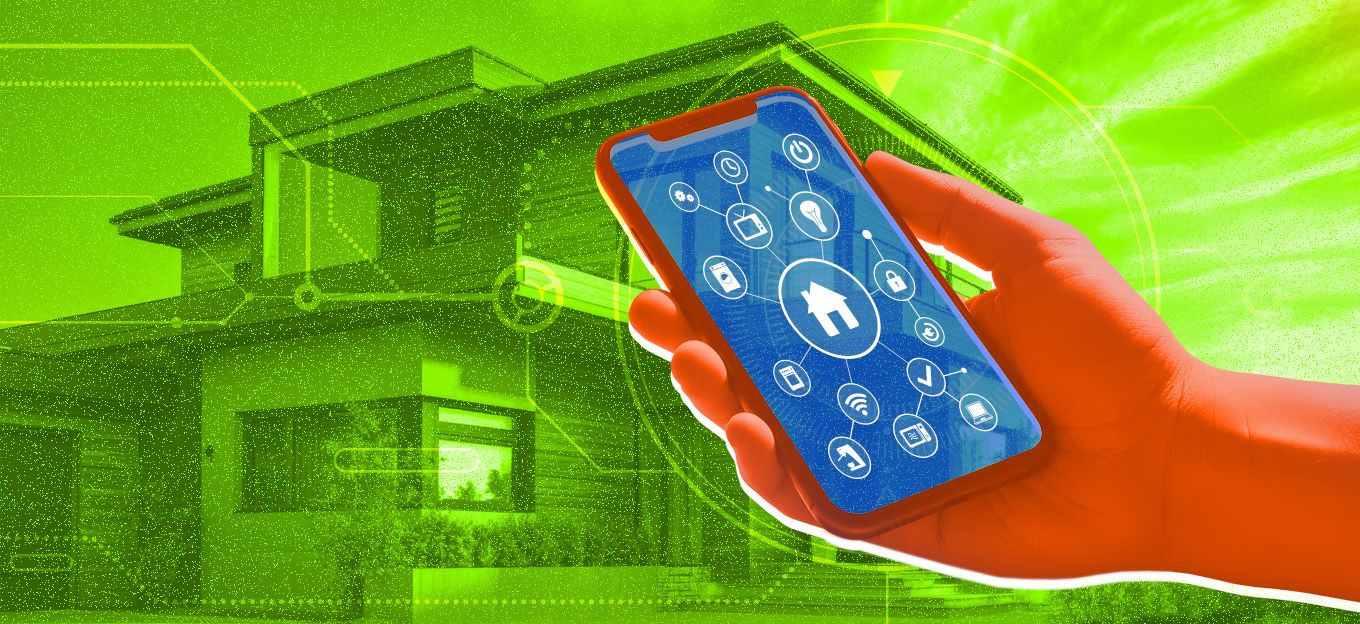
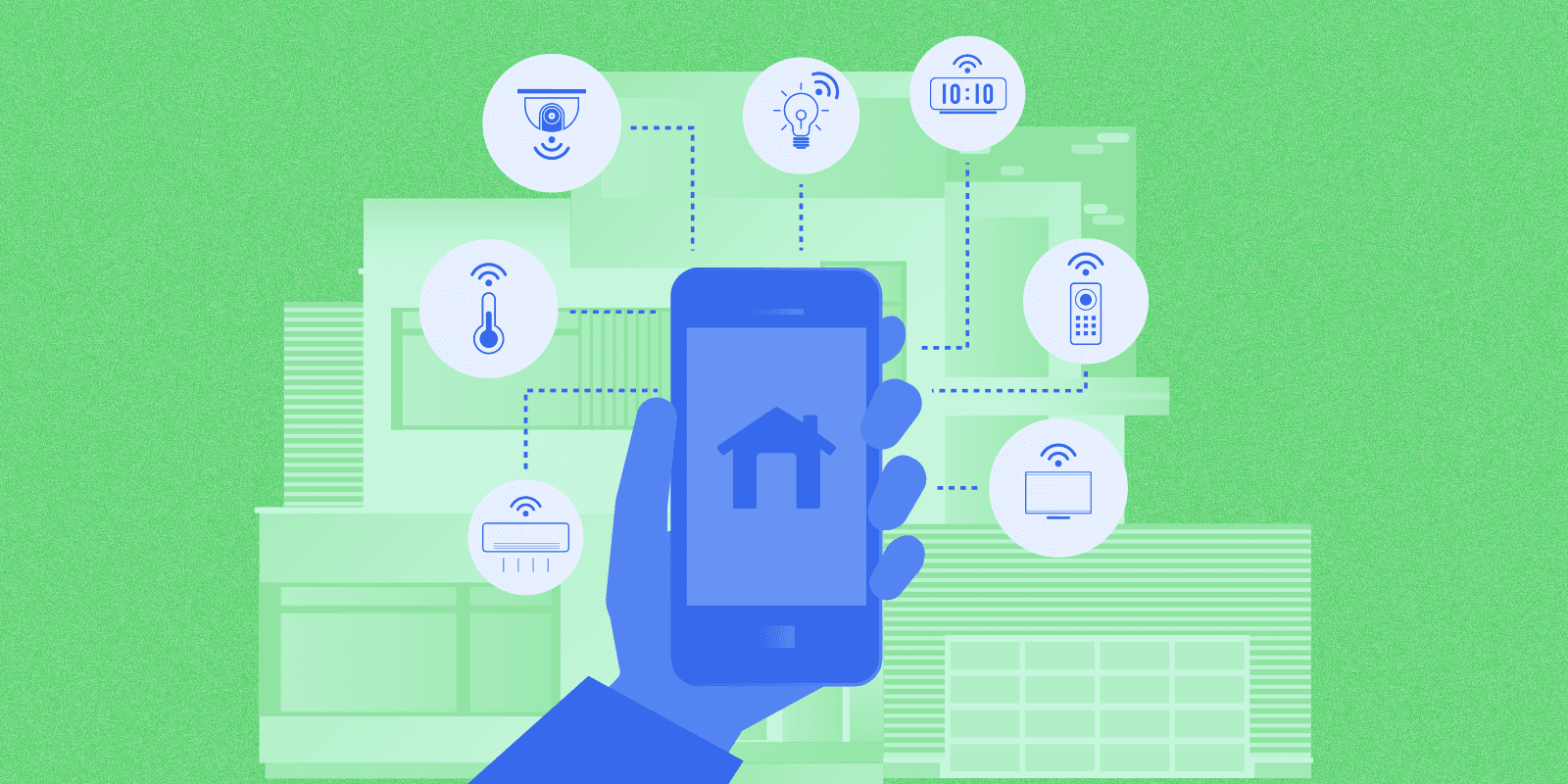
A collection of connected devices: That is what the smart home has essentially been for the past decade.
The homeowner has acted as a makeshift systems integrator, running interference for security cameras, smart thermostats, robotic vacuums, connected lighting, irrigation controllers, voice assistants, and pool systems, each delivered through its own app, interface, and ecosystem.
This device-centric model helped bring IoT into the mainstream. But it leaves a lot to be desired.
We expect the next phase of the smart home will look very different. Instead of functioning as a collection of connected gadgets, the home will behave as a coordinated system that quietly manages everyday tasks in the background. Lighting, cleaning, security, climate control, energy management, and even pool care will operate as parts of a unified, adaptive environment.
It won’t mean more technology demanding more of our attention. If current adoption patterns in smart speakers, thermostats, and robot cleaners are any indication, it will gradually become seamless and invisible.
Welcome to what we think of the borderless, proactive smart home.
System-Level Intelligence
Today’s smart homes are reactive. Devices respond to direct commands, preset schedules, or simple triggers. It requires continuous oversight. Homeowners are still in the middle of it, acting as coordinators.
But in the emerging model, coordination is replacing active management.
A truly intelligent home is one where systems anticipate needs and act before you ask, for example, cleaning when debris is detected, adjusting temperature during an incoming heat wave, or maintaining water quality in the pool based on usage patterns rather than fixed routines. In the pool, that might mean a robot automatically increasing cleaning frequency after a big storm or heavy weekend use, without anyone having to update a schedule.
In our view, the smart home is becoming an active caretaker instead of a responsive assistant.
What makes this shift possible is the concept of a borderless ecosystem, a smart home where devices communicate and collaborate regardless of their manufacturer.
In the borderless smart home, adding a new device does not require rebuilding automations or committing to a single vendor’s closed platform. Instead, the device joins a shared network of environmental and behavioral data.
Over time, shared context enables deeper coordination. Outdoor cleaning schedules for the pool and the yard align with incoming weather patterns, for example. Lighting and climate systems respond dynamically to occupancy signals detected by security sensors. Energy-intensive tasks are automatically shifted to lower-demand periods.
For homeowners, it won’t grow more complex. It will feel effortless.
Cross-Category Intelligence
The most transformative aspect of the borderless home is not cross-brand compatibility. It is cross-category intelligence.
In a mature ecosystem, devices share real-time status and sensor data, including occupancy, temperature, local weather forecasts, energy pricing, and pool usage patterns. This means climate systems can adjust proactively in response to broader environmental conditions.
This shared awareness is what is allowing devices to anticipate changes rather than react to them.
In the future, anonymized environmental insights could even be shared across neighborhoods. Devices operating within range could exchange depersonalized data on weather patterns, power usage trends, or seasonal conditions to improve efficiency street by street. While still in its early stages of development, the concept illustrates how IoT could one day scale from isolated properties to connected communities.
The key principle remains the same: when devices understand a common environmental context, coordination becomes natural and more valuable.
What Makes the Borderless Smart Home Possible
Several foundational technologies are converging to enable this borderless, proactive smart home of the future.
First, interoperability standards such as Matter and Thread are critical. These standards provide a shared communication layer that allows devices from different manufacturers to securely connect and cooperate.
Without common standards, each new device risks becoming just another disconnected gadget that responds to prompts. With the standards, these devices instead join a unified network and are orchestrated by the homeowner’s preferred platform. Early adoption across major platforms suggests this direction is gaining momentum.
Real-time data sharing is another crucial piece of the puzzle. Devices must surface meaningful sensor information (for example, occupancy, temperature, energy consumption, or debris levels in the pool) so the broader system can use the data to make informed decisions. Contextual intelligence runs on free-flowing data.
Distributed computing and edge intelligence are other important innovations that allow faster, more resilient automation. Decisions can be processed locally for low latency and greater privacy, while cloud connectivity supports learning and broader optimization.
Engineers can no longer optimize devices solely for standalone performance. Products must “play well with others,” supporting standards and behaving predictably within multi-brand ecosystems. Over time, we expect long-term trust to be earned by devices that integrate seamlessly into complex, real-world environments.
The Role of Specialized Devices
In a borderless ecosystem, specialized devices take on an important role.
Consider smart pool robots. Within their domain, these devices are highly data-rich. They map cleaning routes, measure debris accumulation, track cycle durations, and detect patterns tied to weather and usage. Over time, they can identify where debris tends to collect and how conditions change by season.
But when integrated into a unified system, insights from a pool-cleaning robot are actually used far beyond the pool.
Filtration and heating schedules, for example, can be optimized based on real demand. Energy management systems can coordinate pump activity with solar generation or time-of-use pricing. Maintenance alerts can reflect actual wear rather than run on arbitrary intervals. Irrigation and outdoor lighting can respond to shared weather signals.
While many of these integrations are still evolving, they reflect a long-term vision: devices acting as expert contributors within a shared intelligence layer. Whatever the role of a specific device, it becomes a node in a coordinated network rather than an isolated endpoint.
Looking Ahead
Progress toward the borderless smart home will not be measured in flashy new features. The advances will be subtle. Homeowners will gradually notice they have fewer apps to juggle. They will notice that more tasks “just happen.” There will be less manual scheduling. There will be more cross-brand cooperation.
When a home feels calmer, less noisy, and more effortlessly maintained both inside and out, it signals that the borderless, proactive model is truly finding its footing. In our view, the smart product era is giving way to a new era of smart systems. Success will not be measured by how many connected devices a home contains, but by how smoothly those devices collaborate.
The smartest homes will not be the ones that listen best. They will be the ones who understand context, anticipate needs, and act before anyone has to ask.

The Most Comprehensive IoT Newsletter for Enterprises
Showcasing the highest-quality content, resources, news, and insights from the world of the Internet of Things. Subscribe to remain informed and up-to-date.

New Podcast Episode

Building Real-Time Voice AI Experiences

Related Articles