


Best IoT Connectivity Platform in 2026? Use This Buyer’s Criteria Instead
Best IoT Connectivity Platform in 2026? Use This Buyer’s Criteria Instead

- Last Updated: July 31, 2026
Monogoto
- Last Updated: July 31, 2026

If you’re searching for the best IoT connectivity platform in 2026, you’ve already found the “Top 10” lists and noticed they rarely agree. The reason is simple: there’s no single best platform, only the best fit for your deployment.
A utility rolling out millions of smart meters, an autonomous robotics company, and a connected-vehicle manufacturer have almost nothing in common when it comes to connectivity requirements. Increasingly, the question isn’t simply whether devices can connect; it’s whether your connectivity platform can remain resilient as networks fail, regulations evolve, and deployments scale.
That’s why choosing a connectivity platform has become an infrastructure decision, not just a procurement exercise. So instead of another subjective ranking, this guide gives you the evaluation framework enterprise buyers actually use: seven criteria and the questions to ask every vendor about each one. Score your shortlist against the same criteria, and the right choice for your deployment becomes much clearer.
What’s different about buying in 2026
A few shifts make this a genuinely different buying environment than it was even two years ago:
- SGP.32 is moving from pilots to production. The IoT-specific eSIM standard is now commercially available from major providers, and analysts expect deployment volume to accelerate through the second half of 2026, turning “eSIM readiness” from a roadmap slide into a real evaluation criterion.
- Satellite is joining the cellular stack. 3GPP-standardized non-terrestrial networks (NTN) are shifting from trials to commercial IoT service, so satellite is no longer a separate silo bolted on with a proprietary modem.
- Permanent-roaming and localization rules keep spreading. More countries restrict long-term roaming or require in-country provisioning, which makes how a platform achieves coverage a compliance question, not just a technical one.
- Buyers want programmable, not managed. Enterprises increasingly expect connectivity they can automate and control through APIs, rather than a managed service they file tickets against.
The criteria at a glance
Seven things determine whether a deployment succeeds. Weight them for your use case, but ignore none of them.
- Coverage architecture: Determines resilience and roaming flexibility across markets
- Multi-IMSI & eSIM/SGP.32: Future-proofs the deployment across a decade-long lifecycle
- Satellite / NTN: Extends coverage beyond terrestrial networks and adds resilience
- Control plane, programmability, and observability: Programmable operations at scale; less manual overhead; Device-level visibility and fast troubleshooting in the field
- Security: Protects devices and data end to end
- Pricing transparency: Prevents hidden costs and lock-in
- Proven deployments and support model: Success stories that match your deployment needs
Why the rankings mislead
Most “top IoT connectivity platforms” articles compare vendors on surface attributes. They seldom test the things that determine whether a deployment succeeds, how the platform achieves coverage, whether you can switch networks without swapping hardware, how it fails over when a network drops, and what you actually pay at scale. The criteria below are ordered roughly by how often they become the thing that breaks a project after go-live.
The IoT connectivity platform checklist
1. Coverage architecture: how does the platform actually connect?
“200+ countries” means little on its own. What matters is how a provider delivers that coverage and what happens when a network degrades. A single-IMSI SIM is tied to one home operator and roams onto partners, simple, but exposed to roaming agreements, permanent-roaming restrictions, and single points of failure. A multi-IMSI or multi-profile approach lets one SIM hold several operator identities and steer between them, improving resilience and local-rate access. Ask for the network list per country you care about, not a global headline number.
Ask the vendor: Is this single-IMSI, multi-IMSI, or eSIM-based? How many networks can a SIM reach in my target countries? What happens automatically when the primary network fails? Are there permanent-roaming or localization requirements in my markets? A capable global IoT connectivity platform should answer all four without hesitation.
2. eSIM and SGP.32 readiness
2026 is the year SGP.32, the GSMA’s eSIM standard built specifically for IoT, moves from pilots to real deployments. Unlike the older M2M standard (SGP.02), SGP.32 uses IP-based provisioning that works on NB-IoT and LTE-M, needs no SMS, and lets you download, switch, and retire operator profiles over the air across an entire fleet from a single SKU. Analysts expect volume to accelerate through the second half of 2026 and scale into 2027, so a platform’s readiness here is a forward-looking bet worth checking now.
The catch: “we support SGP.32” is doing a lot of work in vendor marketing. Some providers mean full remote profile download and lifecycle management (eIM + IPA architecture); others mean preloaded profiles only. Make them prove it.
Ask the vendor: Do you support true SGP.32 remote provisioning, or preloaded profiles? Is your subscription-management environment GSMA-accredited? Can I run today on multi-IMSI and migrate to SGP.32 without a hardware redesign? What’s your coexistence path for existing SIMs?
3. Satellite / NTN and hybrid routing
Roughly 85% of the Earth’s surface has no terrestrial cellular coverage. If any of your devices operate offshore, in remote agriculture, along pipelines, or anywhere resilience matters, satellite is no longer a separate silo. 3GPP standardized non-terrestrial networks (NTN) in Release 17 and has extended them since, so NB-IoT and LTE-M can now run over LEO satellites using the same cellular stack. The strategic move in 2026 is to favor standards-based NTN over proprietary satellite modems, and to design for dual-mode: devices use terrestrial when available and fall back to satellite automatically.
Ask the vendor: Do you offer hybrid terrestrial-plus-satellite connectivity on one SIM and one platform? Is the satellite path 3GPP NTN-based? Does terrestrial-to-satellite failover happen automatically, and can I control when a device attempts a satellite connection? What are the realistic throughput and latency limits?
Common mistake: Buyers often evaluate satellite as a standalone technology decision. Increasingly, the better question is whether satellite is simply another network within the same connectivity platform.
4. Control plane, programmability, and observability
Modern connectivity platforms are evolving from SIM-management portals into programmable control planes. A dashboard that shows data usage is table stakes; the real question is how much of the network you can operate as software. Can you provision devices, steer traffic, enforce security policies, trigger actions via APIs, and integrate them into your own automation and CI/CD pipelines? At scale, that programmability is the difference between managing thousands of devices and managing millions.
Operational automation is where this gets concrete: can SIM activation, policy changes, and network-selection decisions run automatically in response to conditions, instead of requiring a human clicking through a portal? And observability is the other half; when a device goes quiet in the field, you need device-level visibility (packet capture, real-time diagnostics, alerting, and troubleshooting tools), not a support ticket and a 24-hour wait. Private networking and local breakout or edge processing round this out, keeping latency low and traffic off the public internet.
Ask the vendor: What can I do via API versus only in the portal? Can provisioning, policy changes, and network selection be automated and triggered by network conditions? What device-level observability do you provide: packet capture, diagnostics, alerts? Do you support private APNs, private networking, and edge/local breakout?
5. Security architecture
Security failures in IoT rarely originate from the device itself; they often stem from the network connecting it. Connectivity platforms increasingly serve as the first point of enforcement for segmentation, access control, and policy management. As the threat landscape continues to evolve, this layer has become even more critical.
The strongest platforms take a zero-trust approach by design, using private networking to keep devices off the public internet and unifying networking and security through a SASE-style architecture. As regulations tighten and deployments become more distributed, buyers should expect providers to explain not just that “data is encrypted” but also how device traffic is isolated, monitored, and secured end-to-end.
Ask the vendor: Are devices ever exposed to the public internet? Do you offer zero-trust / SASE-by-design networking, private APNs, VPNs, firewall policies, and DNS filtering? How is traffic isolated between customers and between device fleets? What audit logs, certifications, and compliance coverage do you provide?
6. Pricing transparency and commercial model
Opaque pricing is the most common source of post-deployment regret, and IoT bills balloon in specific, predictable ways. Watch for activation fees, SIM-swap fees, roaming surcharges, platform fees, tiered support charges, minimum commitments, data that expires if unused, and localization costs in markets that require in-country provisioning. Any one of these can quietly double a per-device cost that looked competitive in the quote. A transparent provider publishes or clearly explains its rates, pools data across the fleet so a few chatty devices don’t blow the budget, and lets you scale and leave without renegotiating from scratch. SGP.32 is partly a commercial story here: standards-based provisioning is meant to reduce lock-in, so a platform that resists switchability is working against where the market is heading.
Common mistake: Buyers compare the advertised cost per MB but ignore activation fees, roaming surcharges, platform charges, and support costs. Those hidden fees often determine the true cost of ownership.
Ask the vendor: Show me the full cost per device per month at my expected usage, including every fee. Is data pooled across the fleet? Which of these apply: activation, SIM-swap, roaming, platform, localization fees? What are the overage rates, contract length, and exit terms? What does it cost to leave?
7. Proven deployments and support model
Finally, separate marketing from operating history. Ask for named deployments in your vertical and at your scale, and for the support model behind them, an SLA and a technical partner, not a ticket queue. A provider that has run financial services or fleet-tracking deployments in production has solved problems you haven’t hit yet.
Ask the vendor: Can you share references in my industry and region at similar volume? What’s the SLA, and who owns an incident when it happens? What does onboarding look like, and how long does it take?
Looking beyond connectivity
The clearest signal in 2026 is that enterprises are no longer buying connectivity; they’re buying a programmable connectivity layer. The next generation of platforms doesn’t just connect devices; it continuously monitors network conditions, automates network selection, integrates with enterprise systems, and lets applications respond to changing environments on their own. As AI gets embedded across operations, the connectivity platform itself is becoming software-defined infrastructure rather than a managed service.
That reframes the whole decision. Connectivity decisions are becoming infrastructure decisions. The platform you choose today will likely outlive multiple hardware generations, network technologies, and carrier agreements. The vendors that succeed won’t simply connect devices—they’ll give you the flexibility to adapt as everything around those devices changes.
Frequently asked questions
MNO vs MVNO for IoT: which is better?
An MNO owns its radio network and sells connectivity on that one network. An MVNO or connectivity platform doesn’t own radio infrastructure — it aggregates access across many operators and layers multi-network steering, a management platform, APIs, and often satellite fallback on top. For a single-country deployment on strong local coverage, a direct MNO relationship can be the simplest and cheapest route. For anything that crosses borders, needs redundancy, or must navigate roaming restrictions, a multi-network platform usually wins: you get coverage from many operators through one SIM, one contract, and one management layer — without negotiating dozens of local agreements yourself.
What should an IoT connectivity RFP include?
At minimum: target countries with the required networks and committed SLAs per country; SIM/eSIM architecture (single-IMSI, multi-IMSI, or SGP.32 eUICC) and whether true remote provisioning is supported; satellite/NTN needs and failover behavior; the full commercial model (per-MB or pooled pricing, all fees, minimums, contract length, exit terms); security architecture (private networking, zero-trust/SASE, no public-internet exposure); platform capabilities (APIs, automation, real-time diagnostics and observability); data residency and regulatory compliance per market; and the support model with named references in your vertical. Ask every vendor to respond against the same structure so you can score answers side by side.
What is an IoT connectivity platform?
An IoT connectivity platform is the software layer that connects, manages, monitors, and secures IoT devices across one or more cellular and satellite networks. Modern platforms also provide APIs, automation, diagnostics, SIM lifecycle management, and security controls that allow enterprises to operate global deployments from a single interface.

The Most Comprehensive IoT Newsletter for Enterprises
Showcasing the highest-quality content, resources, news, and insights from the world of the Internet of Things. Subscribe to remain informed and up-to-date.

New Podcast Episode

Building Real-Time Voice AI Experiences

Related Articles




Related Solutions
Mobile Networking for Public Safety
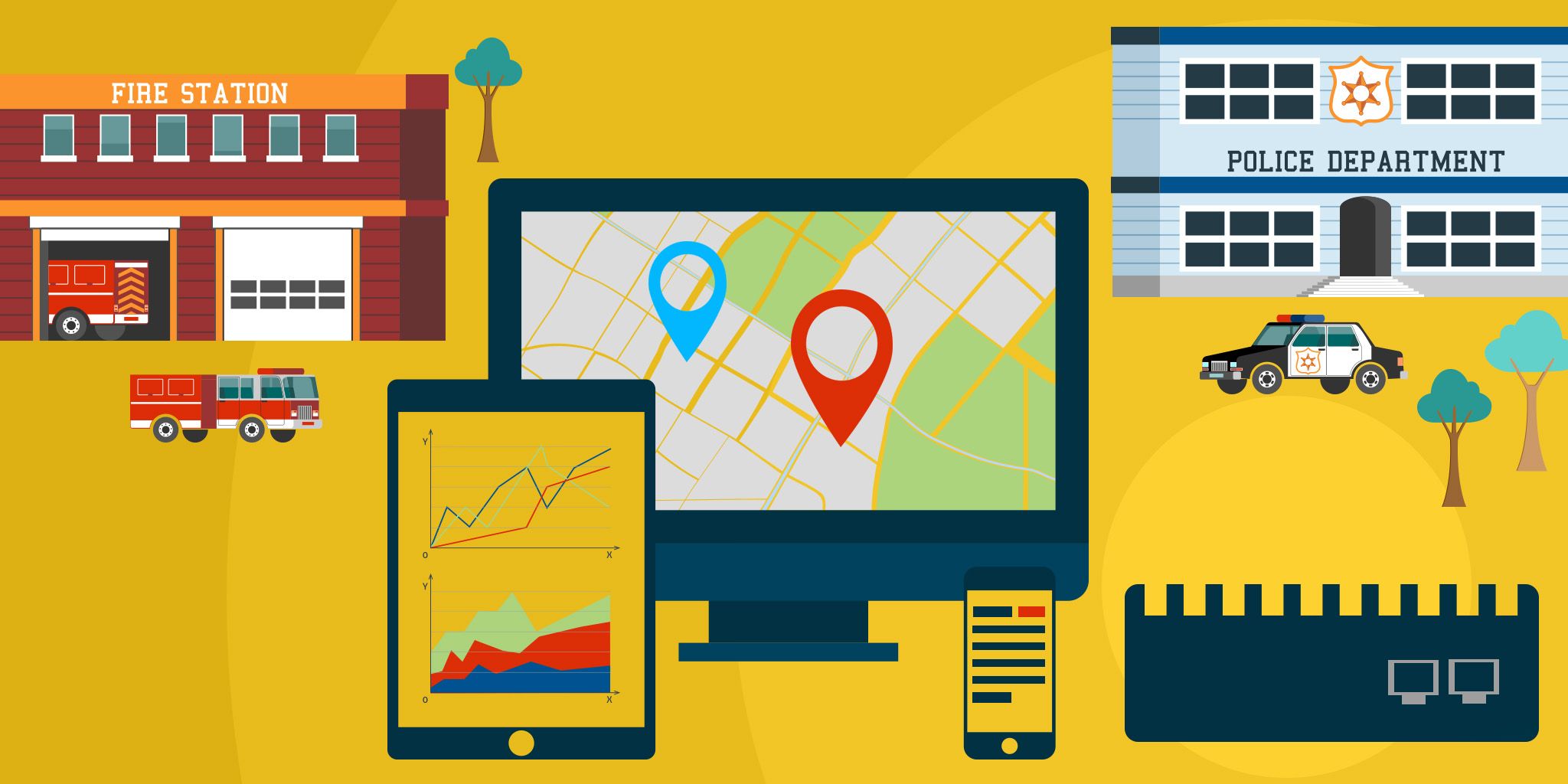
Enable data sharing, enhanced situational awareness, and secure communication across vehicles, devices, and command centers.
Enable data sharing, enhanced situational awareness, and secure communication across vehicles, devices, and command centers.
Digi
Digi
Asset and Inventory Monitoring
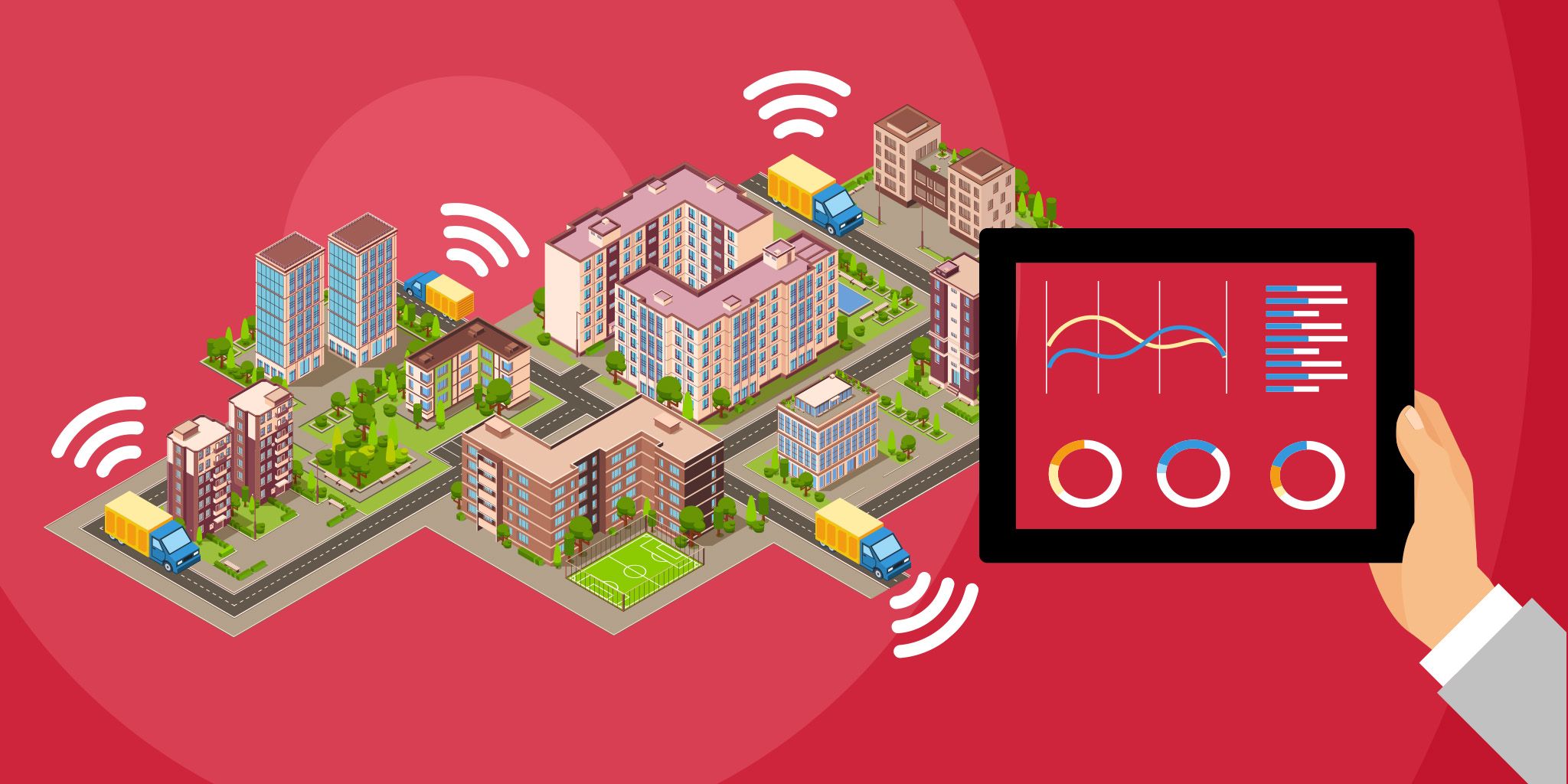
Track assets, monitor performance, and maintain persistent connectivity to improve supply chain efficiency, security, and uptime.
Track assets, monitor performance, and maintain persistent connectivity to improve supply chain efficiency, security, and uptime.
Digi
Digi

Primary and Failover Connectivity for Retail
4G/5G cellular networks for enabling uninterrupted retail operations with seamless support and rapid deployment across stores.
4G/5G cellular networks for enabling uninterrupted retail operations with seamless support and rapid deployment across stores.
KORE
KORE

Related Solutions
Smart Cities
Mobile Networking for Public Safety
Enable data sharing, enhanced situational awareness, and secure communication across vehicles, devices, and command centers.
Digi
Supply Chain & Logistics
Asset and Inventory Monitoring
Track assets, monitor performance, and maintain persistent connectivity to improve supply chain efficiency, security, and uptime.
Digi
Retail
Primary and Failover Connectivity for Retail
4G/5G cellular networks for enabling uninterrupted retail operations with seamless support and rapid deployment across stores.
KORE