
Predictive Maintenance in Manufacturing: AI and IoT Use Cases
Predictive Maintenance in Manufacturing: AI and IoT Use Cases

- Last Updated: October 26, 2026
Intellectyx
- Last Updated: October 26, 2026
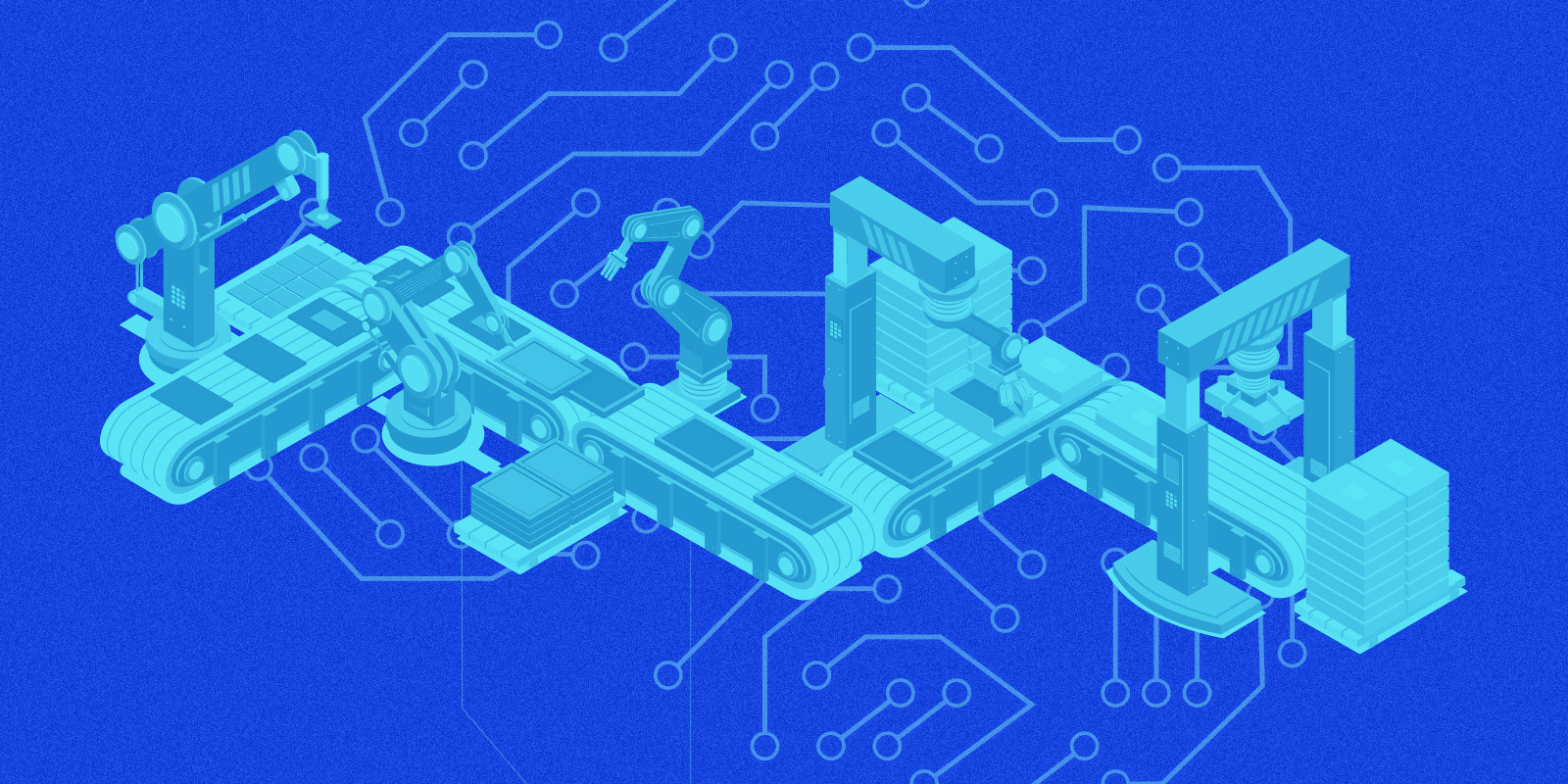
Manufacturers have maintained equipment much the same way for decades: repair it after it fails or service it on a fixed calendar. Both approaches remain useful, but neither answers the question maintenance teams care about most: What needs attention now, and what can safely keep running?
Predictive maintenance uses equipment and process data to identify developing problems before they become unplanned failures. Industrial Internet of Things (IIoT) devices collect the signals. Analytics and artificial intelligence (AI) interpret them. Maintenance teams decide what action to take and when.
This combination is making predictive maintenance more practical across connected factories, but it is not a plug-and-play route to zero downtime. Its performance depends on sensor placement, data quality, failure history, operational context, system integration, and disciplined human review.
This guide examines leading predictive maintenance IoT AI manufacturing use cases, explains how the technology works, and addresses the operational and edge-computing constraints that determine whether a deployment creates value.
What Is IoT- and AI-Based Predictive Maintenance?
Predictive maintenance is a condition-based maintenance approach. Instead of servicing every asset at a fixed interval, a manufacturer monitors equipment condition and intervenes when evidence indicates elevated risk or degradation.
An end-to-end system usually includes:
- Data sources: vibration, temperature, acoustic, electrical current, pressure, flow, lubricant, speed, and controller data
- Connectivity: industrial protocols and gateways that move data from assets to edge or cloud systems
- Data processing: filtering, synchronization, feature extraction, and contextualization
- Analytics: thresholds, statistical techniques, machine-learning models, or physics-informed models
- Operational integration: alerts, dashboards, computerized maintenance management systems (CMMS), enterprise asset management (EAM), and maintenance workflows
- Human decisions: validation, diagnosis, repair planning, and feedback on whether an alert was useful
IoT and AI play different roles. IoT makes asset conditions observable. AI helps find patterns in the resulting data. A sensor alone does not predict a failure, and a model cannot compensate indefinitely for missing, mislabeled, or unreliable signals.
How IoT and AI Predict Machine Failures
"Failure prediction" can describe several distinct capabilities. Manufacturers should define which one they need before selecting technology.
1. Condition monitoring
Rules or thresholds flag a known condition, such as bearing temperature exceeding an accepted limit. This is often the simplest starting point and may not require machine learning.
2. Anomaly detection
A model learns or estimates normal behavior and identifies deviations. This is useful when failure examples are scarce, which is common for critical assets that fail infrequently. An anomaly signals unusual behavior; it does not automatically identify the cause.
3. Fault classification
When enough labeled examples exist, a model can classify patterns associated with known fault types, such as imbalance, misalignment, looseness, or bearing damage. The output can help technicians narrow the diagnostic process.
4. Failure-risk estimation
A model estimates the probability of a defined event within a time window. For this output to be operationally useful, the time horizon must match the time needed to inspect the asset, secure parts, and schedule work.
5. Remaining useful life estimation
The system estimates how much operating life remains before a component reaches a defined failure or performance threshold. This is more difficult than anomaly detection because it requires reliable degradation data, consistent failure definitions, and validation across operating conditions.
The basic data flow is straightforward:
- Sensors and control systems capture equipment and process signals.
- An edge gateway or data platform cleans and aligns those signals.
- Asset identity, operating state, load, product, and maintenance history add context.
- An analytical model produces a score, classification, or estimate.
- Business rules determine whether to log the event, notify a technician, request an inspection, or create a work order.
- Technician findings and completed maintenance feed back into the system.
The last step is frequently overlooked. Without feedback, teams cannot distinguish a useful early warning from a false alert or improve model performance over time.
Predictive Maintenance IoT AI Manufacturing Use Cases
Rotating Equipment Monitoring
Motors, pumps, fans, gearboxes, and compressors are common starting points because their degradation often appears in measurable vibration, temperature, acoustic, or electrical patterns.
Models may detect changes associated with imbalance, misalignment, bearing wear, lubrication problems, or cavitation. Combining multiple signals with speed and load data generally provides better context than analyzing a single sensor stream in isolation.
CNC Machines and Machine Tools
Manufacturers can monitor spindle vibration, motor current, temperature, cycle time, and controller alarms to identify abnormal operating behavior. Predictive analytics can support spindle inspection, tool-change planning, and investigation of conditions that affect both equipment health and part quality.
Tool wear is particularly valuable because maintenance and quality are connected: a degrading tool may keep running while gradually increasing dimensional variation or surface defects. Connecting maintenance signals with quality-inspection data can help teams investigate these relationships across equipment condition and product quality.
Conveyors and Material-Handling Systems
Conveyors, rollers, drives, and automated material-handling equipment can disrupt the line when a small component fails. Current, vibration, speed, temperature, and acoustic data can reveal abnormal friction, motor loading, belt behavior, or bearing condition.
The business value comes from the system context. An alert on a low-cost component may deserve high priority if that component is a single point of failure for an entire production line.
Industrial Robots
Robot data can include joint torque, motor current, position error, cycle time, temperature, and controller events. Analysis can identify gradual changes that warrant inspection of joints, gearboxes, motors, end effectors, or cabling.
Models must account for different programs, payloads, speeds, and motion profiles. Otherwise, a legitimate production change may appear to be equipment degradation.
Compressed-Air and Vacuum Systems
Pressure, flow, power, temperature, and acoustic measurements can help locate leaks, identify deteriorating compressor performance, and detect abnormal cycling. These applications can combine reliability and energy objectives: the same condition may increase energy consumption before it causes a failure.
Boilers, Furnaces, and Thermal Processes
Temperature, pressure, flow, combustion, exhaust, and control-loop data can indicate burner, fan, refractory, heat-transfer, or instrumentation problems. Because these systems may be safety- or emissions-critical, AI outputs should support established engineering controls and inspection procedures, not bypass them.
Electrical Assets
Current, voltage, power quality, temperature, and partial-discharge or insulation measurements can support condition assessment for motors, switchgear, transformers, and related assets. The appropriate signals and analysis depend on equipment type and risk, and qualified personnel should perform electrical inspections.
Heavy-Industry Assets
Mining, metals, cement, pulp and paper, chemicals, and other heavy industries operate large assets under dust, heat, shock, variable loads, and limited-connectivity conditions. Predictive maintenance can support crushers, mills, kilns, turbines, haulage systems, process pumps, and other equipment where unplanned outages are costly, and inspection access may be difficult.
These environments also expose the limits of generic models. Sensor enclosures, calibration practices, sampling rates, communications, and training data must reflect the actual site and duty cycle.
What Benefits Can Manufacturers Expect?
The goal is not simply to generate more alerts. A successful program improves maintenance decisions.
Better Prioritization
Condition and risk information helps teams focus limited labor on assets showing credible signs of deterioration rather than treating every asset equally.
More Planned Work
Earlier warning can create time to confirm a diagnosis, obtain parts, arrange specialist labor, and align repairs with a scheduled production stop.
Less Unnecessary Maintenance
Condition evidence can help teams avoid servicing healthy assets solely because a calendar interval has elapsed, where regulations, warranties, and engineering requirements permit a condition-based approach.
Improved Spare-Parts Planning
Risk trends can inform parts purchasing and inventory decisions. Predictions should not automatically trigger procurement, but they can provide useful lead time for long-lead or critical components. When combined with spare-parts demand forecasting, maintenance risk can also inform replenishment priorities and inventory planning.
Support for Safety and Quality
Some degradation patterns affect product quality or increase operational risk before a breakdown occurs. Connecting maintenance, process, quality, and safety data can reveal these relationships. Predictive maintenance does not replace safeguards, inspections, or safety management systems.
Better Asset Knowledge
The implementation process often exposes inconsistent asset names, missing failure codes, undocumented operating modes, and incomplete maintenance records. Correcting those gaps improves more than the AI model; it strengthens asset management overall.
Real Benefits or New Operational Pains?
Predictive maintenance can create new work when deployed without a clear operational design.
Alert Fatigue
A sensitive model may detect many anomalies that do not require action. If technicians repeatedly investigate low-value alerts, trust deteriorates.
Missing Context
A model may flag a signal change caused by a new product, speed, recipe, or operating mode rather than a fault.
Integration Gaps
A dashboard that is disconnected from the CMMS, maintenance schedule, spare-parts process, and escalation workflow becomes another screen to watch.
Unclear Ownership
Data, reliability, maintenance, operations, IT, and OT teams may each assume another group owns the model and its outcomes.
Model Drift
Equipment ages, repairs change its baseline, sensors move, processes change, and new operating conditions appear. Monitor model performance after deployment. Controlled feedback, retraining, and validation can help models adapt as production conditions change, but adaptation still requires governance.
Sensor Upkeep
Sensors require installation, power, calibration, connectivity, protection, and replacement. The monitoring system becomes an asset that also needs maintenance.
Cybersecurity Exposure
Connecting previously isolated equipment can expand the attack surface. NIST's OT security guidance emphasizes that security measures must account for operational technology's unique performance, reliability, and safety requirements.
The remedy is not to avoid analytics. It is to treat predictive maintenance as an operating capability, not a one-time software installation.
Key Constraints When Deploying Predictive Maintenance AI at the Edge
Edge computing processes data on or near the equipment rather than sending every raw signal to a remote cloud platform. It can reduce response time, bandwidth consumption, and dependence on external connectivity. It can also keep sensitive operational data within the plant.
For a deeper look at how edge inference, streaming pipelines, time-series storage, and governed workflows fit together, see this practical guide to AI agents for large-scale machine sensor data analysis.
However, edge deployment introduces important constraints.
Limited Compute and Memory
An edge device may not support the largest or most computationally intensive model. Developers may need to reduce model size, simplify features, change numerical precision, or divide processing between edge and cloud systems.
Signal-Processing Requirements
High-frequency vibration or acoustic data can produce large volumes. Sampling rate, window length, filtering, synchronization, and feature extraction directly affect model results. These decisions require domain knowledge, not just software optimization.
Intermittent Connectivity
The system needs defined behavior when a gateway loses its network connection. It may buffer data, continue local inference, issue a local alert, or enter a degraded mode. Recovery and synchronization must be tested.
Fleet Management
Deploying one model on one gateway is different from managing hundreds of models across multiple plants. Teams need secure provisioning, version control, staged updates, rollback, health monitoring, and an inventory of which model runs on each device.
Environmental and Hardware Limits
Industrial edge devices may face heat, vibration, dust, moisture, electromagnetic interference, and power interruptions. Hardware selection and installation must reflect the plant environment.
Cybersecurity and Safety Boundaries
Devices should be authenticated, communications protected, access restricted, software updates controlled, and networks appropriately segmented. Predictive outputs should not directly change a safety-critical control state unless the complete system has been engineered, validated, and governed for that purpose.
Observability After Deployment
Teams must monitor input data quality, missing signals, prediction distributions, false alarms, missed events, device health, and model version. A model that is running is not necessarily a model that is working.
What Developers Need to Build a Reliable System
Developers for predictive maintenance in manufacturing need more than general machine-learning experience. Effective teams combine data engineering, industrial connectivity, reliability engineering, operations knowledge, cybersecurity, and ML operations.
Their work typically includes the following:
- Defining the asset, failure mode, decision, and prediction horizon
- Connecting historians, PLCs, SCADA, sensors, and maintenance systems
- Aligning time-series data from sources with different sampling rates and clocks
- Separating operating modes and accounting for load, speed, recipe, and environment
- Building labels from work orders, inspection findings, and failure records
- Choosing between rules, anomaly detection, supervised learning, survival analysis, and physics-informed approaches
- Testing performance on later time periods, different assets, and unseen operating conditions
- Designing explanations that technicians can use, such as contributing signals and trend views
- Deploying models at the edge or in the cloud with controlled versions
- Monitoring performance and incorporating technician feedback
The hardest part is often not model selection. It is converting maintenance history into dependable ground truth. A work order stating "motor replaced" may not identify the failed component, failure mechanism, observed symptoms, or whether replacement resolved the problem.
A Practical Implementation Roadmap
Step 1: Start with a Decision, Not a Model
Define the decision the system should improve. For example: "Which gearbox should be inspected during the next planned stop?" is more actionable than "Use AI to reduce downtime."
Step 2: Select a Bounded Use Case
Choose assets with meaningful failure consequences, measurable degradation, sufficient operating data, and a realistic response window. Avoid beginning with every asset in the plant.
Step 3: Establish the Baseline
Measure current unplanned downtime, maintenance cost, inspection effort, failure frequency, lead time, and false-alarm tolerance. Without a baseline, value is difficult to prove.
Step 4: Audit Data and Infrastructure
Confirm sensor coverage, sampling rates, timestamps, asset hierarchy, network capacity, security requirements, maintenance records, and system integrations. Identify data gaps before committing to model performance targets.
Step 5: Design the Workflow
Specify who receives an alert, what evidence they see, how quickly they respond, what inspection follows, when a work order is created, and how the outcome is recorded.
Step 6: Pilot in Advisory Mode
Run the system without automatic maintenance actions. Compare alerts with technician assessments, inspections, and actual events. Tune thresholds based on operational cost, not only statistical accuracy.
Step 7: Measure Decision Quality
Useful metrics include actionable-alert rate, warning lead time, missed-event rate, avoided disruption, inspection hours, planned-versus-unplanned work, and user adoption. Precision and recall matter, but they do not describe the full operational outcome.
Step 8: Scale by Repeatable Asset Class
After proving the workflow, extend it to similar assets and sites while checking whether sensor configuration, environment, and operating modes remain comparable. Maintain a model and device lifecycle plan.
Build, Buy, or Combine?
Manufacturers can use a packaged condition-monitoring product, develop a custom platform, or combine commercial tools with internal analytics.
A packaged solution can accelerate common use cases for standard asset classes. A custom approach may be appropriate when equipment, failure modes, data, or workflows are highly specialized. A hybrid architecture often uses commercial connectivity and device management with custom models or business logic.
Evaluation should cover the following:
- Supported sensors, protocols, and asset classes
- Edge and cloud deployment options
- Integration with historians, MES, CMMS, EAM, and identity systems
- Model validation and explainability
- Alert and workflow configuration
- Cybersecurity, access control, and update processes
- Data and model ownership
- Multi-site fleet management
- Support for technician feedback and outcome tracking
- Total lifecycle cost, including sensors and ongoing model operations
A technically impressive demonstration is not enough. The best solution is the one the maintenance organization can operate, validate, secure, and improve.
From Prediction to Better Maintenance Decisions
The central promise of predictive maintenance is not perfect foresight. It is better timing and prioritization.
IoT systems provide continuous visibility into asset condition. AI helps interpret patterns that fixed thresholds or periodic inspections may miss. Edge computing can make that analysis faster and more resilient at the equipment level. But the outcome still depends on engineering judgment, trustworthy data, secure integration, technician feedback, and a workflow that converts insight into action.
Manufacturers that begin with a measurable maintenance decision, validate predictions in the real operating environment, and scale only after proving the workflow are more likely to create a durable capability, and less likely to build another dashboard that the plant eventually ignores.

The Most Comprehensive IoT Newsletter for Enterprises
Showcasing the highest-quality content, resources, news, and insights from the world of the Internet of Things. Subscribe to remain informed and up-to-date.

New Podcast Episode

Building Real-Time Voice AI Experiences

Related Articles