


How Agentic AI Can Transform Sourcing Decisions Through Better Data Access
How Agentic AI Can Transform Sourcing Decisions Through Better Data Access

- Last Updated: September 4, 2026
Naresh Chittamur
- Last Updated: September 4, 2026

Although procurement teams have unprecedented access to data, sourcing decisions often utilize only a small portion of available information. Supplier records, contract terms, pricing history, planning data, and related elements are typically dispersed across multiple enterprise resource planning (ERP) systems, supplier portals, contract repositories, spend management tools, and planning platforms. This fragmentation results in a growing disparity between the data that exists and the data organizations can reliably use.
The challenge becomes more difficult as organizations evolve, forcing sourcing managers to spend time searching systems, opening information technology (IT) requests, validating reports, and resolving data issues instead of focusing on supplier strategy, pricing discussions, and contract negotiations.
Agentic artificial intelligence (AI) provides a practical approach to transforming this operating model. Its value extends beyond accelerating automation by offering sourcing teams a more adaptive method to access, monitor, and act on procurement data within complex enterprise environments.
The Data Access Problem Behind Sourcing Decisions
Sourcing teams rely on various types of procurement data. Critical data, such as bills of materials, source lists, and approved manufacturer lists, frequently fall outside the scope of rigorous data quality monitoring.
This gap introduces significant risk. For example, if an engineering bill of materials is updated but the planning bill of materials does not synchronize correctly, the sourcing manager may only identify the issue after a planning run fails or a material is omitted.
Why Traditional Automation Falls Short
Traditional automation is effective when processes are stable and rules are well-defined, as it operates based on predefined logic: if a specific condition occurs, a corresponding action is executed. In contrast, agentic AI receives an objective and reasons toward achieving it.
Agentic AI can decompose goals, select appropriate tools, monitor its outputs, and adjust its approach autonomously. In procurement, this capability enables an agent to investigate missing planning attributes, aggregate relevant data from multiple systems, compare patterns with historical records, and recommend subsequent actions.
Moving From Periodic Cleanup to Continuous Quality
Many organizations consider data quality a secondary priority. Monitoring and reporting are frequently implemented late in the system lifecycle or only after business problems have surfaced. This reactive approach leads to data degradation, manual investigations, remediation efforts, and other issues that arise after planning, purchasing, or reporting processes are impacted.
Agentic AI enables a transition to continuous quality assurance. An agent can constantly monitor procurement data and identify duplicate records, incomplete attributes, failed data transfers, and inconsistencies across interconnected systems. It can flag missing values before a planning cycle starts, compare engineering and planning bills of materials, assess source list completeness, and detect pricing discrepancies, routing them to the appropriate data steward.
The agent’s responsibilities, however, extend beyond issuing alerts. In low-risk scenarios, it may propose corrective actions or update records within established parameters. For higher-impact cases, the agent can escalate issues with relevant context, including details of the change, affected downstream processes, and decisions requiring human intervention.
Governance and Human Oversight Still Matter
Agentic AI achieves optimal effectiveness when clear operational boundaries are established. Certain tasks, such as aggregating data from multiple systems, preparing consolidated views, or identifying missing attributes, are suitable for automation. Actions that impact planning categories, supplier eligibility, pricing, or contractual terms require human approval.
Effective governance is essential in this context, especially as organizations align agentic AI deployments with broader AI risk management practices. Organizations benefit from clearly delineating the agent’s autonomous actions, those requiring review, and the ownership of each escalation pathway.
It’s vital that ownership rests with the business leaders who depend most on each domain: a procurement director for vendor master and source list data, a supply chain director for material master and bill-of-materials data, and a finance director for pricing and cost data. Stewardship follows the same logic. An engineering bill of materials needs to be stewarded by hardware engineers, not data administrators, because resolving a quality exception is a business judgment, not a technical one.
Avoiding Common Implementation Missteps
Successful implementation requires more than advanced AI deployment capabilities. Organizations achieve superior outcomes by clearly defining the sourcing problem, understanding the relevant systems and data, and establishing clear ownership for decisions, exceptions, and approvals. This includes:
- Building on weak data. Agentic AI cannot turn poor data into sound decisions on its own. If the baseline is broken, the outputs will reflect that weakness.
- Underestimating system complexity. A sourcing manager may work across ERP, pricing, planning, contracting, and supplier systems. An agent that sees only one of those environments will provide an incomplete view.
- Skipping governance and ownership. Effective deployment depends on clear responsibility for data, approvals, and escalation paths. When anomalies appear, the agent has to know where to route them and when a human decision is required.
- Leaving sourcing teams out of the process. When sourcing teams are not involved early, the final tool may solve the wrong problem or add work rather than reduce it.
Stronger adoption is achieved by beginning with a clear problem statement, a reliable data foundation, and well-defined roles. Early engagement ensures that the agent aligns with the workflows utilized by sourcing teams.
Better Positioning for What Comes Next
Agentic AI in procurement is moving out of the whiteboard phase. Early adopters are leveraging autonomous negotiation, sourcing agents, and continuous data monitoring to minimize manual effort and enhance process visibility. While speed is the obvious win, tangible benefits include improved data access, enabling more effective supplier selection, more precise pricing analysis, more informed contract decisions, and earlier identification of operational risks.
Ultimately, what makes agentic AI different is how well it adapts. Organizations with clean baseline data, clear governance, human-in-the-loop controls, and the right talent can adapt as procurement evolves.
None of this replaces sourcing judgment. The goal is to help teams make better, faster decisions at greater scale. Agentic AI is only as effective as the enterprise data it relies on. When that data is accessible, accurate, well-governed, and supported by clear human oversight, sourcing teams spend less time wrestling with fragmented systems and more time making the decisions that influence cost, resilience, and supplier performance.

The Most Comprehensive IoT Newsletter for Enterprises
Showcasing the highest-quality content, resources, news, and insights from the world of the Internet of Things. Subscribe to remain informed and up-to-date.

New Podcast Episode

Building Real-Time Voice AI Experiences

Related Articles




Related Solutions

Smart Community Management for HOAs
AI-powered community monitoring with real-time visibility into entrances, parking, and shared spaces.
AI-powered community monitoring with real-time visibility into entrances, parking, and shared spaces.
Iveda
Iveda

Construction Site Safety Monitoring
AI-powered wearables for real-time PPE compliance monitoring, hazard detection, and incident documentation.
AI-powered wearables for real-time PPE compliance monitoring, hazard detection, and incident documentation.
Iveda
Iveda
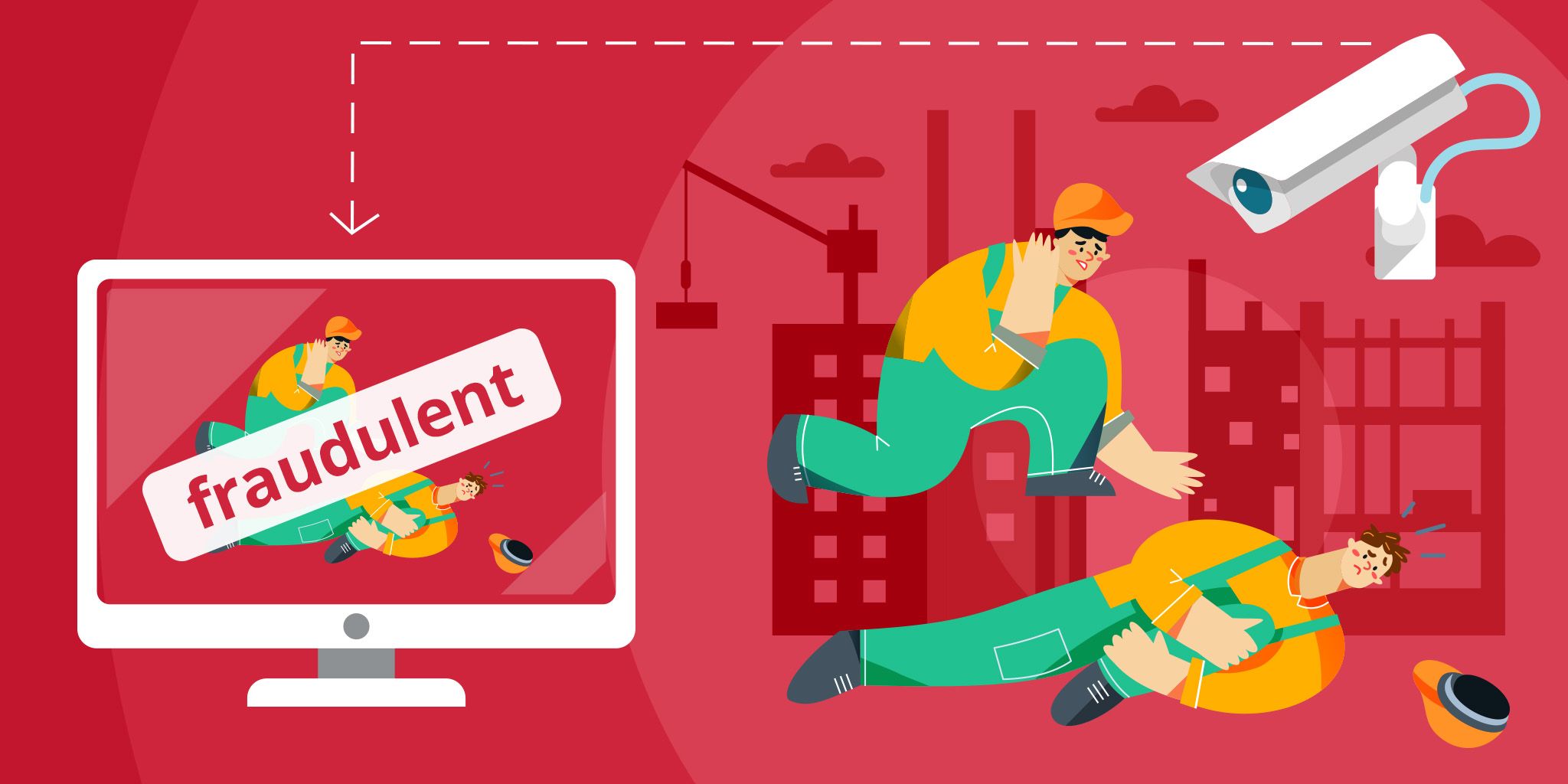
Workers' Compensation Fraud Prevention
Quickly verify claims, reduce investigation time, and protect your bottom line with AI-powered video surveillance and analytics.
Quickly verify claims, reduce investigation time, and protect your bottom line with AI-powered video surveillance and analytics.
Iveda
Iveda

Related Solutions
Buildings & Facilities
Smart Community Management for HOAs
AI-powered community monitoring with real-time visibility into entrances, parking, and shared spaces.
Iveda
Construction
Construction Site Safety Monitoring
AI-powered wearables for real-time PPE compliance monitoring, hazard detection, and incident documentation.
Iveda
Construction
Workers' Compensation Fraud Prevention
Quickly verify claims, reduce investigation time, and protect your bottom line with AI-powered video surveillance and analytics.
Iveda