How Wearable Manufacturers Are Solving Battery Life vs Sensor Density Trade-offs
How Wearable Manufacturers Are Solving Battery Life vs Sensor Density Trade-offs

- Last Updated: August 11, 2026
Shradha Puri
- Last Updated: August 11, 2026
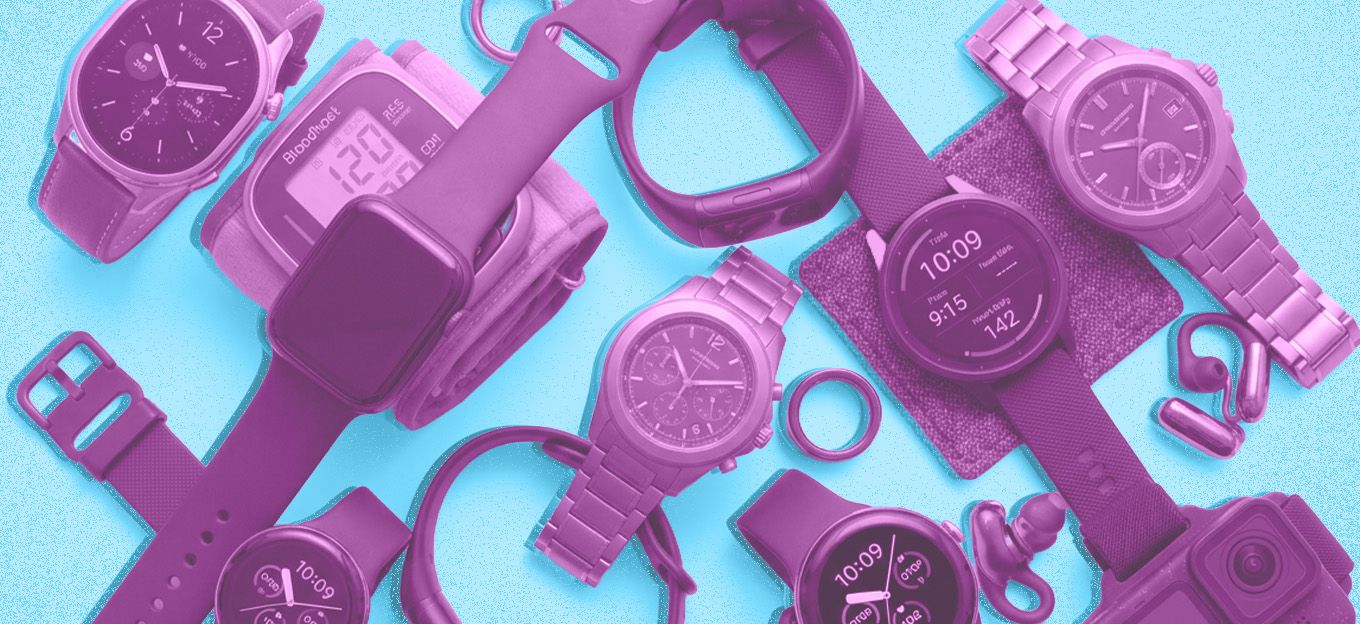
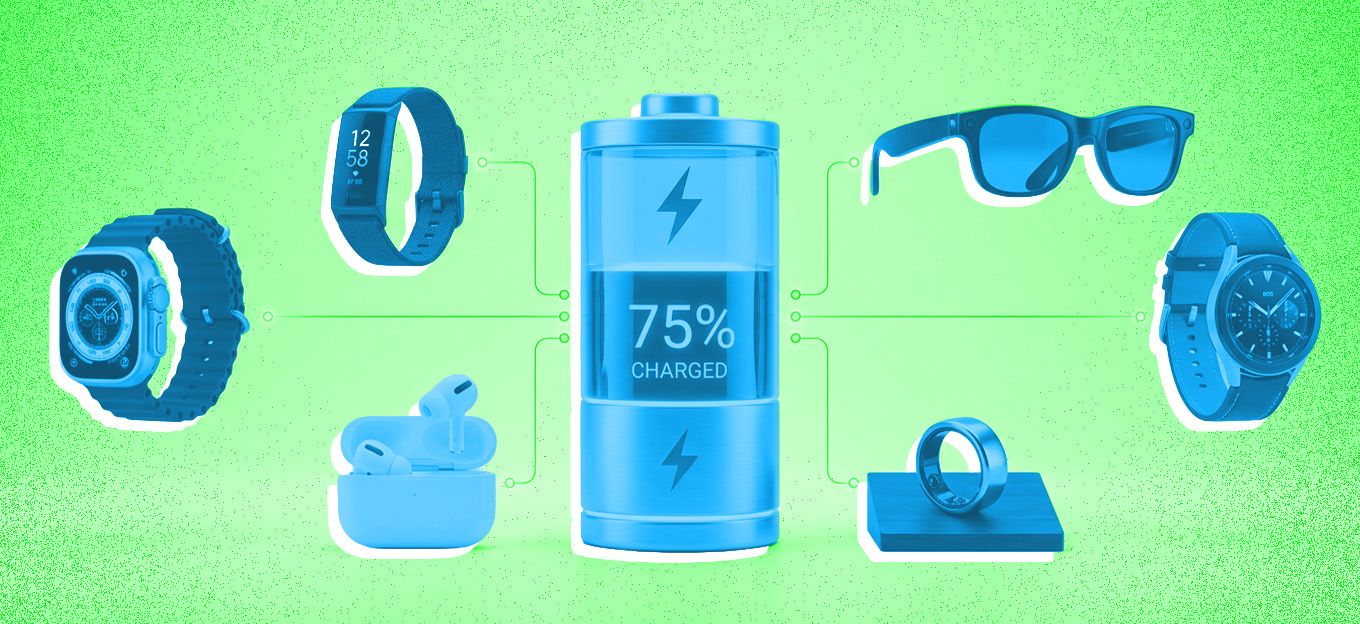
Not long ago, wearable devices had a fairly simple job: Count your steps, estimate your calories burned, and do a bit of health tracking. Today, that same category of devices can measure blood oxygen (SpO2), skin temperature, heart rate variability (HRV), sleep stages, stress levels, GPS location, and even record your ECG, all from your wrist or finger.
Packing more sensors into increasingly smaller devices raises an obvious question: how do manufacturers keep adding new health-tracking features without sacrificing battery life?
The answer isn't simply using bigger batteries. To be publicly acceptable, widely used and enticing enough to buy, wearables must remain lightweight, compact and comfortable enough to wear all day, leaving little room for larger power cells.
Instead, manufacturers have focused on making every part of the device, from sensors and processors to wireless communication, far more energy efficient. Advances in embedded systems, edge AI and even low-power computing now allow modern wearables to deliver richer health insights while making smarter use of every milliwatt of available power.
Research on TinyML and edge intelligence also suggests that processing data directly on the device can significantly reduce energy consumption by limiting unnecessary wireless communication and cloud processing.
Why More Sensors Usually Mean Less Battery
To understand how engineers bypass this problem, we have to look at the fundamental energy trade-offs that are built into physical sensing. Every single sensor added to a wearable's circuit board represents a power-draining problem.
These sensors drain energy in uniquely demanding ways:
- Optical Sensors: Photoplethysmography (PPG) sensors use bright LEDs to flush light through your skin to read pulse and SpO2, requiring constant current draw.
- Environmental & Motion Sensors: Temperature sensors and Micro-Electromechanical Systems (MEMS) accelerometers require continuous sampling to capture shifts in biological state or movement.
- Radios & Processors: GPS chips must constantly communicate with overhead satellites, while Bluetooth radios drain significant power pushing data packets back and forth to a smartphone.
Simply installing a larger physical lithium-ion battery is out of the question. Because consumer electronics must remain lightweight, thin, and comfortable for round-the-clock wear, engineers are forced to operate within strict physical limits.
Smarter Sensor Scheduling Instead of Continuous Monitoring
One of the most consequential advancements in embedded systems design is the shift away from uniform, continuous data gathering. Legacy trackers functioned on rigid, time-based intervals, activating sensors regardless of what the user was doing. Modern architecture relies heavily on event-driven sensing, adaptive sampling, and aggressive duty cycling.
Rather than running an active heart rate monitor every second of the day, an optimized operating system adjusts its behavior dynamically. It might sample every minute while you are sitting at a desk, but automatically scale up to continuous tracking the moment you begin a workout.
This scheduling is highly dependent on a hierarchical trigger system. The primary gatekeeper is typically a highly efficient MEMS accelerometer. The accelerometer remains active at all times because its power draw is negligible. Only when the accelerometer detects sustained, specific kinetic patterns does the firmware wake up more power-hungry systems like SpO2 sensors, GPS chips, or ECG nodes.
A study published by the National Science Foundation (NSF) on adaptive sampling frameworks demonstrated that dynamically modifying data collection rates based on signal relevance can reduce data volume by up to 69% and lower core subsystem power consumption by over 57%. By ensuring that high-power components stay asleep until explicitly needed, idle power consumption drops significantly.
Edge AI Minimizes Processing and Communication Overhead
In traditional IoT setups, edge devices acted as basic collection nodes, offloading raw data to a smartphone or a cloud server for heavy computation. However, wireless communication is incredibly expensive from a power perspective.
To bypass this bottleneck, engineers deploy Edge AI and TinyML (Tiny Machine Learning) directly onto the wearable's microcontrollers. Instead of recording and storing thousands of raw motion data points every minute to determine what an individual is doing, a localized, highly quantized machine learning model processes the data locally on the chip.
The embedded neural network analyzes the kinetic waveforms in real time and simply outputs a single categorical result: walking, running, cycling or sleeping. Research highlighted by MDPI regarding TinyML implementations in wearable systems shows that running efficient, quantized classification models locally allows devices to achieve over 88% deployment accuracy for complex movement tracking while minimizing raw data transmission. This provides multiple systemic advantages:
- Lower CPU Overhead: The processor handles tiny, optimized inferences rather than managing massive data streams.
- Reduced Radio Strain: The Bluetooth antenna only needs to transmit the compressed state changes rather than megabytes of raw sensor data.
- Data Privacy: Because the data is analyzed and summarized locally on the device, sensitive raw biometric information never has to leave the device.
Sensor Fusion Means Doing More with Less
Sensor fusion is the algorithmic practice of combining inputs from multiple, low-power sensors to extrapolate a complex data point that would otherwise require a single, highly inefficient sensor.
Instead of turning on an energy-hogging GPS radio to figure out if someone is covering distance indoors or tracking a run, a wearable can fuse data from a low-power accelerometer, a gyroscope, and basic heart-rate trends to accurately map out activity levels, step cadence, calorie burn, and fall detection.
Research in the field of Energy-Aware Sensor Fusion Architecture highlights how applying duty-cycling and on-demand scheduling via dynamic sensor fusion frameworks can cut energy consumption by roughly 35% with almost zero compromise to measurement accuracy. For instance, a wearable's motion sensor can confidently register the distinct, steady signature of deep sleep before the optical sensors ever spin up to run an intensive SpO2 blood oxygen scan. By using low-power sensors as gatekeepers for high-power ones, accuracy goes up while system drain goes down.
Low-Power Co-Processors Keep the Main CPU Asleep
Historically, a single central processing unit (CPU) handled every task within a wearable, from drawing the user interface to managing wireless connections and counting steps. Keeping a primary processor awake just to count steps is highly inefficient.
Modern wearable architectures solve this issue by splitting workloads across a multi-sensor architecture. This design typically pairs a primary, high-performance, low-power MCU with dedicated sensor hubs and always-on co-processors.
While the wearable is idle or the screen is turned off, the main CPU enters a deep sleep state, drawing minimal power. Meanwhile, a tiny, specialized sensor hub remains awake.
Operating on a microamp power budget, this microchip handles basic background tasks like step counting, gesture detection (such as lifting your wrist to wake the screen) and monitoring sensor thresholds. The main processor is only woken up when complex tasks are required, such as rendering graphics on the display or handling an incoming phone call. This architecture is now standard practice across modern smartwatches, fitness rings and wireless earbuds.
Optimizing Wireless Communication for Better Battery Life
It is easy to forget that data communication often costs more energy than processing or storing data locally. Broadcasting data over a wireless channel requires driving a radio transmitter, which places a heavy tax on a wearable's tiny battery.
To manage this, engineers rely heavily on Bluetooth Low Energy (BLE) protocols alongside smart firmware data-handling techniques:
- Data Batching: Instead of opening a wireless connection to transfer data packets every second, wearables compress and save data to local flash memory over long stretches.
- Interval Synchronization: The radio chip stays asleep for fixed windows, waking up briefly every few minutes to dump the accumulated, compressed data packets to the connected smartphone in a short, high-speed burst.
- Optimized Payloads: Custom compression algorithms strip away unnecessary structural data from packets, ensuring that the radio spends as little time active as possible.
Modern Sensors Are Becoming More Energy Efficient
While system-level architecture has improved dramatically, component-level hardware efficiency has advanced alongside it. Semiconductor manufacturers continue to refine the physical design of MEMS and optical components to reduce their power needs at the silicon level.
Modern photodiodes are built with significantly higher light sensitivity, allowing them to capture accurate heart rate metrics using lower-intensity flashes from the companion LEDs. At the same time, silicon designers have successfully integrated multiple separate sensors onto a single, highly efficient package.
It is now common to find a single chip that houses a 3-axis accelerometer, a 3-axis gyroscope and an embedded digital signal processor (DSP). This tight integration reduces the physical board space required inside the chassis, simplifies the overall PCB layout and eliminates the power losses that normally occur when routing signals across long copper traces on a circuit board.
As wearable technology continues to evolve, the biggest innovation won't necessarily be adding more sensors; it will be designing them to work more efficiently. By combining embedded AI systems and power-aware system design, manufacturers are proving that richer health insights and longer battery life can go hand in hand. All that’s left to see is what limit this can be pushed to and how many more features and sensors we can expect from our wearables while also striving for a longer battery life.

The Most Comprehensive IoT Newsletter for Enterprises
Showcasing the highest-quality content, resources, news, and insights from the world of the Internet of Things. Subscribe to remain informed and up-to-date.

New Podcast Episode

Building Real-Time Voice AI Experiences

Related Articles