Why Edge AI Changes IoT Architecture
Why Edge AI Changes IoT Architecture

- Last Updated: September 30, 2026
Reetain Raina
- Last Updated: September 30, 2026
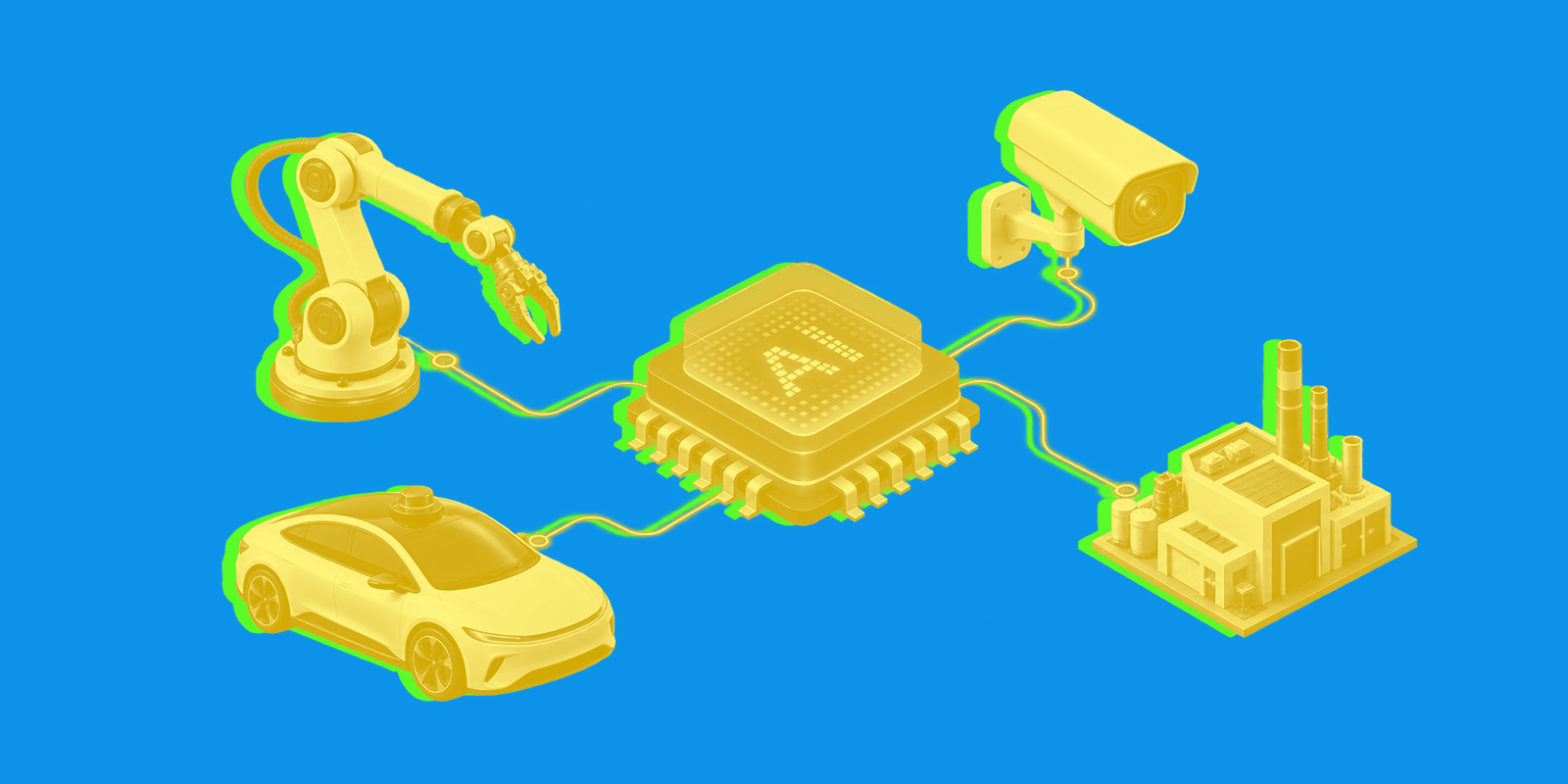
A smartwatch can collect a surprising amount of information without its user doing anything. It can measure movement, heart rate, sleep patterns, skin temperature, and other signals throughout the day. A fitness tracker can do something similar while sitting quietly on a wrist.
But collecting all that information is only one part of the job. The more interesting question is what happens after the data is collected. For a long time, connected wearables have depended heavily on smartphones and cloud servers to process and interpret data. The wearable collects information, sends it somewhere else, and waits for the result to come back.
Edge AI changes that arrangement. Instead of treating the wearable as a sensor that simply sends data elsewhere, Edge AI allows some analysis to happen directly on the device. That sounds like a small technical change, but it affects how data moves, how quickly a wearable can respond, how much information it needs to transmit, and how its limited battery and computing resources are used.
In other words, Edge AI changes where intelligence sits inside a wearable IoT system.
What Edge AI Actually Changes in Wearables
To understand this architectural evolution, it helps to distinguish traditional wearable pipelines from Edge AI frameworks:
- Traditional Wearable IoT: Sensors → Mobile Gateway → Remote Cloud Server → Batch Analytics → User Notification. In this model, the remote infrastructure handles almost all heavy computation, digital signal processing, and pattern recognition.
- Edge AI Wearables: Sensors → Embedded Microcontroller / Neural Accelerator → On-Device Inference → Immediate Action. Here, the wearable interprets raw signals locally in real time.
It is equally important to clarify the distinction between general edge computing and Edge AI. Edge computing refers broadly to running generic workloads, such as data parsing, basic threshold checks, or filtering, closer to where data originates. Edge AI specifically involves deploying machine learning models, deep neural networks, and inference engines directly at or near the physical hardware.
As detailed in research on foundational principles by the NIST Edge AI Program, edge intelligence spans multiple tiers. These range from resource-constrained nodes executing pre-trained static neural networks to advanced architectures where distributed edge devices selectively participate in federated learning tasks using local data partitions.
Why Traditional Architectures Relied on the Cloud
Cloud-centric architectures became the standard for consumer wearables for straightforward practical reasons. Centralized cloud platforms provide virtually elastic compute capacity, massive storage repositories, unified fleet management, and the high parallel performance necessary to train complex deep learning models across millions of user records.
However, modern consumer wearables have introduced a data distribution challenge. Wearables generate high-frequency biometric streams continuously:
- Multi-wavelength PPG sensors capturing pulse wave contours at 25 Hz to 100 Hz
- Continuous electrocardiogram (ECG) and electromyography (EMG) monitoring at up to 500 Hz
- Inertial measurement units (IMUs) logging 3-axis acceleration and rotational velocity around the clock
- Continuous glucose monitors (CGMs) and sweat analysis arrays sampling biochemical indicators
Streaming every raw voltage reading and continuous waveform from millions of active users back to central servers creates severe architectural bottlenecks. It strains mobile radio bandwidth, drains battery reserves, introduces dependency on constant network coverage, and expands attack surfaces for sensitive health metrics.
Surveys on decentralized topologies in the ACM Computing Surveys on Edge-Driven IoT point directly to network latency, radio power drain, and backend compute bottlenecks as the primary technical factors driving intelligence directly toward data sources. The cloud is not disappearing from wearable ecosystems; rather, it no longer needs to serve as the default compute engine for every single physiological classification.
Edge AI Adds a Local Decision Layer
By introducing on-device neural execution, Edge AI inserts a dedicated interpretation layer directly into the local wearable runtime. Instead of relying on a single processing point, system workloads are split across distinct functional tiers:
1. Sensor Node (On-Body)
- Primary Responsibilities: High-frequency physical signal acquisition and analog-to-digital conversion.
- Example Workload: Raw optical voltage capture from PPG sensors and continuous IMU polling.
2. Edge Hardware (Wearable MCU / NPU)
- Primary Responsibilities: Real-time signal cleaning, digital feature extraction, and low-latency on-device inference.
- Example Workload: Instant cardiac arrhythmia detection, sleep stage classification, and gait abnormality analysis.
3. Edge Gateway (Smartphone)
- Primary Responsibilities: Local cross-device data aggregation, protocol conversion, and short-term secure storage.
- Example Workload: Correlating continuous glucose monitor readings with smartwatch activity and dietary inputs.
4. Central Cloud Platform
- Primary Responsibilities: Large-scale longitudinal health analytics, fleet-wide telemetry monitoring, and compute-heavy model retraining.
- Example Workload: Training generalized cardiovascular risk prediction models using anonymized multi-cohort data sets.
5. Client Application Layer
- Primary Responsibilities: Long-term biometric visualization, health record generation, and user-facing dashboards.
- Example Workload: Displaying 90-day recovery trends, baseline sleep shifts, and clinical export summaries.
This layered model divides tasks dynamically based on operational urgency and computational cost. As established in the foundational review on IEEE Edge Intelligence: Paving the Last Mile of AI, pushing intelligence toward terminal nodes resolves the sheer volume constraints of modern sensor ecosystems. Wearables transition from passive data loggers into active participants within a distributed intelligence network.
Restructuring Data Flow: Moving Past Continuous Streaming
In a conventional setup, a wearable tracking biometric data often attempts continuous transmission of raw sensor streams over low-power Bluetooth to a connected phone or base station. This design creates an inefficient data pipeline where empty, normal readings consume equal transmission energy to critical anomalous events.
With an Edge AI design, the wearable evaluates incoming waveforms directly within its internal memory registers. Instead of forwarding hours of baseline sinus rhythm recordings, the internal model evaluates heartbeats locally.
When a distinct anomaly occurs, such as a series of premature ventricular contractions, the device flags the event immediately, alerts the user, and selectively packages the relevant 30-second context window as structured metadata for cloud synchronization. This restructuring transforms wearable networks from bandwidth-heavy streaming pipes into efficient, event-driven pipelines.
Latency as an Architectural Decision
System latency in wearable technology is often treated strictly as a telecommunications problem to be solved with faster radio protocols. However, in mission-critical biometric monitoring, physical transport delays represent only one part of the round-trip latency budget:
T_total = T_sample + T_radio-tx + T_network-routing + T_cloud-queue + T_inference + T_return-tx
For applications like automated fall detection in elderly care wearables or tremor suppression in Parkinson’s management devices, relying on remote infrastructure introduces unpredictable network jitter, connection drops, and server queueing delays.
Deploying Edge AI directly onto the device microcontroller collapses this sequence into a tightly bounded, localized computation loop:
T_local = T_sample + T_on-chip-inference + T_actuation
Local inference allows time-critical biological classifications to execute in single-digit milliseconds. The design choice is clear: latency transitions from an uncontrollable external network dependency into a deterministic hardware design parameter.
The Wearable Device as a Dedicated Compute Node
Transferring intelligence to the body alters the physical requirements of wearable hardware. Traditional fitness trackers were built strictly around basic sensing, local buffering and low-energy transmission chips. Integrating AI changes the wearable into an active compute node, forcing system architects to balance strict hardware budgets:
- Microcontroller and NPU Capability: Integrating low-power micro-NPUs capable of accelerating matrix arithmetic without spiking power rails.
- SRAM and Flash Budgets: Fitting active neural weights within internal SRAM registers (often under 512 KB to 2 MB) to avoid the high energy penalty of external memory access.
- Thermal Dissipation: Ensuring continuous inference loops do not generate skin-contact heat.
- Battery Conservation: Operating within tiny lithium polymer cells (typically 150 mAh to 400 mAh) that must sustain multi-day runtimes.
These exact trade-offs are central to the domain of TinyML. As analyzed in the comprehensive survey on Edge Intelligence and TinyML for Resource-Constrained Hardware, deploying deep learning onto sub-milliwatt devices requires balancing compute, memory footprints, and energy constraints. Moving computation to the edge does not eliminate processing overhead; it redistributes that compute load across physical constraints.
Fitting AI Models to Extreme Physical Constraints
Because multi-gigabyte foundation models and deep transformers cannot execute within the flash memory of a wearable wristband, model architecture and hardware design must be engineered together.
Engineers apply several core model-compression techniques to achieve this:
- Post-Training Quantization: Reducing model weights and activation states from 32-bit floating-point numbers down to 8-bit or 4-bit integers (INT8/ INT4), reducing memory footprints by up to 75 percent with minimal accuracy loss.
- Structural Pruning: Identifying and severing non-critical synaptic connections and convolutional filters in the network graph, reducing execution cycles.
- Knowledge Distillation: Training a compact, shallow "student" neural network to reproduce the functional output of an unconstrained, high-parameter "teacher" model running in a server cluster.
- Custom Core Acceleration: Pairing optimized neural runtimes (such as TensorFlow Lite for Microcontrollers or microTVM) with embedded vector extensions and dedicated low-power arithmetic logic units.
Model design and hardware architecture become interdependent: the neural network must be shaped specifically around the target silicon's memory hierarchy and register widths.
The Cloud’s New Role in the Continuum
Shifting inference onto consumer wearables does not render the cloud obsolete. Instead, it creates a complementary edge-to-cloud continuum where each tier handles what it does best:
The wearable edge handles high-frequency sensory sampling, noise removal, instant classification and mission-critical local alerts. Meanwhile, the centralized cloud aggregates compressed event summaries, identifies multi-month physiological trends across millions of users, and trains next-generation neural models to be deployed back to the devices via firmware updates over the air.
Privacy and Local Data Governance
Consumer wearables capture some of the most intimate data sets in modern computing: continuous cardiac rhythms, sleep architectures, exact physical movements and ambient biometrics. In a legacy cloud-centric architecture, protecting this data requires securing continuous in-flight transmissions and massive centralized data stores against interception or exfiltration.
Processing data directly on the wearable establishes a strong local privacy boundary. Because raw bio-signals are evaluated in volatile device memory and discarded once classified, sensitive high-frequency waveforms never need to leave the user's wrist. The system transmits only derived, high-level states (such as sleep cycle changes or daily step counts).
However, on-device intelligence introduces distinct physical attack surfaces. As documented in technical guidelines from the NIST Trustworthy Edge Computing Program, decentralized endpoints face potential vulnerabilities including physical side-channel analysis, firmware extraction, and unencrypted local flash reads. Local execution improves data transmission privacy, but it requires secure enclaves and robust on-chip key management to prevent physical hardware exploitation.
Offline Reliability and Continuous Biometrics
Cloud-dependent wearables suffer a severe failure point: when a user enters an area without cellular connectivity, boards an aircraft or travels into remote regions, their device's high-level intelligence degrades or halts completely.
Edge AI establishes functional autonomy on the body. A wearable equipped with on-device fall detection or arrhythmia classification does not require an active Wi-Fi link or cellular handshake to perform its primary safety function.
The device continues to monitor, calculate, and alert the wearer locally, caching event logs to synchronize with cloud servers once connectivity resumes. System reliability becomes a property of the local hardware rather than a factor of continuous network uptime.
Operational Complexity at the Edge
While Edge AI solves latency and bandwidth bottlenecks, it significantly increases fleet management complexity. Managing a single centralized AI model in a secure cloud data center is straightforward; deploying and maintaining thousands of compressed models across millions of physically distributed, battery-constrained devices introduces substantial operational overhead.
Engineering teams must build robust edge orchestration frameworks to handle:
- Heterogeneous Hardware Targets: Managing different processor revisions, sensor batches, and memory configurations across product generations.
- Firmware and Model Synchronization: Orchestrating delta over-the-air (OTA) updates to push updated model weights without interrupting active biometric tracking or draining battery life.
- On-Device Model Drift Detection: Monitoring whether real-world sensor degradation, seasonal variations, or diverse skin tones degrade inference accuracy over time without access to raw centralized logs.
The Broader Paradigm Shift in Wearable Intelligence
The real change Edge AI brings to consumer wearables is not simply putting AI inside a smartwatch or smart ring. It changes what the wearable does with the data it collects.
Instead of constantly sending information somewhere else to be understood, the device can increasingly make sense of some of that data right where it is collected. Researchers have already explored this approach in consumer wearables, including a Nature Communications study on on-device wearable gait analysis and a TinyML-based wearable stress classification study.
The cloud still has an important role, especially for storage, larger-scale analysis, and model training. But the wearable no longer has to be just the starting point of the data journey.
It can also be part of the decision-making process. And that may be the biggest shift of all: wearables are slowly moving from devices that simply measure us to devices that can understand more of what they measure.

The Most Comprehensive IoT Newsletter for Enterprises
Showcasing the highest-quality content, resources, news, and insights from the world of the Internet of Things. Subscribe to remain informed and up-to-date.

New Podcast Episode

Building Real-Time Voice AI Experiences

Related Articles