


Healthcare’s Biggest Untapped Intelligence Source Is Still the Phone
Healthcare’s Biggest Untapped Intelligence Source Is Still the Phone

- Last Updated: June 16, 2026
Omilia
- Last Updated: June 16, 2026

Healthcare organizations are pouring investment into digital front doors— portals, apps, remote monitoring, and automation. Meanwhile, the phone—the most common tool patients use to schedule appointments—is treated as legacy overhead. That’s a mistake. Think about the 11:00 p.m. question about a medication interaction or the anxious parent trying to reach a nurse triage line. But in most healthcare systems, everything said in those conversations disappears the moment the call ends.
Every patient call contains valuable signals: intent, urgency, emotional cues, context regarding health needs, and friction points across the care experience. But with staff constrained by sheer inbound call demand, there is no bandwidth to analyze what patients are actually saying. The insight is always there, but there hasn’t been infrastructure to capture it.
That is changing. Voice AI makes it possible to treat the phone not as a cost to be managed, but as the richest patient data source healthcare organizations already have.
Every Call Is a Data Point. Organizations Not Collecting It Aren’t Learning From It.
Until recently, there was no practical way to learn from the millions of unstructured patient conversations at scale. Manual call review covers a fraction of interactions, and what it surfaces is anecdote, not pattern. Voice AI changes that.
Modern conversational intelligence can automatically interpret patient intent on every call. It surfaces trends, identifies where patients are getting stuck, and flags spikes in call volume before they become a staffing crisis. The insight was always there, but the platform to extract it wasn’t.
When AI operates natively inside the phone channel, rather than bolted on as a post-call analytics tool, the picture shifts dramatically. Providers gain a continuous, real-time view of what patients are asking for, how those needs vary across populations, and where the friction lies. This translates directly into better resource allocation, more accurate demand forecasting, and earlier identification of care pathway failures. While it can help with reporting, it is best understood as an operational intelligence layer that is improving the care experience.
AI Can Automate Repetitive Calls, So Clinicians Can Focus Efforts Where It Matters Most.
The fear that automation displaces clinical staff misunderstands AI’s role in healthcare contact centers. The calls consuming the most staff time, for example, appointment scheduling, prescription status, insurance verification, and routine follow-ups, are not the calls that require clinical judgment. Rather, they are the calls that prevent clinical judgment from happening. When AI handles repetitive inquiries and requests, clinicians can get back to the work that requires their expertise.
There is a secondary benefit that leadership teams are starting to recognize: the same AI handling routine calls is also generating a continuous stream of demand data. This includes what patients are asking for, when call volume spikes, and which call types are increasing. For workforce planners working with persistent understaffing, that is not a marginal improvement but a fundamentally different way to manage capacity.
HIPAA Compliance Isn’t a Feature. It’s the Baseline.
Healthcare leaders evaluating Voice AI are right to ask hard questions about compliance. Every automated interaction involving Protected Health Information (PHI) must be auditable. Compliance teams need to see exactly what the system said, what information it referenced, and why it made the decisions it did.
In a HIPAA-regulated environment, AI that lacks audit trails or cannot explain its decision-making is unacceptable. The architecture matters. Authentication, data governance, and full auditability of AI decisions must be built in from the ground up, not retrofitted.
There is also a fraud dimension that healthcare organizations are underestimating. Contact center fraud has risen sharply across regulated industries, and healthcare is not immune. AI-generated synthetic voices are increasingly being used to bypass authentication systems. Passive voice biometrics (which authenticates callers in the first few seconds of natural speech, without PINs or knowledge-based questions) and other multi-layered anti-fraud solutions, such as liveness detection, behavior analysis, and known fraudster identification, address this directly, improving security while reducing friction for legitimate patients.
More importantly, this upholds the foundation of patient trust. Systems that serve as the first point of contact must reinforce confidence from the beginning of every interaction. Convenience should never interfere with protection.
Connected AI Learns While Isolated AI Stagnates.
Voice AI deployed in isolation is a missed opportunity. Most healthcare organizations are still running fragmented systems in which a phone interaction has no connection to what’s in the patient’s record. The result is patients repeating information they’ve already shared, staff working without context, and the self-learning loop that makes AI improve over time never closing properly.
When Voice AI connects directly with EHR systems like Epic, Oracle Health, or eClinicalWorks, the interaction changes fundamentally. The system already knows who is calling, what appointments they have, and what medications they are on. Patients are not repeating themselves or working through clunky IVR menus. Staff are not starting from zero because they have support from an AI system that learns from a richer dataset with every interaction, so they can respond with the right information right away. That kind of connection improves the experience for everyone and closes the loop that most healthcare AI deployments never reach.
The Phone Never Stopped being the front door
The shift underway is not really about AI - it’s about what healthcare organizations choose to do with the data they are already sitting on. Every day that passes without a Voice AI strategy is another day of patient intelligence lost from a critical communication channel, where intent goes unread, friction unaddressed, and demand unforecasted. The phone has always been the most direct line to what patients actually need; it’s time healthcare organizations invest in the infrastructure to support it.
Healthcare organizations need to seriously reinforce the channels patients already use and trust. Voice AI does not just answer calls more efficiently; it learns from them, improves from them, and turns the contact center from a cost line into the most valuable intelligence asset in the organization. The organizations that learn to listen to patient conversations at scale will lead the next era of patient experience, access, and care delivery.

The Most Comprehensive IoT Newsletter for Enterprises
Showcasing the highest-quality content, resources, news, and insights from the world of the Internet of Things. Subscribe to remain informed and up-to-date.

New Podcast Episode

Building Real-Time Voice AI Experiences

Related Articles


Related Solutions

Infant Security for Hospitals
Enable immediate alerts, automated security responses, and mother-baby matching to reduce abduction risk.
Enable immediate alerts, automated security responses, and mother-baby matching to reduce abduction risk.
Vizzia Technologies
Vizzia Technologies
Overnight Health Monitoring
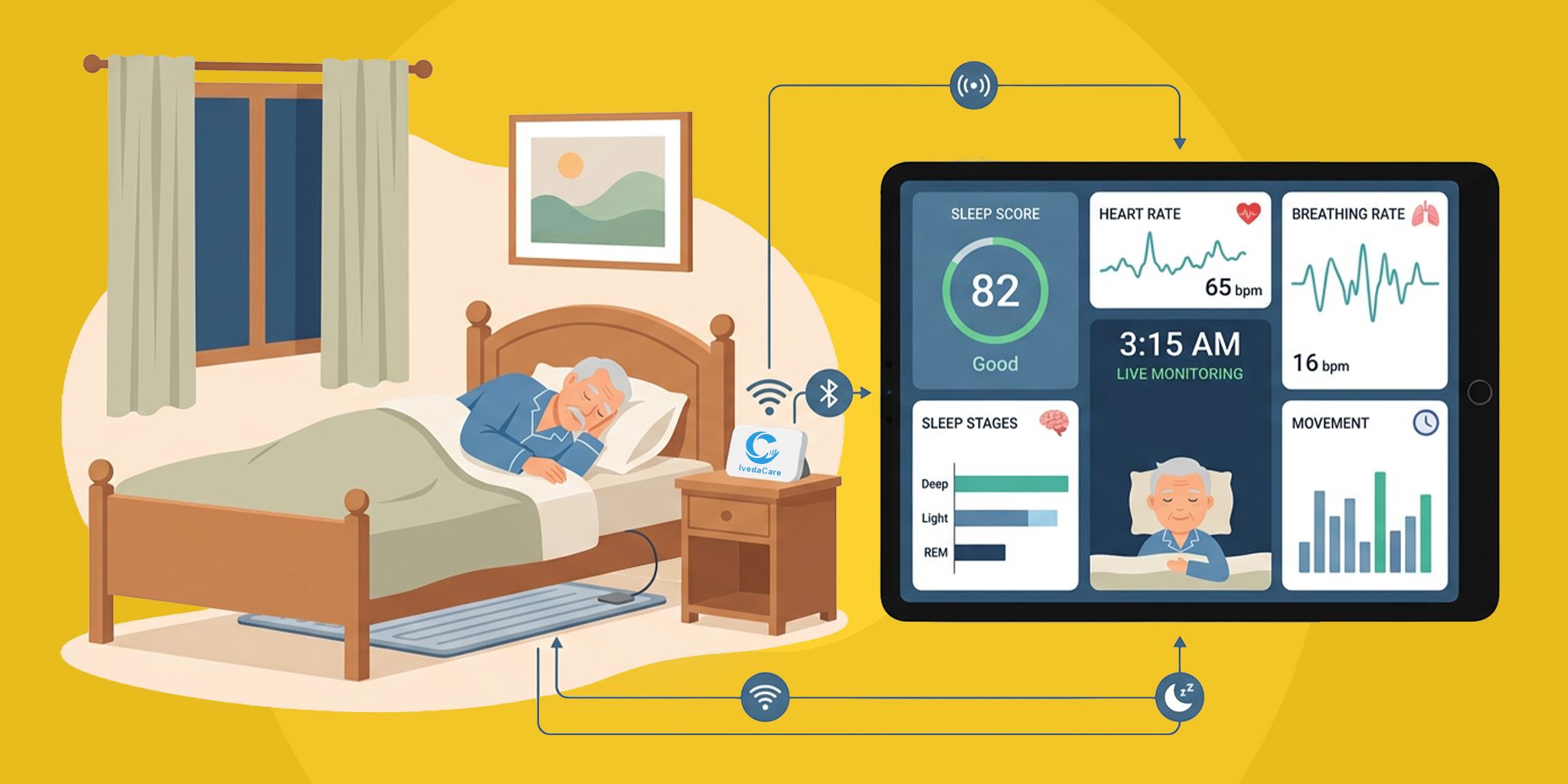
Health insights without cameras or wearables, enabling caregivers to detect issues early and improve resident well-being.
Health insights without cameras or wearables, enabling caregivers to detect issues early and improve resident well-being.
Iveda
Iveda
Hand Hygiene Compliance Monitoring
Detect hand hygiene events and ensure compliance to reduce infections and promote a culture of patient safety.
Detect hand hygiene events and ensure compliance to reduce infections and promote a culture of patient safety.
CenTrak
CenTrak

Related Solutions
Healthcare
Infant Security for Hospitals
Enable immediate alerts, automated security responses, and mother-baby matching to reduce abduction risk.
Vizzia Technologies
Healthcare
Overnight Health Monitoring
Health insights without cameras or wearables, enabling caregivers to detect issues early and improve resident well-being.
Iveda
Healthcare
Hand Hygiene Compliance Monitoring
Detect hand hygiene events and ensure compliance to reduce infections and promote a culture of patient safety.
CenTrak