



How Multispectral Drones Enable Smarter IoT Data Systems
How Multispectral Drones Enable Smarter IoT Data Systems

- Last Updated: March 25, 2026
Dania Akram
- Last Updated: March 25, 2026

The Internet of Things (IoT) has transformed how organizations monitor environments, infrastructure, and assets. Connected sensors continuously collect data from machines, buildings, and outdoor environments, enabling real-time insights and automated decision-making. However, traditional IoT deployments often rely on fixed, ground-based sensors. While effective, these stationary devices can only monitor specific locations and may leave critical coverage gaps across large or complex environments.
To address this limitation, organizations are increasingly incorporating mobile sensing technologies into their IoT ecosystems. Multispectral drones represent one of the most powerful advancements in this area. By combining aerial mobility with advanced sensing capabilities, multispectral drones extend IoT networks into previously inaccessible areas. They function as intelligent, connected sensing platforms that collect high-resolution environmental and structural data and integrate it into broader IoT systems. This integration allows organizations to enhance monitoring accuracy, improve operational visibility, and make more informed decisions based on comprehensive, real-time data.
Understanding Multispectral Drones in an IoT Ecosystem
A multispectral drone is an unmanned aerial system equipped with sensors that capture data across multiple wavelengths of light, including visible and non-visible spectra such as near-infrared. These sensors detect variations in materials, vegetation, and surfaces that may not be visible to standard cameras. In an IoT context, multispectral drones serve as mobile edge-sensing devices. Unlike fixed IoT sensors that monitor a single location, drones can dynamically collect data across large geographic areas and transmit that information to connected platforms. This makes them a natural extension of IoT infrastructure, supporting the same fundamental components:
- Sensors: Multispectral cameras capture environmental and structural data
- Connectivity: Wireless communication enables data transmission
- Data Processing: Cloud and edge systems analyze incoming information
- Applications: Dashboards and analytics tools generate insights
By integrating seamlessly into this architecture, multispectral drones enhance the scalability and flexibility of IoT deployments.
How Multispectral Drones Fit into the IoT Data Pipeline
Multispectral drones contribute to IoT ecosystems through a structured data pipeline that aligns with standard IoT architecture.
Edge Layer: Data Acquisition
The drone’s multispectral sensors collect data across multiple wavelengths. This allows the system to detect patterns such as vegetation stress, heat absorption differences, material degradation, or environmental changes. As edge devices, drones collect data directly from the source, improving accuracy and reducing reliance on indirect measurements.
Connectivity Layer: Secure Data Transmission
After collecting data, drones transmit it to centralized systems using wireless communication technologies such as:
- Cellular networks (4G/5G)
- Wi-Fi connections
- Dedicated industrial communication systems
Reliable connectivity ensures that data can be transferred quickly and integrated into broader IoT platforms.
Cloud and Edge Processing Layer
Once transmitted, data is stored and processed in cloud or edge computing environments. These platforms organize and analyze the information alongside data from other IoT sensors.
Combining aerial data with ground-based sensor data provides a more complete view of monitored environments.
Application Layer: Insights and Decision Support
Processed data is presented through IoT dashboards, visualization platforms, and analytics tools. This allows operators, engineers, and decision-makers to interpret conditions, identify patterns, and take appropriate action. This layered integration transforms raw aerial data into actionable IoT intelligence.
Enhancing IoT Coverage and Visibility
One of the primary advantages of multispectral drones in IoT ecosystems is their ability to expand sensing coverage. Fixed IoT sensors are effective for continuous monitoring in specific locations, but deploying them across large areas can be expensive and impractical. Drones provide flexible, on-demand sensing coverage without requiring permanent installation. This mobility allows IoT systems to monitor:
- Large agricultural fields
- Remote infrastructure
- Industrial facilities
- Environmental zones
- Hard-to-access terrain
By filling gaps in fixed sensor coverage, drones enhance overall system visibility and reliability.
Key IoT Applications of Multispectral Drones
Multispectral drones support a wide range of IoT applications across industries. Their ability to integrate with connected platforms makes them valuable tools for improving monitoring and operational efficiency.
Smart Agriculture
Agriculture is one of the most significant beneficiaries of IoT-enabled multispectral sensing. IoT systems monitor soil conditions, weather, and irrigation systems, while multispectral drones provide detailed aerial insights into crop health. This integrated approach allows farmers and agricultural operators to:
- Identify crop stress early
- Monitor field conditions more accurately
- Optimize resource usage
- Improve overall productivity
By combining aerial and ground-based IoT data, IoT-enabled agricultural production can make more precise, data-driven decisions.
Environmental Monitoring
Environmental IoT systems rely on accurate data to monitor ecosystems, vegetation, and climate conditions. Multispectral drones enhance these systems by providing large-scale, high-resolution environmental data.
They can help monitor:
- Vegetation health
- Land condition changes
- Ecosystem stability
- Environmental impact over time
This improves the effectiveness of environmental monitoring programs and supports long-term sustainability efforts.
Infrastructure and Asset Monitoring
IoT systems are widely used to monitor infrastructure such as power lines, pipelines, transportation networks, and industrial facilities.
Multispectral drones enhance infrastructure monitoring by detecting early signs of potential issues, including:
- Surface degradation
- Structural irregularities
- Environmental impacts on assets
Integrating aerial sensing data into IoT platforms allows organizations to identify potential problems earlier and improve maintenance planning.
Industrial and Operational Monitoring
Industrial IoT deployments depend on reliable, accurate data to maintain safe and efficient operations. Multispectral drones provide additional visibility into large or complex industrial environments.
This supports:
- Remote facility monitoring
- Asset condition assessment
- Improved operational awareness
The integration of aerial data strengthens the overall effectiveness of industrial IoT systems.
Role of Analytics and Intelligent Processing
IoT systems generate large volumes of data, and multispectral drones contribute valuable new data sources. Advanced analytics tools process this data to identify patterns, trends, and anomalies. These analytics systems help organizations:
- Detect changes over time
- Identify potential issues early
- Improve planning and decision-making
- Optimize system performance
By combining aerial multispectral data with IoT analytics platforms, organizations gain deeper insights into their operations and environments.
Benefits of Integrating Multispectral Drones into IoT Systems
Integrating multispectral drones into IoT ecosystems provides several important advantages.
Improved Data Accuracy: Aerial multispectral sensing provides detailed information that complements ground-based sensor data, improving overall system accuracy.
Expanded Monitoring Capabilities: Drones enable IoT systems to monitor larger areas without requiring extensive fixed sensor installations.
Enhanced Operational Awareness: Combining aerial and ground-based data provides a more comprehensive view of monitored systems.
Greater Flexibility and Scalability: Mobile sensing platforms allow IoT deployments to expand without major infrastructure changes.
Better Decision Support: More complete and accurate data helps organizations make better operational and strategic decisions.
Challenges and Considerations
While multispectral drones offer significant benefits, integrating them into IoT ecosystems requires careful planning. Organizations must consider:
- Connectivity reliability in remote areas
- Data storage and processing requirements
- Integration with existing IoT platforms
- Regulatory and operational constraints
Addressing these factors ensures successful and effective integration.
The Future of Multispectral Drones in IoT
As IoT systems continue to evolve, multispectral drones are expected to play an increasingly important role. Advances in connectivity, edge computing, and intelligent processing will enable deeper integration between aerial sensing platforms and IoT infrastructure.
Future IoT deployments may incorporate autonomous aerial sensing systems capable of collecting and transmitting data continuously with minimal human intervention.
This will further enhance monitoring capabilities and enable more intelligent, responsive IoT environments.
Conclusion
Multispectral drones represent a powerful extension of IoT sensing capabilities. By functioning as mobile, connected sensing platforms, they enhance data collection, expand monitoring coverage, and improve overall system intelligence.
Their integration into IoT ecosystems enables organizations to gain deeper insights, improve operational awareness, and make more informed decisions.
As IoT continues to transform industries, multispectral drones will play a critical role in supporting more comprehensive, connected, and intelligent monitoring systems.

The Most Comprehensive IoT Newsletter for Enterprises
Showcasing the highest-quality content, resources, news, and insights from the world of the Internet of Things. Subscribe to remain informed and up-to-date.

New Podcast Episode

Building Real-Time Voice AI Experiences

Related Articles

Related Solutions
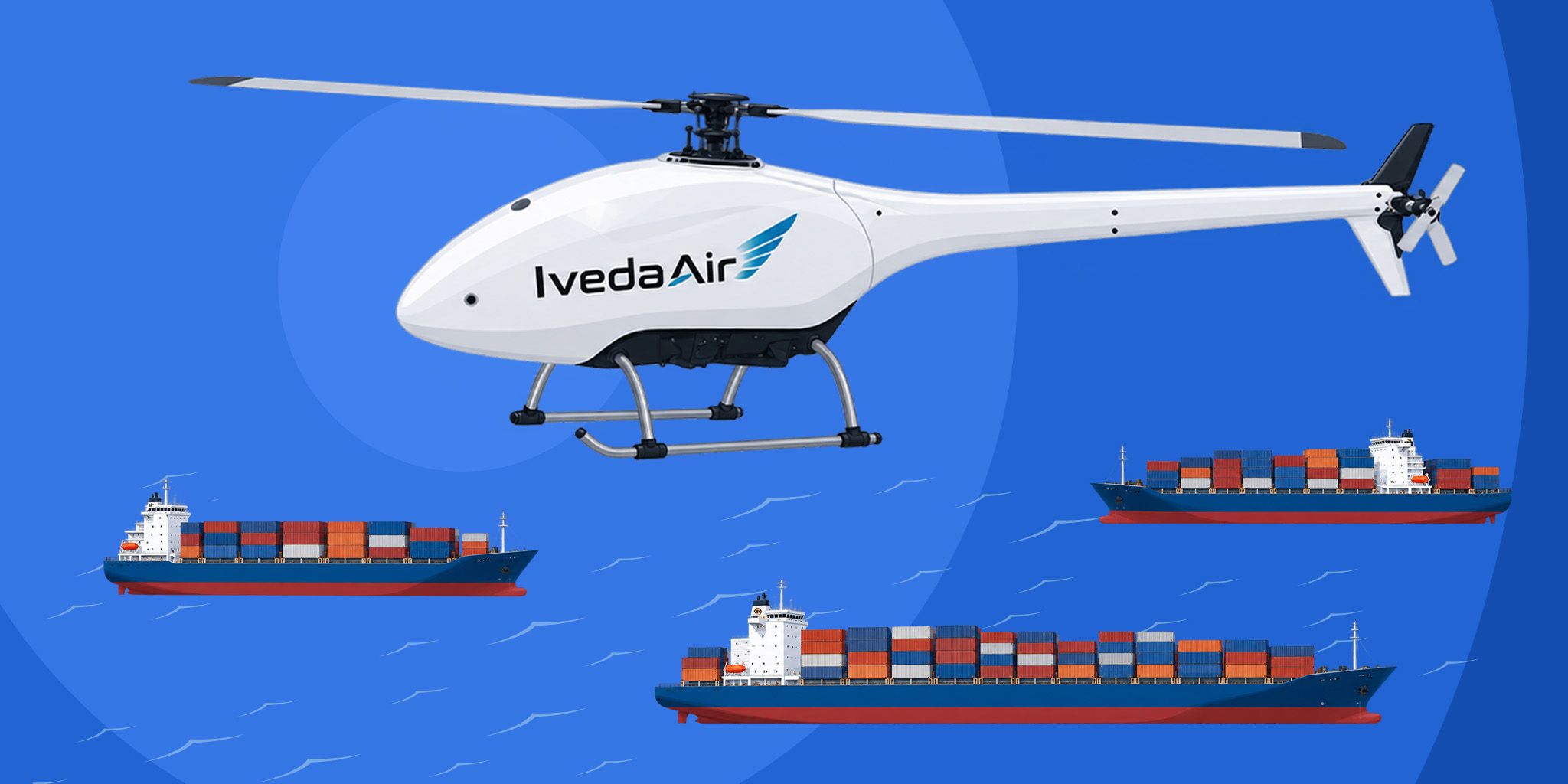
Long-Endurance Aerial Monitoring and Response
AI-powered analytics and mission-ready aircraft for public safety, maritime, search and rescue, and emergency response.
AI-powered analytics and mission-ready aircraft for public safety, maritime, search and rescue, and emergency response.
Iveda
Iveda
GNSS Module for Embedded Positioning
Embed reliable GNSS positioning directly into connected products with a module-level solution.
Embed reliable GNSS positioning directly into connected products with a module-level solution.
Kalmix
Kalmix

Smart Drones for Site Inspection and Monitoring
AI-driven drones provide autonomous surveillance for pipeline inspections, power line monitoring, and environmental compliance.
AI-driven drones provide autonomous surveillance for pipeline inspections, power line monitoring, and environmental compliance.
Iveda
Iveda

Related Solutions
Maritime & Boating
Long-Endurance Aerial Monitoring and Response
AI-powered analytics and mission-ready aircraft for public safety, maritime, search and rescue, and emergency response.
Iveda
Industrial
GNSS Module for Embedded Positioning
Embed reliable GNSS positioning directly into connected products with a module-level solution.
Kalmix
Utilities
Smart Drones for Site Inspection and Monitoring
AI-driven drones provide autonomous surveillance for pipeline inspections, power line monitoring, and environmental compliance.
Iveda