How Smartphones Bridge the Gap Between Users & IoT Devices
How Smartphones Bridge the Gap Between Users & IoT Devices

- Last Updated: May 1, 2026
Aaron Smith
- Last Updated: May 1, 2026
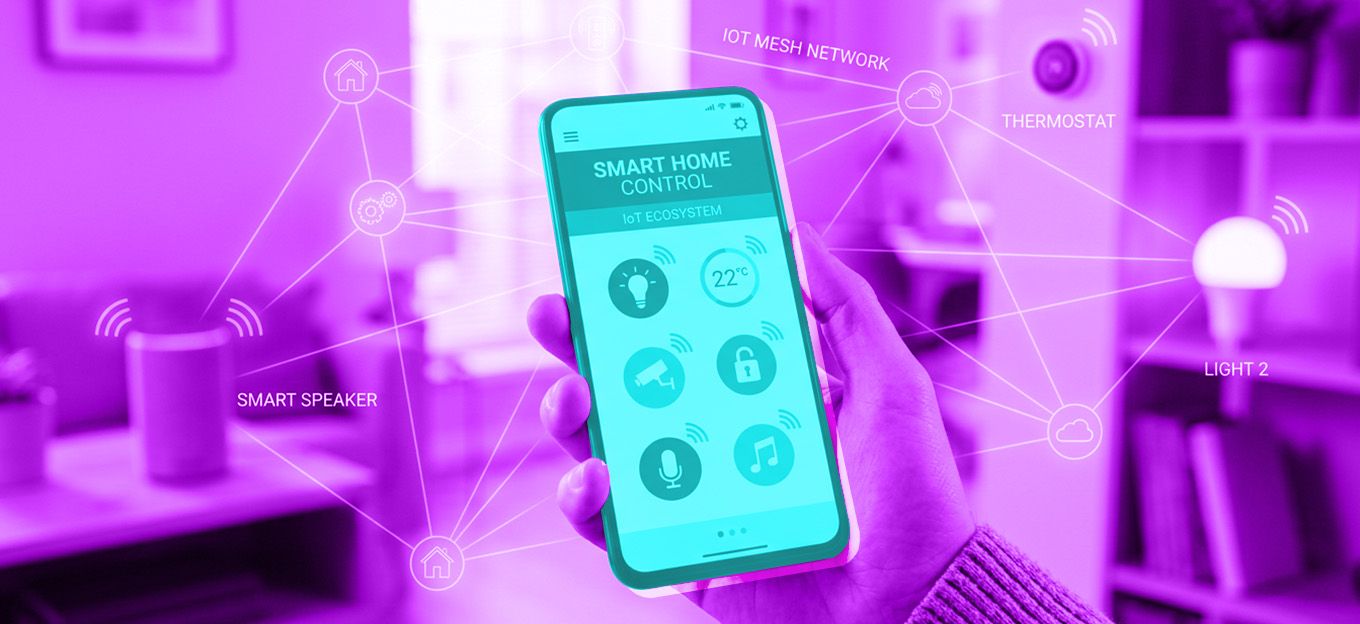
Smartphones have quietly become something of a universal remote for the Internet of Things (IoT). For laymen, that refers to the vast network of interconnected appliances, gadgets, sensors, and even wearables that we use in everyday life. It could be something as commonplace as an Apple Watch, or something more subtle like a temperature sensor in your AC.
IoT devices make life so much easier with the added functionality to the table, but they would also be simply unusable if you had to use a separate controller for each of them. That’s exactly where smartphones come in.
The Dawn of IoT
A Statista analysis places the number of IoT devices actively in use in 2025 at about 19.8 billion. That figure is projected to more than double by 2034. What’s driving that surge?
For starters, efficiency. IoT devices tend to be simple, affordable, and very low-power compared to smartphones or appliances like washing machines. They’re also typically designed for specific jobs. Their low-powered nature also means they need an intermediary that is:
- Always with you
- Always online
- Packed with enough computing muscle to handle networking with dozens of devices.
The Ultimate Remote Control
Your smartphone ticks all three of those boxes. It’s equipped with multiple radios (including cellular, Wi-Fi, and Bluetooth), packs a powerful processor, and includes an intuitive interface that lets you control all your devices. Essentially, your phone serves as a central hub.
That’s not all your phone is doing, either. Many devices tend to follow different communication standards based on varying manufacturer practices. For example, a Wi-Fi-enabled bulb might use a different connectivity standard than a Wi-Fi-enabled camera.
A Universal Solution
Your smartphone translates those different standards. It relays commands and fetches data to create a seamless experience across all your devices in a single app.
The Google Home app is a great example here, and you probably have it installed on your phone right now. This one app allows users to control everything from lights and locks to thermostats from different brands. Your phone does all the heavy lifting behind the scenes, whether that’s authenticating you or processing voice commands and running local AI to make decisions.
The Technology That Makes Everything Work
The bridge between your phone and your favorite IoT devices isn’t just one single piece of technology. There are many different wireless standards at work here.
Bluetooth Low Energy (BLE)
BLE is designed for short-range and battery-friendly connections. This lets your phone pair directly with:
- Wearables (such as smart watches)
- Smart locks
- Bulbs
The main benefit here is instant local control that doesn’t even need Wi-Fi. If you’re unsure how to sanitize your phone and use a sensor that checks for device cleanliness, it’ll probably be running on BLE.
Wi-Fi
Wi-Fi is a lot better at handling larger data streams than something like Bluetooth. It’s the ideal communication standard for data-hungry devices like security cameras and modern smart TVs. High-bandwidth and direct internet access (usually 20 MB/s or higher) means you can stream video in real time from any of these devices to your phone, from anywhere.
Z-Wave and Thread
These are more low-power mesh networks used for whole-home coverage. You’ll see IoT devices like sensors and switches rely on Z-Wave to hop signals across multiple devices, extending their range without using up too much power. Thread is a lot newer and uses IPv6 for better internet integration.
Matter
This is the latest in IoT standards and also, arguably, the future of IoT connectivity. Matter is an open-source protocol backed by virtually every tech giant, including Apple, Google, Samsung, and Amazon.
Matter uses Wi-Fi, Bluetooth, and other standards to enable devices from different ecosystems (such as an Apple Watch and a Samsung Gear watch) to communicate. This is how your iPhone can control a Philips Hue light and a Yale smart lock all within the same app.
Navigating Hurdles
Despite the rapidly evolving technology at work, the bridge isn’t exactly perfect. IoT devices introduce hundreds, if not thousands, of points of vulnerability into the system. This could be due to default passwords, weak encryption, or limited capabilities. All this makes devices vulnerable to hackers. If a single thermostat is compromised, it can be used to breach any major network.
Compatibility was also a much bigger issue before Matter was devised. Devices from different brands simply would not be able to communicate, leading to a mountain of frustration for the average consumer.
Evolving IoT
Thankfully, the answers to these issues are also coming out at a lightning pace. End-to-end encryption is becoming increasingly popular for even the smallest IoT devices, and regular over-the-air updates are fairly commonplace for most major brands, such as Philips. Most smartphones also handle biometric authentication as an additional defense against cyber threats.
Empowering Users with IoT
The future is only going to become more integrated. 5G coverage is virtually everywhere, and edge-processing technology for AI allows IoT devices to do so much more, even with limited power. We’re going to see a lot more sophisticated wearables and other consumer tech in the coming decade.
The next time you adjust your lights while sitting on the couch or receive a warning that your fridge door is wide open while you’re on the bus, you’ll know IoT is doing the heavy lifting behind the scenes. The gap between you and your devices is only going to get smaller as the future nears, and smartphones are making it all possible.

The Most Comprehensive IoT Newsletter for Enterprises
Showcasing the highest-quality content, resources, news, and insights from the world of the Internet of Things. Subscribe to remain informed and up-to-date.

New Podcast Episode

Building Real-Time Voice AI Experiences

Related Articles