



Conversation, Not Commands: The “Let's Convo!” Era of AI Companion Devices
Conversation, Not Commands: The “Let's Convo!” Era of AI Companion Devices

- Last Updated: June 26, 2026
Lawrence Wu
- Last Updated: June 26, 2026

Something is shifting in the IoT device landscape, and most manufacturers are not paying close enough attention to it yet.
A new category of connected hardware is forming: devices designed not to automate tasks or collect data, but to provide ongoing presence, emotional engagement, and conversational companionship. These are not smart speakers with better marketing. They are a fundamentally different class of IoT devices with distinct connectivity requirements, user expectations, and a different definition of what "working" actually means.
The category does not yet have a single agreed-upon name. Some call it Physical AI. Some call it AI companion devices. The labels are still settling, but the market is not.
What Is Already Emerging
This is not just a future category. Early examples are already appearing across different markets and use cases.
Early-stage devices are entering the market as well. Pophie, launched on Kickstarter in May 2026 by Singapore-based InsBotics, is designed to proactively initiate interaction with users rather than simply respond to commands, positioning itself as an AI that notices rather than waits.
ElliQ, built by Intuition Robotics, is purpose-built for senior companionship. It focuses on conversation, encouragement, and daily engagement and has been deployed at scale with state agencies in the US. In January 2025, Intuition Robotics launched a caregiver solution combining ElliQ's companion functionality with a caregiver app that monitors health, detects poor sleep or illness, and sends alerts, marking a shift from purely conversational companionship toward proactive wellness support.
LOVOT, from Japan's Groove X, takes a different approach. It focuses on emotional comfort rather than utility, using over 50 sensors to detect temperature, touch, and distance while adapting its personality based on individual interactions through deep learning. It does not try to be useful in a conventional sense, but that is the point.
These products do not all target the same users or solve the same problems. But they share a set of technical requirements that distinguishes them from every other IoT category currently in volume production.
Why AI Companion Devices Are Different From Other IoT Devices
Most IoT products are built around functional interaction. A thermostat adjusts temperature. A security camera detects motion. A wearable tracks health data. A smart speaker answers a question or plays music.
AI companion devices operate under a different model. They are designed for ongoing interaction, not occasional use. The device is expected to recognize patterns, maintain continuity, and become part of a user’s daily life.
That creates a different definition of product success.
A smart sensor can be considered successful if it captures accurate data and performs reliably. A companion device can be technically functional and still fail if users do not want to return to it. In this category, emotional engagement is not a nice-to-have. It is part of the product experience.
This is why “Let’s Convo!” is more than a catchy phrase. It reflects a design principle. Conversation becomes the interface.
The device has to know when to speak, when to pause, when to listen, and when not to interrupt. It has to feel natural enough that users want to keep interacting with it tomorrow, not just try it once.
Where These Devices Could Matter Next
The most obvious use case is AI companionship, but the opportunity is much broader. Conversational AI devices could reshape several IoT categories that already depend on trust, timing, and human engagement.
Telehealth is one of the clearest examples. Intuition Robotics' ElliQ has been deployed through programs such as the New York State Office for the Aging, where it supports older adults through daily conversation, wellness check-ins, reminders, and social engagement.
By May 2025, more than 800 older adults had joined the program in New York, with thousands more applications submitted. ElliQ's newer caregiver solution also allows family members and caregivers to receive updates and monitor wellness signals remotely.
Education is another area where conversational AI is moving beyond simple chat interfaces. Khan Academy's Khanmigo was designed as an AI-powered tutor that can guide students through problems, ask follow-up questions, and provide personalized support instead of simply giving answers. The platform has been piloted across hundreds of school districts, reflecting growing interest in AI systems that behave more like interactive learning partners than traditional educational software.
AI companionship is also evolving rapidly among younger users. Platforms such as Pophie, Character.AI and Replika have popularized the idea of AI companions that function as conversational partners, creative collaborators, or emotional support systems.
Recent studies have found that a large percentage of US teens have already experimented with AI companions, with many using them regularly for conversation, emotional expression, entertainment, or to practice social interactions. Researchers and policymakers are now closely watching the category because of its growing influence on how younger users build relationships with AI.
Other scenarios are likely to emerge as the category matures. Hospitality robots, museum guides, interactive brand mascots, wellness coaches, therapy-adjacent support devices, and AI-powered workplace assistants could all become part of the same broader movement.
In each case, the core question is not simply, “Can the device answer?” It is, “Can the device participate in an interaction that feels useful, timely, and human enough to continue?”
What IoT Manufacturers Should Understand Before Entering
Device manufacturers who have successfully built in other IoT categories will find that companion devices require them to rethink several assumptions.
1. The hardware cost floor is higher than it looks.
A capable companion device needs a meaningful sensor array, sufficient on-device processing for always-on awareness, and memory architecture that supports persistence. The bill of materials is not comparable to a smart home sensor or a connected wearable.
2. The connectivity model must account for interaction continuity.
Most IoT devices handle intermittent connectivity gracefully. A companion device that goes silent for several seconds because of a network fluctuation fails in a way that is emotionally noticeable to users. The architecture needs to prioritize continuity of interaction, not just continuity of data sync.
3. The update cycle never stops.
ElliQ's third generation represents years of iterative hardware and software improvement, and users of companion devices form ongoing relationships with their devices. The product they receive at launch needs to improve meaningfully through continued use. OTA infrastructure and a long-term improvement roadmap are not optional.
4. The success metric is retention, not activation.
Every other IoT category measures success by whether the device is functioning correctly. Companion devices succeed or fail based on whether users choose to interact with them day after day. A device that works technically but fails to sustain emotional engagement falls into this category, even if every sensor reports correctly.
5. The infrastructure underneath the interaction is not separable from the product.
I have seen companion device projects with thoughtful hardware design, strong model selection, and careful UX work fail in production because the real-time audio transport layer was not engineered to the standard required by the interaction model. Latency that is invisible in a demo becomes emotionally disruptive in daily use. Noise handling that was not tested in real household environments produces failures at exactly the moments users remember most.
Why “Let’s Convo!” Matters
“Let’s Convo!” works as a phrase because it reflects the direction the industry is moving toward. It is casual, simple, and social. It suggests that the interaction is not a command, but a shared moment. For AI-native devices, that distinction matters.
The future of IoT will still involve automation, monitoring, data collection, and control. But a growing part of the market may be shaped by devices that do something more personal: talk with users, remember them, support them, and build a sense of continuity over time.
For builders, the lesson is clear. AI companion devices are not just smart speakers with better personalities. They are a new kind of IoT product with new expectations around awareness, memory, timing, privacy, and emotional engagement. The companies that understand this early will have an advantage.
The next major IoT category may not be defined by what the device can do on command. It may be defined by whether users want to start the next conversation.

The Most Comprehensive IoT Newsletter for Enterprises
Showcasing the highest-quality content, resources, news, and insights from the world of the Internet of Things. Subscribe to remain informed and up-to-date.

New Podcast Episode

Building Real-Time Voice AI Experiences

Related Articles




Related Solutions

Smart Community Management for HOAs
AI-powered community monitoring with real-time visibility into entrances, parking, and shared spaces.
AI-powered community monitoring with real-time visibility into entrances, parking, and shared spaces.
Iveda
Iveda
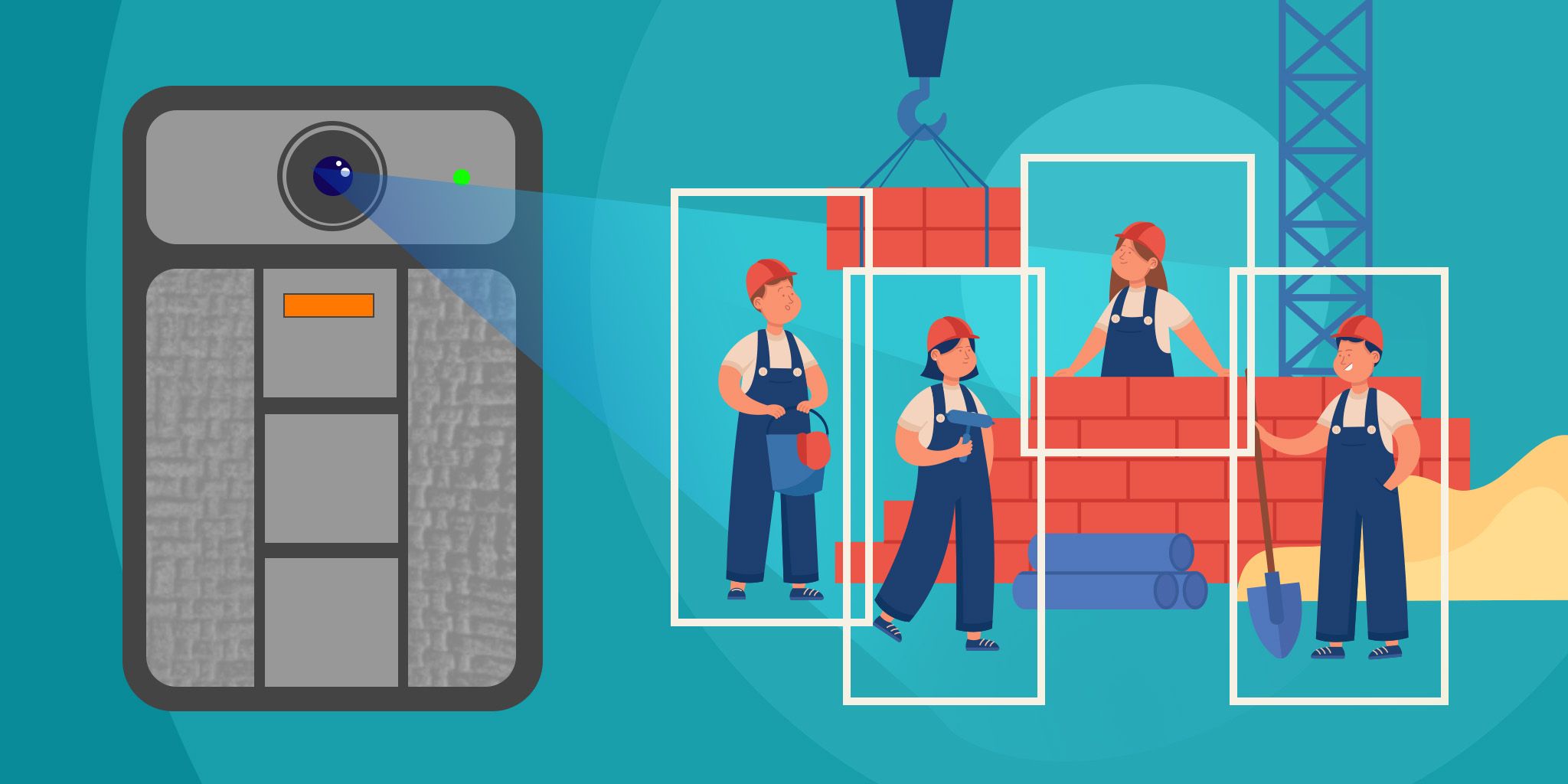
Construction Site Safety Monitoring
AI-powered wearables for real-time PPE compliance monitoring, hazard detection, and incident documentation.
AI-powered wearables for real-time PPE compliance monitoring, hazard detection, and incident documentation.
Iveda
Iveda

Workers' Compensation Fraud Prevention
Quickly verify claims, reduce investigation time, and protect your bottom line with AI-powered video surveillance and analytics.
Quickly verify claims, reduce investigation time, and protect your bottom line with AI-powered video surveillance and analytics.
Iveda
Iveda

Related Solutions
Buildings & Facilities
Smart Community Management for HOAs
AI-powered community monitoring with real-time visibility into entrances, parking, and shared spaces.
Iveda
Construction
Construction Site Safety Monitoring
AI-powered wearables for real-time PPE compliance monitoring, hazard detection, and incident documentation.
Iveda
Construction
Workers' Compensation Fraud Prevention
Quickly verify claims, reduce investigation time, and protect your bottom line with AI-powered video surveillance and analytics.
Iveda