



The Role of Expert Validation in Labeling Diverse Medical Waveform Datasets
The Role of Expert Validation in Labeling Diverse Medical Waveform Datasets

- Last Updated: February 3, 2026
Matthew
- Last Updated: February 3, 2026

Medical waveform labeling commonly involves annotating time-series health signals from cardiac (heart), neurological (brain), and respiratory (breathing) monitoring systems. These signals, with clinically validated annotations, support research, algorithm training, and enable doctors to interpret waveform data, such as ECG, PPG, and EEG, in clinical examinations, physiological research, and electronic medical records.
Structured waveform data becomes essential for medical and research purposes, as well as for regulatory submissions to health authorities, to obtain FDA approval for medical devices, or to test AI/ML models in healthcare.
Labeled data sets are essential for the development of intelligent monitoring systems in healthcare. The precise ordering of events in complicated cases is essential in making a correct assessment. Experts offer a means to visualize and analyze such signals.
The design and development of sophisticated systems can be achieved through a thorough understanding of waveforms, including their definitions, types, applications, and the methods used in their measurement. This understanding can be applied to optimize and improve these systems, making them work more effectively and reliably.
There are many types of medical waveform annotations used in healthcare, with the data having been manually annotated to ensure accurate analyses can be conducted.
Medical Devices Need Waveform Annotation
The advancement of modern technology, enabled by an understanding of waveforms, allows for innovation in the design of medical devices that accurately and efficiently monitor vital bodily functions in their intended applications. They are as follows:
ECG Waveform Annotation
An electrocardiogram, performed using an ECG machine, is one of the most important diagnostic tests in the field of cardiac care. This test is capable of identifying the heart's electrical signals, ranging from fleeting conditions, such as heart palpitations, to persistent conditions, like cardiac arrhythmias.
It allows for the detection of arrhythmias, ischemia, conduction issues, and overall heart health through the analysis of waveform patterns and intervals. Individual tracings from an electrocardiogram generally comprise a P wave, a QRS complex, and a T wave.
EEG Waveform Annotation
The process of annotating an EEG waveform involves the analysis of the electrical signals that are produced by the brain. This process involves looking at the various properties of recorded brain waveforms, including amplitude, rhythm, frequency, and patterns, from electrodes placed on the scalp, to determine brain function and the neurological process.
Brain signals can be grouped according to their frequency, for instance, alpha, delta, theta, and beta waves, each one associated with various mental or physical conditions. The annotation of EEG waveforms enables the development of algorithms that can identify anomalies, track the state of the brain, assist in the diagnosis of conditions affecting the brain (such as epilepsy and sleep disorders), and measure mental workload.
PPG Waveform Annotation
The annotation of photoplethysmographic waveform data is crucial in the analysis of the flow of blood through the circulatory system. Each feature of the PPG waveform can be used in the annotation process to determine various characteristics of heart activity, including its strength, the timing of the heartbeat, the shape of each heartbeat, and whether the heartbeat is irregular or steady.
Among the potential benefits of the wearable, it can provide detailed information about a user's cardiovascular system. Keeping track of the heart's function enables us to understand heart rate, the level of oxygen in the body, the state of blood vessels, and the efficiency of blood circulation. In most medical applications, annotating the PPG waveform is very advantageous.
GCG Waveform Annotation
Gyrocardiography waveform annotation involves the analysis of tiny rotational chest movements using AI to quickly determine the mechanical activity of the heart, as measured by gyroscopes embedded in wearable or chest-mounted sensors.
It evaluates waveform features such as timing, amplitude, and rotational patterns linked to cardiac events (e.g., valve opening/closing, ventricular contraction). GCG waveform analysis is utilized to develop heart monitoring models, wearable health devices, and research on seismocardiography, as well as AI heart evaluations, typically in conjunction with ECG and PPG for comprehensive heart assessments.
What Defines a High-Quality Medical Waveform Labeling Partner?
1. Setting the Foundation with Clear Labeling Guidelines
Learning to understand waveforms is like learning a new language for doctors. The medical waveform labeling that a doctor does may have differing interpretations. Such differences can cause considerable confusion in model training.
Comprehensive guidelines, therefore, serve as a blueprint for data annotators to add metadata to an unstructured image of heart rhythms or other signals. Guidelines are there to specify what an annotator does in edge cases, whether they should flag certain ambiguous data for expert review or choose the closest match based on predefined rules to keep the training data consistent, free from bias, so that the model does not hallucinate.
2. Clinically Validated Annotations
A high-quality partner delivers waveform labels created and validated by qualified clinical experts using standardized medical guidelines. Cardiologists should review ECG waveforms in order to find abnormalities such as arrhythmias, seizures, or when someone is breathing in a certain way.
These professionals must label waveforms to provide a structure to medical data, enabling the model to identify events such as arrhythmias or seizures and determine the patient's outcome, whether they are breathing normally or not. Access to these medical professionals becomes easier with the assistance of a data annotation company, as opposed to hiring an in-house team that would incur the costs of infrastructure and other operational resources.
3. Regulatory-Ready Processes
Waveform datasets must stand up to regulatory scrutiny. A reliable partner goes beyond data delivery and provides comprehensive documentation for regulatory review and approval that can accelerate FDA, MDR, and clinical approval.
For example, medical waveform labeled datasets used in FDA submissions must show how labels were checked and controlled. Such documentation reduces the risk of regulatory issues and prevents costly rework.
The proper documentation at the beginning of a project can reduce the risk of costly rework and penalties that come from regulatory compliance issues. Quality and regulatory standards must be met by the data you label. This includes FDA standards, EU MDR, ISO 13485, IEC 62304, and Good Machine Learning Practice.
4. Quality Control as a Continuous Process
Developers do not acquire labels by chance. They outsource these tasks to experts, so continuous quality checks are performed during the annotation process to ensure everything meets the standards. They then regularly verify that they are meeting performance standards. This procedure enables you to achieve high-quality labels, such as those required for medical waveform annotated training data.
One powerful method is consensus labeling, which comprises having multiple labelers annotate the same data and resolving disagreements. This reveals where guidelines may be unclear and where individual labelers may need retraining. Another approach is gold-standard testing, where labelers are periodically given pre-labeled data to assess their accuracy without their knowledge.
5. Scaling Without Losing Quality
When you have a large number of data points in a project, maintaining consistency becomes challenging with human annotation alone. It refers to labeling big data, such as transitioning from a hundred to millions of data points.
The more data points you have, the bigger the risk that the quality of your project will suffer. To ensure everything runs smoothly, data labeling companies find ways to automate some of their processes. At the same time, they also need to have humans keeping the accuracy metric check as the topmost priority.
Scaling a project requires automating certain aspects and maintaining human supervision to oversee the project, ensuring consistent quality. Automation can assist in pre-labeling data using existing models, which human labelers then correct.
Understanding Physiological Signals
Medical waveform labeling in healthcare enables AI models to understand physiological signals in a manner that aligns with medical standards. Although automated systems are capable of handling a large amount of data in a short amount of time, only a human specialist can discern intricate physiological patterns, address edge cases, and verify the ground truth. Through the utilization of this integrated strategy, the waveform data becomes accurate, consistent, and clinically usable.
These computer models must be trained on data that has been labeled or classified so that they can learn the patterns and relationships between different variables. This will also necessitate the involvement of human reviewers to supervise it for accuracy.
This new technology allows us to use less labeled data through self-supervised learning procedures. As machine learning technology advances, annotators will increasingly be required to create the rare but highly valuable training data that teaches the algorithms to reason, make decisions, and interpret in a nuanced way.
The future will also demand greater transparency. We need both automation and human supervision to train AI systems that reflect true clinical decision-making.

The Most Comprehensive IoT Newsletter for Enterprises
Showcasing the highest-quality content, resources, news, and insights from the world of the Internet of Things. Subscribe to remain informed and up-to-date.

New Podcast Episode

Building Real-Time Voice AI Experiences

Related Articles



Related Solutions

Infant Security for Hospitals
Enable immediate alerts, automated security responses, and mother-baby matching to reduce abduction risk.
Enable immediate alerts, automated security responses, and mother-baby matching to reduce abduction risk.
Vizzia Technologies
Vizzia Technologies
Overnight Health Monitoring
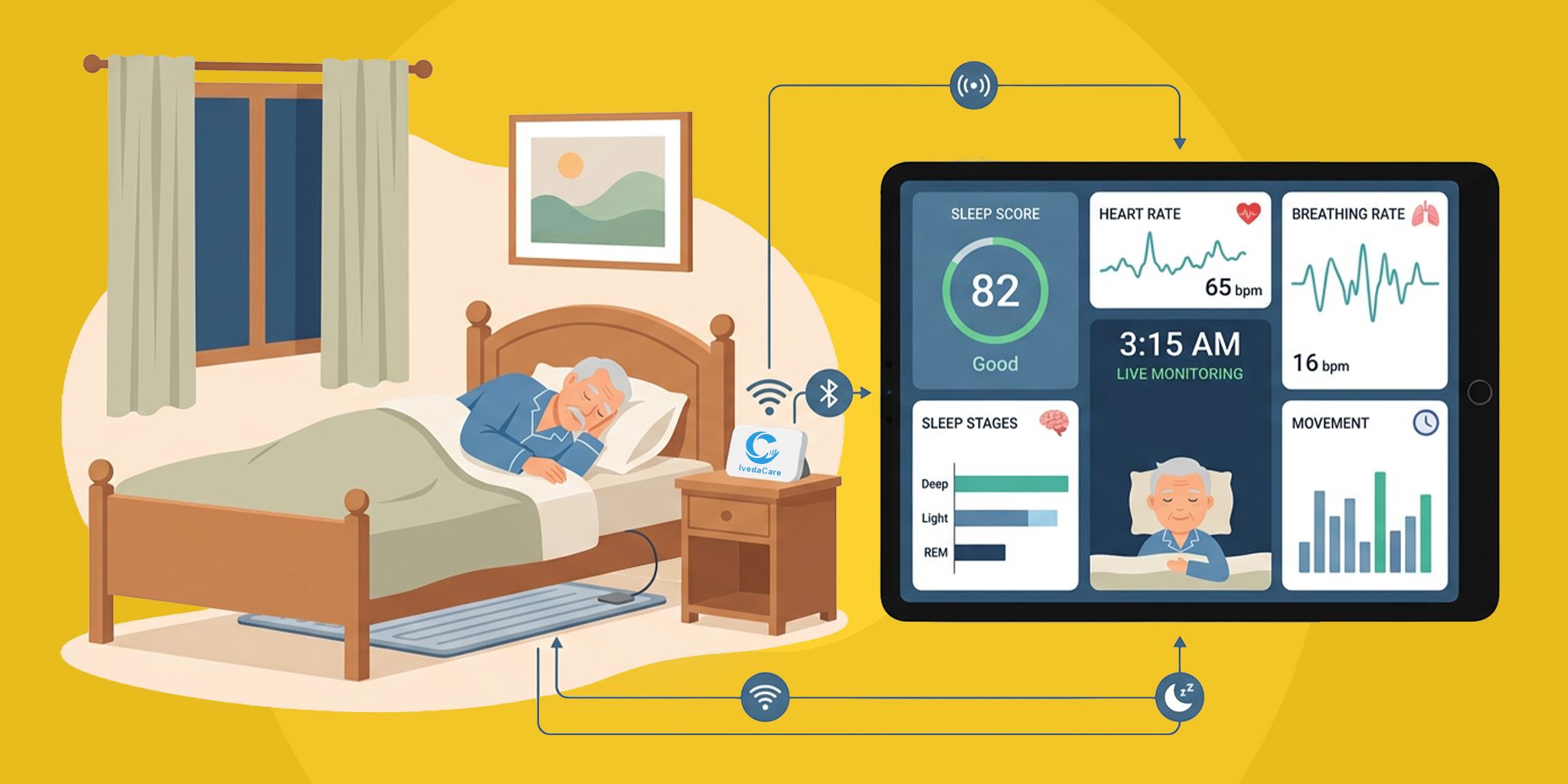
Health insights without cameras or wearables, enabling caregivers to detect issues early and improve resident well-being.
Health insights without cameras or wearables, enabling caregivers to detect issues early and improve resident well-being.
Iveda
Iveda

Hand Hygiene Compliance Monitoring
Detect hand hygiene events and ensure compliance to reduce infections and promote a culture of patient safety.
Detect hand hygiene events and ensure compliance to reduce infections and promote a culture of patient safety.
CenTrak
CenTrak

Related Solutions
Healthcare
Infant Security for Hospitals
Enable immediate alerts, automated security responses, and mother-baby matching to reduce abduction risk.
Vizzia Technologies
Healthcare
Overnight Health Monitoring
Health insights without cameras or wearables, enabling caregivers to detect issues early and improve resident well-being.
Iveda
Healthcare
Hand Hygiene Compliance Monitoring
Detect hand hygiene events and ensure compliance to reduce infections and promote a culture of patient safety.
CenTrak