



The Hardware Engineering Gap in Cold Chain IoT: What Spec Sheets Don't Tell You
The Hardware Engineering Gap in Cold Chain IoT: What Spec Sheets Don't Tell You

- Last Updated: July 10, 2026
Eelink
- Last Updated: July 10, 2026

A cold chain IoT pilot fails. The software vendor is summoned. Dashboards are audited. Cloud uptime logs are pulled. Alert rules are reviewed. After weeks of investigation, the root cause is traced to a $12 temperature sensor that drifted 3°C at -20°C — a deviation invisible in a 25°C lab but enough to miss a real excursion event in a frozen trailer.
This pattern repeats across the industry with striking consistency. As the global IoT cold chain monitoring market grows from an estimated $8 billion in 2025 toward $30 billion by 2035 — with the hardware segment accounting for nearly 47% of total market value — the gap between what appears on a spec sheet and what actually determines field performance is becoming the single largest source of deployment risk.
The problem is not that hardware is ignored. It is that hardware is evaluated using the wrong criteria. A typical procurement process compares listed specifications side by side: temperature range, battery life, IP rating, connectivity protocol. Two devices with identical spec sheet entries can have vastly different field performance — because the engineering decisions that determine real-world reliability are never listed on a data sheet.
This article examines those hidden engineering decisions across five critical dimensions, explains why they matter more than listed specifications, and provides a technical evaluation framework for IoT platform builders, solution architects, and supply chain technology leaders who need to get hardware selection right the first time.
Sensor Accuracy: The Difference Between Lab Specs and Operating Specs
The Problem With Room-Temperature Calibration
Temperature sensor accuracy is universally specified at 25°C in a controlled laboratory — a condition that exists nowhere in a cold chain. The sensors inside a frozen food trailer operate at -25°C. The sensors on a loading dock endure rapid transitions from -30°C to +35°C in minutes. A sensor rated ±0.3°C at 25°C may drift to ±1.5°C or worse at -25°C, depending on the sensing element and calibration methodology.
That drift has real consequences. A 1.5°C error at a threshold boundary means the system either misses a genuine temperature excursion — putting product safety at risk — or generates false alarms that lead operators to disable alerts entirely. Both outcomes defeat the purpose of the monitoring system.
What Separates Industrial-Grade From Consumer-Grade
Industrial-grade cold chain sensors use NTC thermistor or platinum RTD elements calibrated across the full operating range, typically -40°C to +85°C, with individual calibration certificates traceable to national metrology standards such as NIST (United States) or PTB (Germany). Each device is characterized at multiple temperature points, not just at room temperature.
Consumer-grade or general-purpose IoT sensors rely on single-point calibration at 25°C and apply a mathematical correction curve for other temperatures. This approach works adequately for HVAC monitoring or agricultural applications, but introduces unacceptable uncertainty in cold chain environments where regulatory compliance depends on measurement accuracy.
The Regulatory Dimension
The FDA's FSMA Section 204 food traceability rule — now set for enforcement beginning July 2028 — requires covered entities to maintain records of Critical Tracking Events with associated Key Data Elements. For temperature-sensitive foods on the Food Traceability List, those records must demonstrate that storage and transport conditions were properly maintained. A sensor with uncharacterized accuracy at the operating temperature is not just a technical weakness — it is an audit-trail liability.
Similarly, the EU's Good Distribution Practice (GDP) guidelines for pharmaceutical logistics (2013/C 343/01) require that temperature monitoring equipment be calibrated at appropriate intervals using traceable standards. Devices without documented cold-temperature calibration will not meet GDP audit requirements.
Battery Chemistry: Why Lithium-Ion Fails the Cold Chain
The Capacity Collapse Below Zero
Lithium-ion (Li-ion) batteries — the default in smartphones, laptops, and most consumer IoT devices — suffer dramatic capacity loss in cold environments. At -20°C, a standard Li-ion cell delivers only 50–60% of its rated capacity. At -30°C, capacity can drop below 40%. For a cold chain tracker expected to operate continuously inside a frozen container for 30, 60, or 90 days, this capacity collapse can cause the device to go silent mid-transit — precisely when data is most critical.
The issue compounds over time. Repeated charge-discharge cycles in cold conditions accelerate cell degradation, reducing the useful life of rechargeable Li-ion batteries far below manufacturer estimates.
Cold-Optimized Chemistry Options
Hardware designed specifically for cold chain applications uses one of two primary chemistries: lithium thionyl chloride (Li-SOCl2) for extended deployments, or lithium manganese dioxide (LiMnO2) for moderate-duration applications.
Li-SOCl2 cells maintain over 80% of rated capacity at -40°C and offer exceptionally low self-discharge rates — under 1% per year — enabling multi-year deployments without battery replacement. They are the standard chemistry in devices designed for frozen food transport, pharmaceutical cold chain, and long-duration asset tracking. The tradeoff is that Li-SOCl2 is a primary (non-rechargeable) chemistry, which fundamentally changes the device lifecycle model from "recharge and redeploy" to "deploy, use, and replace."
LiMnO2 occupies a middle ground: better cold performance than Li-ion, lower cost than Li-SOCl2, and moderate capacity retention down to -20°C. It suits applications where the tracker spends time in cold environments but is not permanently frozen.
The key engineering decision is matching battery chemistry to the duty cycle: reporting interval, transmission power, GPS fix frequency, and sleep mode depth. A device with a 15-minute reporting interval and GPS consumes 8–10 times more energy per day than one reporting every 4 hours with cellular-only location. Battery chemistry, capacity, and power management must be co-designed — not selected independently.
Enclosure Engineering: Beyond the IP Rating
What IP67 Does and Does Not Guarantee
An IP67 rating — defined by IEC 60529 — means the device is dust-tight (6) and survives temporary immersion in 1 meter of water for 30 minutes (7). This is the standard specification for cold chain hardware, and on a data sheet, it looks like a solved problem.
It is not. The IP rating does not test for thermal cycling — the repeated transitions between cold storage (e.g., -25°C) and ambient temperature (e.g., +30°C) that cold chain devices experience daily. Each thermal cycle creates a pressure differential inside the sealed enclosure, drawing humid ambient air through micro-gaps in gaskets and seals. Over weeks and months, this moisture accumulation creates condensation on internal circuit boards.
The Hidden Damage Mechanism
Condensation corrodes copper traces on PCBs, degrades solder joints, and attenuates antenna performance. The failure mode is insidious: the device continues to report data, but signal strength gradually weakens and sensor readings slowly drift. By the time the failure is noticed, the data trail is already unreliable.
Effective countermeasures are manufacturing decisions, not design specifications. They include conformal coating (a thin polymer layer applied to assembled circuit boards that repels moisture), desiccant packs or moisture-absorbing materials inside the enclosure, gasket compounds rated for the specific thermal cycling profile, and venting membranes that equalize pressure without admitting liquid water. None of these measures appear on a spec sheet — but they are the difference between a device that lasts 6 months and one that lasts 5 years.
Connectivity Architecture: Matching RF Design to the Operating Environment
Why Refrigerated Environments Are Hostile to RF
Refrigerated trailers and cold storage warehouses are among the most RF-challenging environments in logistics. The metal walls of a reefer trailer attenuate cellular signals by 15–30 dB. Dense product loads — palletized frozen goods wrapped in foil-backed packaging — absorb and scatter radio energy. Insulated door seals block signals completely when the unit is closed.
This creates a fundamental architecture decision that must be resolved before hardware is selected.
Direct-to-Cellular vs. Gateway-Based Models
In a direct-to-cellular architecture, each tracker contains its own LTE-M, NB-IoT, or LTE Cat-1 modem and SIM card. It operates autonomously, communicating directly with the cellular network. This simplifies logistics — one device, one SIM, no infrastructure — but imposes higher per-device cost, higher power consumption, and persistent signal challenges inside sealed metal containers.
In a gateway-based architecture, low-power Bluetooth Low Energy (BLE) sensors are placed directly with the cargo — on pallets, in cartons, inside pharmaceutical totes. A gateway device, mounted where cellular signal is accessible (on the exterior of the trailer, near the cab, or at a warehouse dock door), continuously collects data from the BLE sensors and relays it upstream via cellular.
This model excels in multi-zone monitoring. A cold storage warehouse with 50 temperature zones can deploy 50 BLE sensors at $5–15 each rather than 50 cellular trackers at $50–150 each. The gateway handles all upstream communication, dramatically reducing total hardware cost and eliminating the need for 50 SIM cards.
The architecture decision depends on the deployment scenario: single-shipment tracking (direct cellular), multi-zone facilities (gateway-based), or hybrid operations that span both. Hardware that locks the customer into one model before deployment planning is complete creates expensive re-architecture later.
Form Factor: The Overlooked Operational Variable
A cold chain monitoring device does not exist in isolation. It is handled by warehouse operators, attached to pallets by forklift drivers, scanned by dock workers, and recovered by logistics coordinators. The physical form factor — size, weight, mounting method, visual indicators — determines whether the device integrates into existing workflows or creates friction that leads to inconsistent deployment.
A vehicle-mounted GPS tracker (typically 80×60×25 mm, magnetic mount) does not integrate cleanly into pallet-level cold chain monitoring. An ultra-thin disposable sensor (credit-card form factor, 3–5 mm thick) lacks the battery capacity and antenna gain needed for container-level visibility. A device designed for pharmaceutical tote monitoring (small, lightweight, tamper-evident) has different requirements from one designed for intermodal container tracking (ruggedized, multi-year battery life, external antenna).
The most effective hardware platforms use a modular architecture: a common electronics core packaged in different enclosures, each optimized for a different use case. This delivers consistent data quality across deployment scenarios while matching the ergonomic and operational requirements of each specific workflow.
A Technical Evaluation Framework for Hardware Selection
The following five questions — asked during hardware evaluation, before a pilot — consistently surface the engineering decisions that spec sheets conceal.
First: what is the sensor accuracy specification at the minimum operating temperature, not at 25°C? Request the calibration methodology, the number of calibration points, and whether individual device calibration certificates are available.
Second: what specific battery chemistry is used, and what is the validated capacity at -20°C and -40°C? Ask for discharge curves at cold temperatures, not just nominal capacity at room temperature.
Third: beyond the IP67 rating, what specific measures protect against condensation from thermal cycling? Ask about conformal coating, desiccant materials, gasket specifications, and pressure-equalization mechanisms.
Fourth: does the connectivity architecture match the RF environment of the deployment? Ask for measured signal attenuation data inside the target container or facility type, and understand whether the architecture is direct-cellular, gateway-based, or configurable.
Fifth: was the form factor designed for this specific cold chain workflow, or repurposed from another product category? Ask for references for field deployment in comparable operational environments.
These are engineering questions. They require engineering answers. If a hardware vendor cannot answer them with specific data, that tells you something important about their engineering process.
Conclusion
The cold chain IoT market is maturing rapidly. The window where listing "IP67, -40 to 85°C, 3-year battery" on a spec sheet was sufficient to win a hardware evaluation is closing. As regulations tighten — FSMA 204 enforcement in 2028, evolving EU GDP requirements, growing retailer mandates — the burden of proof shifts from "does this device meet the listed specifications" to "does this device actually perform under the conditions where it will be deployed."
The five engineering dimensions examined here — sensor calibration, battery chemistry, enclosure thermal cycling protection, connectivity architecture, and form factor — are not visible on any spec sheet. They are the product of engineering decisions made years before a device reaches procurement.
Understanding these decisions — and knowing what questions to ask about them — is the difference between a cold chain IoT deployment that delivers on its promise and one that generates more problems than it solves.

The Most Comprehensive IoT Newsletter for Enterprises
Showcasing the highest-quality content, resources, news, and insights from the world of the Internet of Things. Subscribe to remain informed and up-to-date.

New Podcast Episode

Building Real-Time Voice AI Experiences

Related Articles



Related Solutions

Unit Load Device Tracking for Airports
Real-time visibility into Unit Load Devices and supporting airport assets with solar-powered tracking and BLE.
Real-time visibility into Unit Load Devices and supporting airport assets with solar-powered tracking and BLE.
SODAQ
SODAQ
Long-Endurance Aerial Monitoring and Response
AI-powered analytics and mission-ready aircraft for public safety, maritime, search and rescue, and emergency response.
AI-powered analytics and mission-ready aircraft for public safety, maritime, search and rescue, and emergency response.
Iveda
Iveda
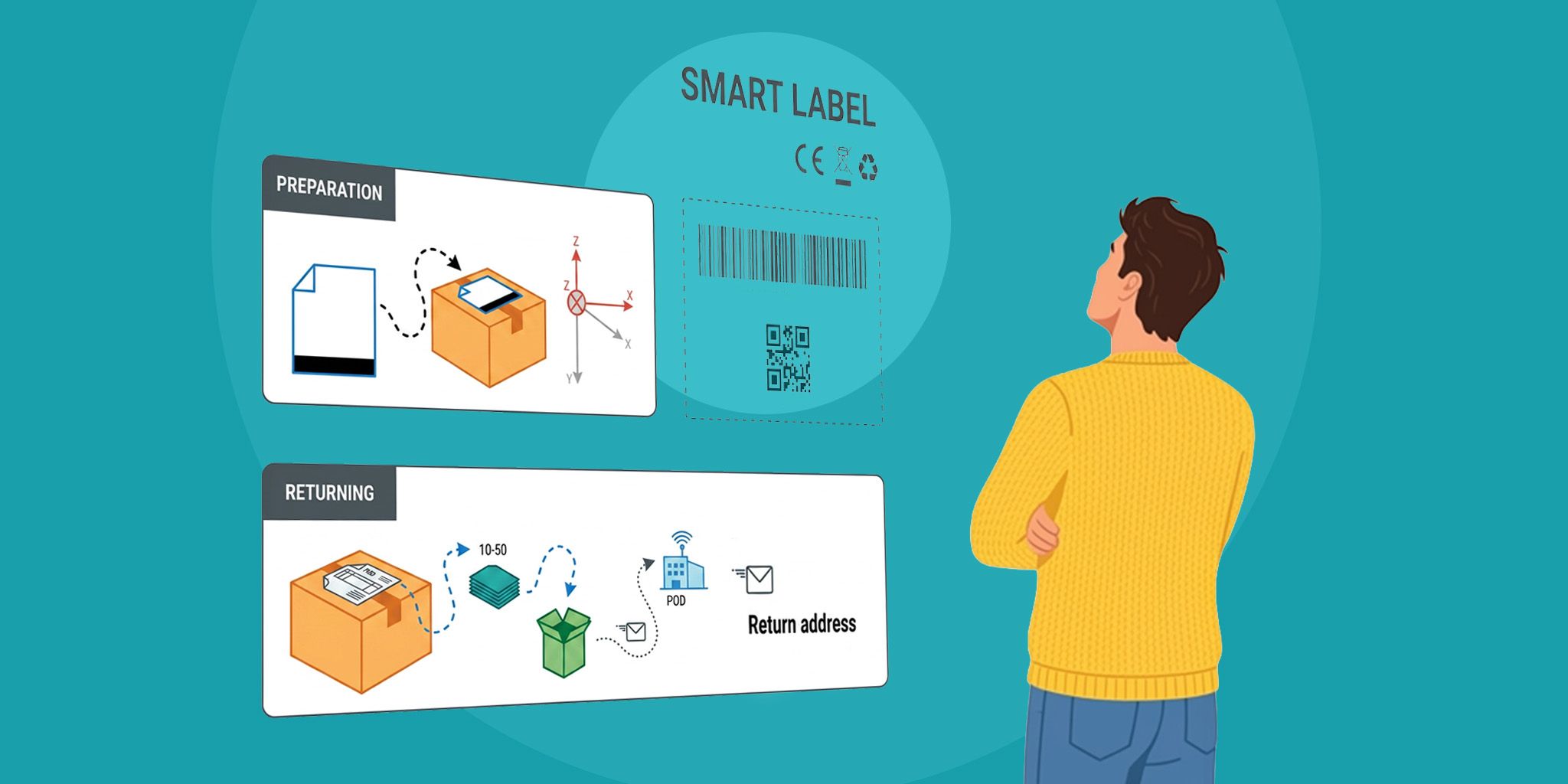
Smart Shipping Label for Supply Chain
Easy-to-deploy shipping label that provides real-time visibility into location, condition, and handling to reduce damage and optimize logistics.
Easy-to-deploy shipping label that provides real-time visibility into location, condition, and handling to reduce damage and optimize logistics.
SODAQ
SODAQ

Related Solutions
Supply Chain & Logistics
Unit Load Device Tracking for Airports
Real-time visibility into Unit Load Devices and supporting airport assets with solar-powered tracking and BLE.
SODAQ
Maritime & Boating
Long-Endurance Aerial Monitoring and Response
AI-powered analytics and mission-ready aircraft for public safety, maritime, search and rescue, and emergency response.
Iveda
Supply Chain & Logistics
Smart Shipping Label for Supply Chain
Easy-to-deploy shipping label that provides real-time visibility into location, condition, and handling to reduce damage and optimize logistics.
SODAQ