How IoT Sensors Collect, Process and Track Data in Wearable Devices
How IoT Sensors Collect, Process and Track Data in Wearable Devices

- Last Updated: August 17, 2026
Reetain Raina
- Last Updated: August 17, 2026
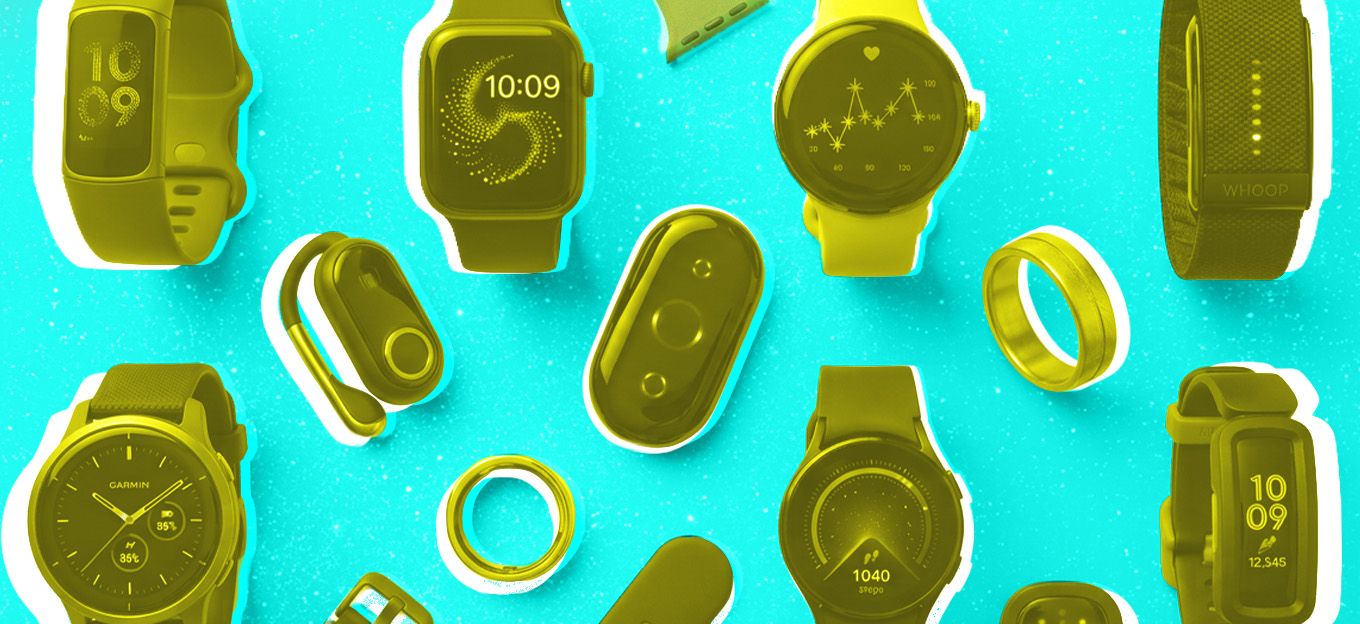
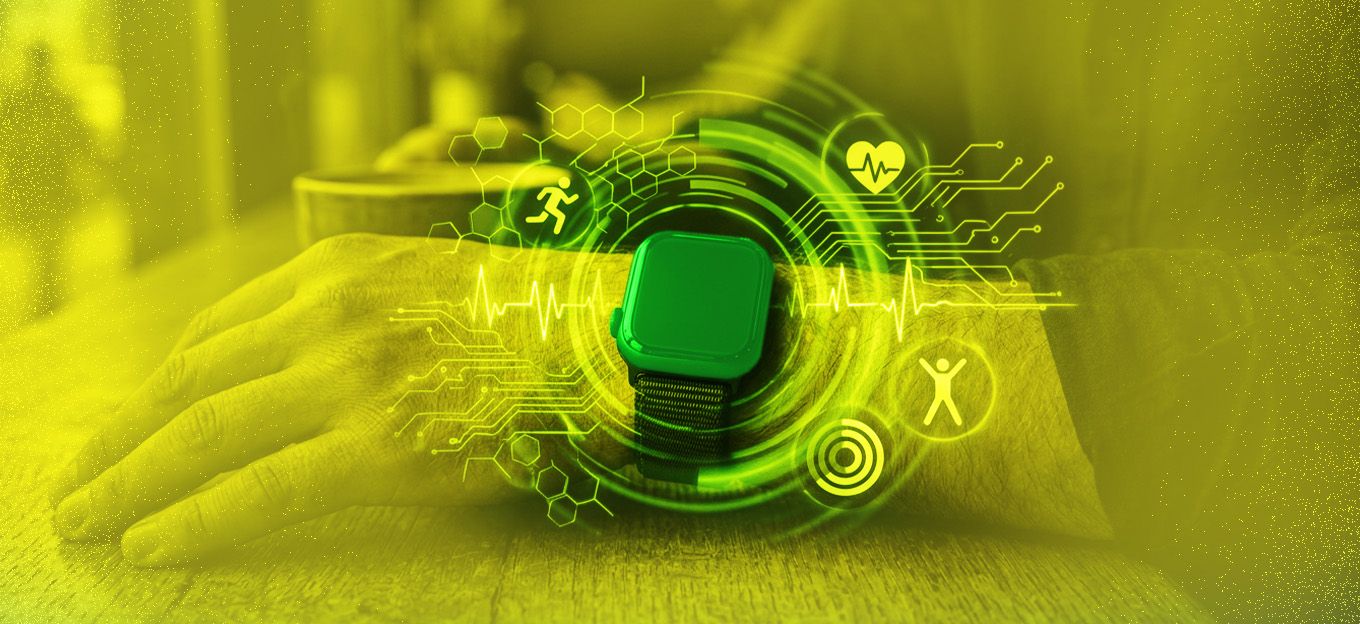
Every time you glance at your smartwatch, it seems to know a surprising amount about you. Within seconds, it can display your heart rate, count your steps, estimate your stress level, analyze your sleep and even remind you to move if you've been sitting for too long.
But have you ever wondered what happens behind the scenes before those insights appear on your screen?
The answer lies in a network of tiny Internet of Things (IoT) sensors working together inside modern wearable devices. These sensors continuously detect physical changes such as movement, heart activity, skin temperature and blood oxygen levels. However, collecting data is only the beginning. Before you see a health score or workout summary, that raw information is filtered, processed, analyzed and transformed into meaningful insights using embedded processors, artificial intelligence (AI) and cloud computing.
This combination of sensing, connectivity and intelligent processing has made wearables one of the most practical examples of IoT in everyday life. According to the International Data Corporation (IDC), worldwide wearable device shipments continue to grow as consumers increasingly adopt connected health and fitness technologies, highlighting the growing importance of wearable IoT in modern healthcare and consumer electronics.
Understanding this journey, from sensor to smartphone, helps explain why wearable devices have evolved from simple fitness trackers into intelligent health companions.
What Are IoT Sensors?
At its core, a standard sensor is a transducer; it detects a physical property, like heat, light, or motion, and converts it into a measurable electrical signal. However, a sensor inside a wearable device cannot operate in a vacuum. What elevates a component to an IoT sensor is its integration into a larger, connected ecosystem that can communicate, interpret, and act upon that data.
In wearable IoT architectures, these sensors act as the frontline data collectors within a highly compact, multi-layered framework. The standard data flow operates in a continuous loop:
[Biophysical Signal]
↓
[IoT Sensor Module] (Captures raw data)
↓
[Microcontroller / MCU] (Filters noise & digitizes)
↓
[Edge AI / On-Device Processing] (Initial algorithmic analysis)
↓
[Communication Module] (Bluetooth Low Energy / Wi-Fi transmission)
↓
[Cloud Infrastructure] (Deep analytics & historical storage)
↓
[Application Dashboard] (User-facing visualization)
Rather than relying on a solitary data point, modern IoT devices combine an array of diverse sensor modules into a single hardware footprint. This allows the device to cross-reference different types of environmental and physiological data simultaneously, building a comprehensive, real-time map of the user's health.
The Most Common IoT Sensors Found in Wearables
To capture the vast spectrum of human movement and biology, smart wearables rely on a specialized suite of miniature hardware components.
Accelerometer
An accelerometer measures proper acceleration, the rate of change of velocity over time along specific axes (typically three-dimensional X, Y, and Z planes). In wearable technology, high-precision micro-electromechanical systems (MEMS) accelerometers serve as the foundational tool for tracking physical movement. They capture the specific impact forces and cadences required to calculate daily step counts, log running paces, and instantly deploy emergency alerts via automated fall detection systems.
Gyroscope
While accelerometers track linear motion, gyroscopes measure angular velocity or rotational movement around those same axes. By combining these two sensors, a wearable can understand its precise orientation in space. This is critical for differentiating between complex athletic movements, such as transitioning from a freestyle swim stroke to a breaststroke or determining whether a user is cycling uphill versus leaning into a sharp turn.
Optical Heart Rate Sensor (PPG)
Photoplethysmography (PPG) sensors monitor heart rate by projecting light, usually from bright green LEDs, directly through the outer layers of the skin and into the superficial microvascular bed. Because blood absorbs green light more efficiently than the surrounding tissue, each cardiac contraction causes a predictable spike in blood volume, which alters the amount of light reflected back to the adjacent photodiode.
The baseline mechanics and clinical utility of this optical approach are thoroughly documented in comprehensive literature reviews regarding photoplethysmography accuracy, such as those published in IEEE Reviews in Biomedical Engineering, which analyze how these systems filter out structural noise to isolate distinct arterial pulses.
SpO2 Sensor
Operating on a similar optical principle to PPG, pulse oximetry (SpO2) sensors utilize a combination of red and infrared light paths to estimate peripheral blood oxygen saturation. Oxygenated hemoglobin absorbs more infrared light, whereas deoxygenated hemoglobin absorbs more red light. By calculating the ratio of red to infrared light reflection, the device estimates the percentage of oxygen circulating in the bloodstream. Global health events, including the COVID-19 pandemic, significantly accelerated consumer adoption of this specific hardware for baseline respiratory monitoring.
Skin Temperature Sensor
Integrating highly sensitive thermistors, these sensors continuously track micro-fluctuations in skin temperature at the wrist or finger. While core body temperature requires invasive measurement, peripheral skin temperature trends serve as highly effective indicators for autonomic nervous system shifts, sleep stage transitions, physical recovery status, and early signs of acute physiological illness.
ECG Sensor
Unlike optical PPG sensors that approximate mechanical blood flow, Electrocardiogram (ECG) sensors measure the actual electrical impulses that trigger your heartbeats. By touching a specific metallic bezel or electrode on the wearable, the user completes a closed electrical circuit across their body. This allows a single-lead ECG configuration to record the cardiac wave patterns, providing crucial data for detecting irregular heart rhythms like Atrial Fibrillation (AFib).
Bioimpedance Sensor
Bioelectrical impedance analysis (BIA) sensors introduce an imperceptible, low-level alternating electrical current into the body's tissues. Because fat mass, muscular tissue, and water volumes offer varying levels of electrical resistance (impedance), the sensor can calculate total body composition, systemic hydration levels, and cellular recovery rates based on how the current flows through the circuit.
How Wearable Devices Collect Data
The journey from a biological event to an on-screen chart requires an exact, multi-stage engineering pipeline to ensure the raw data remains accurate and useful.
- Signal Detection: A physical event occurs, such as a capillary expanding with blood or a wrist swinging forward. The specialized health sensors instantly register this raw analog input.
- Electrical Conversion: The analog signal passes through an Analog-to-Digital Converter (ADC), translating the physical phenomenon into precise binary code that the computer can read.
- Microcontroller Filtering: A dedicated microcontroller unit (MCU) isolates the relevant data from ambient interference. It applies digital bandpass filters to strip away high-frequency electromagnetic noise or low-frequency physical shifting.
- Algorithmic Combination: The filtered data streams flow into unified processing algorithms, cross-referencing multiple sensor inputs to confirm the context of the activity.
- Edge AI Processing: Lightweight machine learning models embedded on the device inspect the structured streams, classifying the event in real time (e.g., identifying an irregular heart rhythm pattern).
- Cloud Synchronization: The compressed, processed data packet is transmitted via Bluetooth Low Energy (BLE) to a connected smartphone. From there, it securely uploads to cloud infrastructure for long-term trend analysis, eventually populating the clean visual charts on the user's mobile dashboard.
Why Wearables Use Sensor Fusion
A single sensor reading rarely tells the whole story. For instance, if an accelerometer detects a sudden, rapid arm movement, it cannot definitively tell if the user is throwing a ball, slipping on ice, or experiencing a high heart rate during a stressful meeting. To solve this ambiguity, developers rely on sensor fusion.
Sensor fusion is the algorithmic combination of data originating from distinct hardware sensors to yield an inference that is fundamentally more accurate and reliable than any single sensor could manage alone.
Accelerometer Data + Gyroscope Data + PPG Heart Rate = Validated Dynamic Workout
Major wearable ecosystems engineered by firms like Apple, Garmin, WHOOP, and Samsung rely heavily on these integrated matrices. For instance, during a workout, the sensor fusion layer combines step cadence from the accelerometer, rotational orientation from the gyroscope, and volumetric blood spikes from the PPG sensor to confidently categorize the activity as rowing rather than running.
This multi-faceted approach is validated by peer-reviewed research published in MDPI Sensors, which demonstrates that combining heterogeneous sensor streams significantly reduces false positives and improves overall activity recognition accuracy in dynamic environments.
Edge AI Is Changing Wearable IoT
Historically, wearable architectures operated on a simple, hub-and-spoke telemetry model: collect the raw data locally, transmit it immediately to a smartphone, and push it to the cloud for heavy algorithmic computation. However, this method introduces latency, drains battery life through constant wireless transmission, and raises persistent data privacy concerns.
The modern paradigm shift centers on Edge AI and TinyML (Tiny Machine Learning). By integrating specialized, ultra-low-power neural processing units directly onto the wearable's silicon chip, the device can execute complex inference models right at the source of the data collection.
Instead of waiting for a round-trip cloud confirmation, an Edge AI model can instantly analyze streaming ECG wave data or detect a sudden deceleration vector to trigger an immediate, life-saving fall notification. This localized processing minimizes power-hungry wireless radio operations, drastically extending device battery life while ensuring that sensitive biological information remains securely contained on the local hardware.
Challenges in Collecting Wearable Data
Engineering reliable consumer health devices requires overcoming significant real-world hardware and environmental obstacles.
- Motion Artifacts: A user's arm movement creates shifting gaps between the sensor housing and the skin, introducing severe structural noise that can distort optical readings.
- Skin Tone Variation: Optical PPG accuracy relies on consistent light absorption and reflection. Variations in melanin levels affect light scattering, demanding advanced algorithmic tuning to ensure equitable sensor performance across all skin phenotypes. This critical calibration issue is a focal point of ongoing digital health studies featured in npj Digital Medicine, which call for diverse validation standards in consumer health hardware.
- Battery Power Limits: Engineers must balance continuous health monitoring with small battery capacities, requiring highly efficient firmware that cycles sensors on and off in microsecond intervals.
- Calibration and Environment: Environmental conditions like extreme cold can cause vasoconstriction (narrowing of blood vessels), reducing peripheral blood flow and making it difficult for optical sensors to capture clean physiological signals.
Conclusion
The seamless metrics displayed on a wearable screen are the final output of an elegant, highly coordinated engineering pipeline. The journey requires an intricate balance of physical transduction, digital noise filtering, multi-sensor algorithmic fusion, and on-device machine learning inference. As IoT sensors continue to decrease in physical size while expanding their computational efficiency, wearable tech will evolve beyond simple health tracking tools, becoming indispensable, proactive systems for optimizing long-term human health.

The Most Comprehensive IoT Newsletter for Enterprises
Showcasing the highest-quality content, resources, news, and insights from the world of the Internet of Things. Subscribe to remain informed and up-to-date.

New Podcast Episode

Building Real-Time Voice AI Experiences

Related Articles