



Predictive Logistics: How Connected Data and AI Drive Dynamic Inventory Balancing
Predictive Logistics: How Connected Data and AI Drive Dynamic Inventory Balancing

- Last Updated: August 18, 2026
Net Solutions
- Last Updated: August 18, 2026

For enterprise distributors operating multi-location networks, visibility is often a double-edged sword. A central enterprise resource planning (ERP) system might show 500 critical components in stock across a region, signaling healthy inventory levels.
However, the reality at the edge is often entirely different. 490 of those components might be sitting idle in a warehouse in one city, while a high-value commercial client at a branch two states away faces a critical operational delay because local shelves are empty.
This is the classic "phantom stockout." It is a systemic failure born from data silos and legacy forecasting. In an era defined by digital transformation and smart logistics, relying on historical, reactive inventory models is no longer viable. To optimize modern supply chains, organizations must shift toward Dynamic Inventory Balancing powered by AI and connected data streams.
The Limitations of Static, Historical Forecasting
Traditionally, supply chain forecasting has relied on internal historical sales data. A legacy system looks at what a specific branch sold during the same quarter last year, applies a standardized growth multiplier, establishes a static safety stock buffer, and triggers a purchase order.
This insular approach treats every market as a static entity. It fails to account for real-world, hyper-local variables that directly impact demand, such as shifting regional economics, infrastructure developments, or evolving micro-demographics.
If a new logistics hub opens near a specific branch, introducing hundreds of commercial delivery vehicles to that immediate area, historical data will not reflect the sudden spike in maintenance demands until the distributor has already missed months of revenue. Operating purely through the rearview mirror forces organizations into a costly cycle: locking up working capital in dead stock at one location while paying premium, expedited freight fees to rush critical parts to another.
Under the Hood: The Data Pipeline Behind Dynamic Balancing
Describing this system as "AI-driven" understates the engineering involved. In practice, dynamic balancing runs on a layered architecture that has to reconcile fast-moving external telemetry with slower, structured enterprise data. Four layers do the work:
1. Ingestion layer. External signals—regional vehicle registration filings, DMV and fleet-telematics feeds, traffic sensor data, and localized commercial permit filings - arrive on different schedules and in different formats (batch CSV/XML drops from government sources, near-real-time JSON from telematics APIs). These are pulled through a mix of scheduled ETL jobs and event-streaming pipelines (commonly Kafka or a managed equivalent) so that a spike in commercial vehicle registrations in a zip code doesn't sit in a queue for a week before it reaches the model.
2. Normalization and feature store. Raw registration and telemetry data is noisy and inconsistently keyed. A vehicle registered under a fleet operator's parent company doesn't automatically map to a distributor's branch territory. A geospatial join (mapping registrations and sensor data to zip code and branch service radius) and entity resolution step converts this into structured features: fleet age distribution, average mileage bands, vehicle class mix, and commercial vs. passenger ratio per territory. These features are versioned and stored in a feature store so the same inputs can be reused consistently across training and live inference.
3. Internal data fusion. The feature store is joined against internal ERP/SKU data—historical sell-through, current on-hand quantity by branch, open purchase orders, and lead times per SKU. This is the step that turns "the local fleet is aging" into "branch B14 will need 40% more heavy-duty alternators in the next 6 weeks."
4. Serving layer. Combined features are pushed to the forecasting models on a rolling basis (typically daily re-scoring, with lightweight incremental updates when a high-signal event—like a new registration surge—is detected), rather than a single static batch run.
The Forecasting Layer: What's Actually Predicting Demand
The forecasting engine itself is not one monolithic model—it's typically an ensemble tuned for different demand patterns:
- Time-series models (such as Prophet-style decomposition or SARIMA variants) handle the seasonal, cyclical component of demand—capturing patterns like increased braking-component turnover in winter climates or freight surges tied to harvest or retail seasons.
- Gradient-boosted tree models (XGBoost/LightGBM-class algorithms) handle the non-linear relationships between the fused external features— fleet age, mileage bands, vehicle class—and part-level demand. These models are well suited here because the relationship between "average fleet age in a zip code" and "alternator failure rate" isn't linear or easily captured by a seasonal curve; tree-based ensembles pick up on threshold effects and feature interactions that time-series models miss.
- An ensemble/stacking layer blends the outputs of both, weighted by each SKU category's historical forecast accuracy, to produce a final zip-code-level demand prediction with a confidence interval—not just a point estimate. That confidence interval matters operationally: a high-confidence forecast can trigger an automated transfer, while a low-confidence one gets flagged for a human planner to confirm.
Applied to the two branch examples from the original scenario: for Location A (the urban commuter hub), the gradient-boosted model weighs stop-and-go traffic sensor data and EV/commuter fleet registration density heavily, while the time-series component adjusts for seasonal commuter volume changes. For Location B (the industrial corridor), the model weights average fleet mileage and vehicle age more heavily than seasonality, since heavy-duty component wear correlates more strongly with utilization than with time of year.
The Decision Engine: How a Transfer Actually Gets Triggered
This is the step the original draft glossed over as "the AI detects a demand spike... the system automatically triggers an inter-branch transfer." In practice, detecting a demand spike and choosing to move inventory instead of ordering new stock are two separate computational problems.
Once the forecasting layer flags a projected shortfall at Location A, a constrained optimization step runs across the network - this is typically framed as a transportation/assignment problem solved via mixed-integer linear programming (MILP), not a black-box "AI decision." The optimizer takes as inputs:
- Projected shortfall quantity and required-by date at the destination branch
- Current on-hand surplus at every other branch in the network
- Transfer cost and transit time between each branch pair (vs. the cost and lead time of a new purchase order)
- Any minimum safety-stock floor that can't be breached at the source branch
The optimizer minimizes total network cost (transfer cost + risk-adjusted cost of a potential stockout) subject to those constraints, and only recommends a new purchase order when no feasible internal transfer clears the threshold. In more mature implementations, this optimization is periodically re-tuned using reinforcement learning. The system observes outcomes (was the transferred stock used before a new shortfall appeared elsewhere, or did it just relocate the overstock problem) and adjusts the cost weightings it assigns to transfers vs. new orders over time.
The resulting inter-branch transfer (IBT) is then pushed as a work order to the warehouse management system (WMS) through an API call—an event-driven microservice architecture is what allows this to happen within minutes of the forecast update, rather than waiting for a nightly batch job or manual planner review.
Transforming Static Storage into a Self-Healing Network
Predicting localized demand and computing the optimal transfer is only part of the equation. The true value of this architecture is that it operates continuously rather than as a single decision point. As new telemetry and registration data stream in, the feature store updates, the ensemble models re-score, and the MILP optimizer re-runs, meaning the "right" transfer computed this morning can be revised by afternoon if a new signal (a fleet operator files 200 new commercial registrations) changes the picture.
This continuous re-scoring loop is what transitions the supply chain from a series of isolated, reactive storage sites into a fluid, connected ecosystem. The reliance on capital-heavy safety stock decreases, while inventory velocity accelerates.
Delivering Measurable Enterprise ROI
Transitioning to an AI-driven, dynamic balancing architecture delivers distinct operational and financial advantages across the enterprise:
- Capital Efficiency. By eliminating localized overstocking, distributors stop burying capital in stagnant inventory. Funds are freed up for strategic growth, and carrying costs drop significantly.
- Optimized Asset Utilization. Organizations can maximize the efficiency of their existing footprint, reducing the need to acquire or lease additional warehouse square footage just to hold "just-in-case" safety stock.
- Elevated Fill Rates. Having the right asset in the right place at the right time ensures near-perfect fill rates. This protects margins, eliminates expediting costs, and strengthens commercial SLA compliance.
Let's Sum Up
The future of industrial and automotive distribution belongs to organizations that can successfully turn data into agility—not through a vague "AI decides" black box, but through a specific pipeline: real-time ingestion of external fleet and telemetry data, feature engineering that fuses it with internal SKU history, an ensemble forecasting layer that separates seasonal from structural demand drivers, and a constrained optimization engine that weighs transfer cost against stockout risk on a rolling basis.
Multi-location distributors operating on legacy, siloed infrastructure will increasingly find themselves outpaced by competitors running this kind of connected, closed-loop architecture. By leveraging AI to understand and adapt to the literal DNA of local markets, forward-thinking enterprises are removing the guesswork from supply chain management—transforming their logistics networks into predictive, self-healing assets.

The Most Comprehensive IoT Newsletter for Enterprises
Showcasing the highest-quality content, resources, news, and insights from the world of the Internet of Things. Subscribe to remain informed and up-to-date.

New Podcast Episode

Building Real-Time Voice AI Experiences

Related Articles

Related Solutions
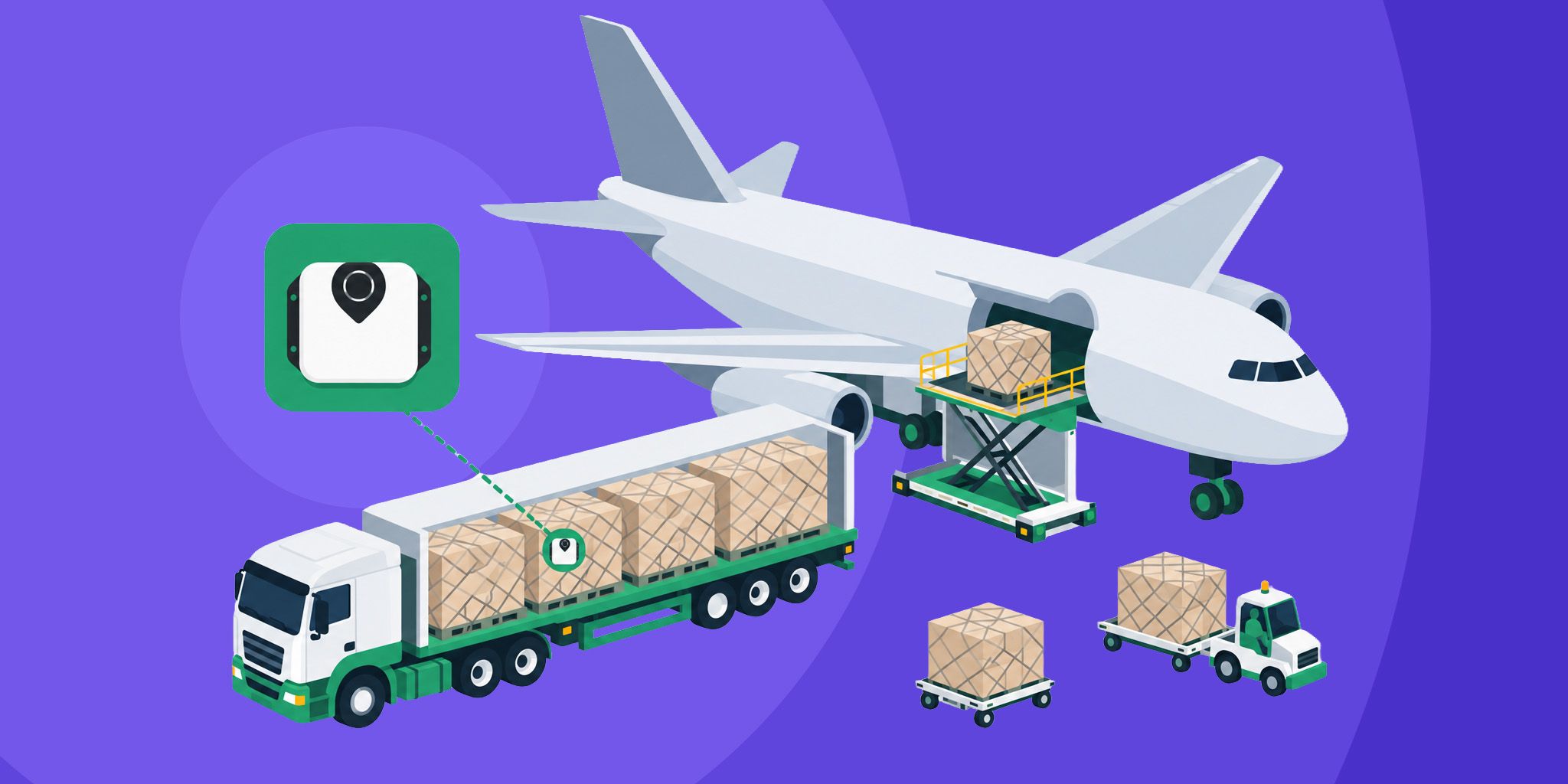
Unit Load Device Tracking for Airports
Real-time visibility into Unit Load Devices and supporting airport assets with solar-powered tracking and BLE.
Real-time visibility into Unit Load Devices and supporting airport assets with solar-powered tracking and BLE.
SODAQ
SODAQ
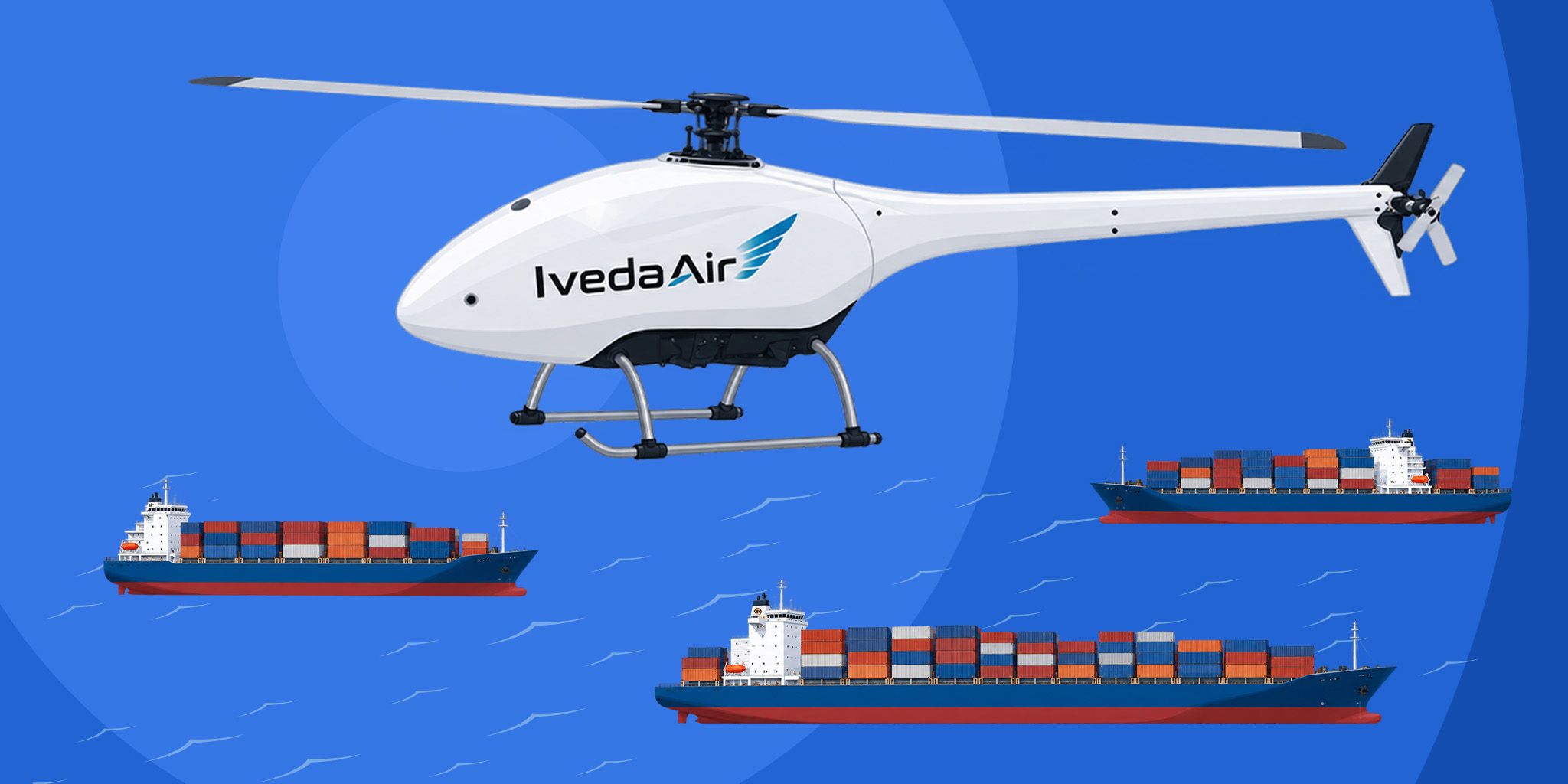
Long-Endurance Aerial Monitoring and Response
AI-powered analytics and mission-ready aircraft for public safety, maritime, search and rescue, and emergency response.
AI-powered analytics and mission-ready aircraft for public safety, maritime, search and rescue, and emergency response.
Iveda
Iveda
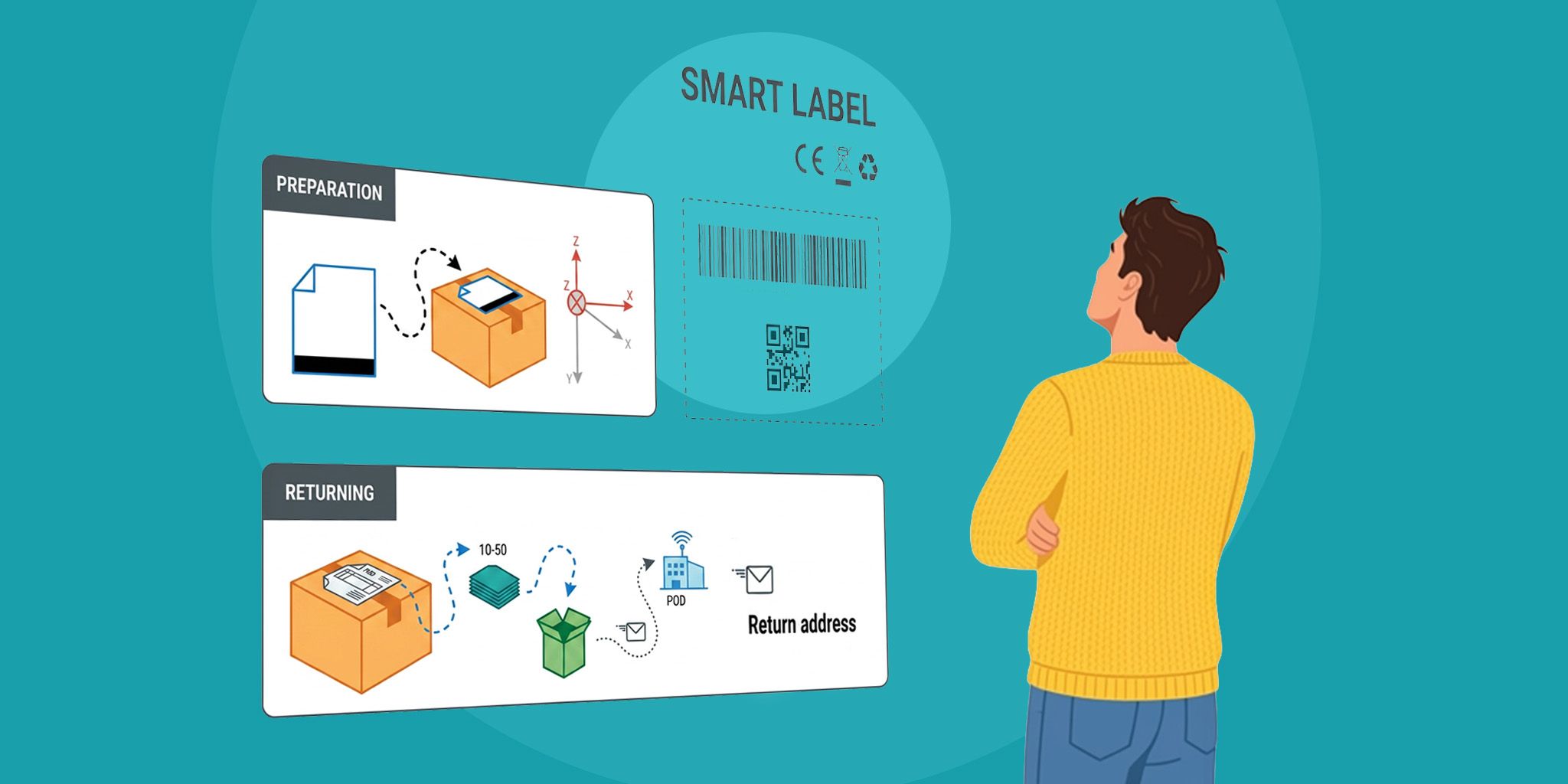
Smart Shipping Label for Supply Chain
Easy-to-deploy shipping label that provides real-time visibility into location, condition, and handling to reduce damage and optimize logistics.
Easy-to-deploy shipping label that provides real-time visibility into location, condition, and handling to reduce damage and optimize logistics.
SODAQ
SODAQ

Related Solutions
Supply Chain & Logistics
Unit Load Device Tracking for Airports
Real-time visibility into Unit Load Devices and supporting airport assets with solar-powered tracking and BLE.
SODAQ
Maritime & Boating
Long-Endurance Aerial Monitoring and Response
AI-powered analytics and mission-ready aircraft for public safety, maritime, search and rescue, and emergency response.
Iveda
Supply Chain & Logistics
Smart Shipping Label for Supply Chain
Easy-to-deploy shipping label that provides real-time visibility into location, condition, and handling to reduce damage and optimize logistics.
SODAQ