


How Medical Text Annotation Powers Healthcare AI
How Medical Text Annotation Powers Healthcare AI

- Last Updated: December 1, 2025
Matthew
- Last Updated: December 1, 2025
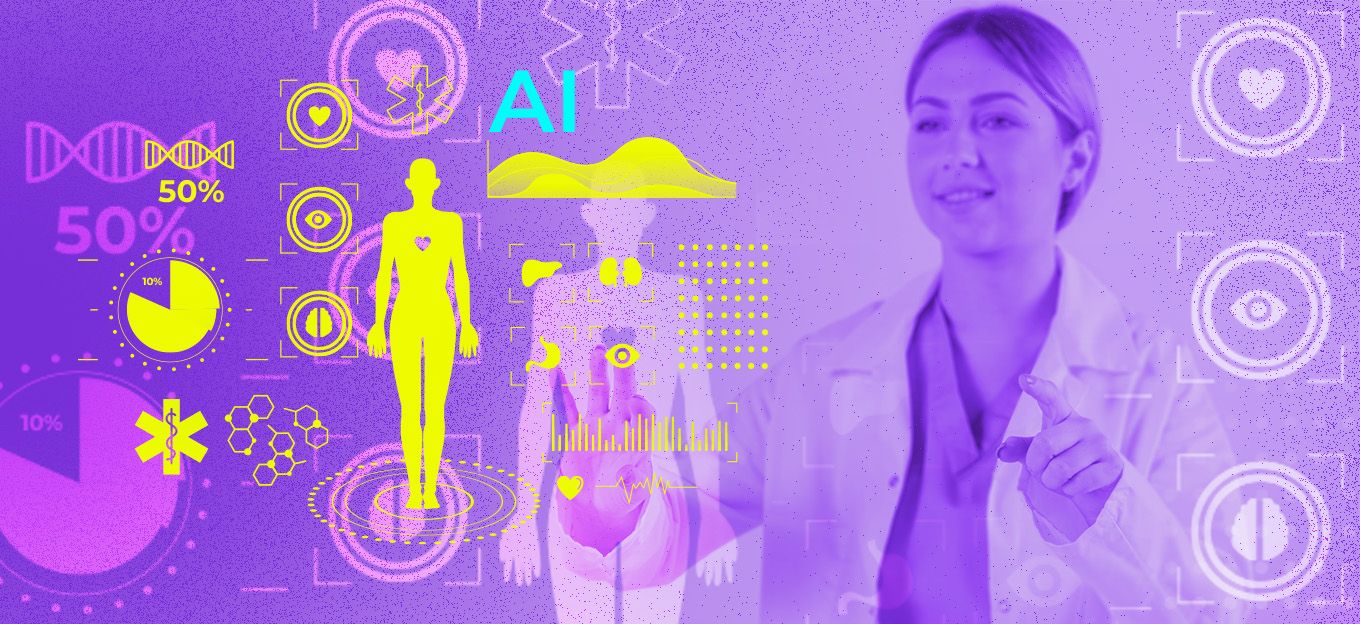
The healthcare industry generates billions of words in unstructured text every year, from clinical notes to discharge summaries. This text contains hidden insights that can transform patient care, but only if AI can interpret them. This is where medical text annotation helps to manage a large amount of untapped data.
The development of medical NLP solutions helps organize and make sense of vast clinical data, ensuring accurate and high-quality annotations that improve the performance of machine learning models.
What is Medical Text Annotation?
Medical text annotation is the process of labeling and structuring clinical language to enable AI and NLP (Natural Language Processing) systems to interpret medical terminology and context. It is how humans teach machines to read like clinicians. It helps them identify diseases, symptoms, treatments, and other medical entities within text data.
Whether for training clinical LLMs (Large Language Models), automating documentation, or supporting decision systems, accurate medical annotation ensures AI understands not just the words, but the meaning and intent behind them.
Why is Medical Text Annotation Necessary?
- Text annotation of different document types enhances the robustness of NLP systems.
- Patient care improves with accurate annotation of medical texts. Well-annotated data identifies critical details, such as symptoms, diagnoses, and treatment responses, that are often hidden in unstructured clinical notes.
- Annotated datasets support the development of AI in healthcare.
- It helps manage a large amount of unstructured clinical data.
Significance of Text Annotation in Healthcare
Medical natural language processing (NLP) can boost the efficiency of medical professionals and the quality of medical services. NLP helps doctors interact with patient data by automatically processing and evaluating large volumes of unstructured text data. It enables them to make informed decisions, diagnoses, and treatment planning.
Medical NLP also minimizes the administrative burden on medical staff with the help of automated processes for entering and updating data in electronic medical record systems. It helps in the research and development of new treatment methods. This process assesses the outcomes of scientific articles, clinical trials, and medical reports.
Types of Medical Text Annotation?
Medical texts to annotate include clinical notes, medical histories, hospital discharges, prescriptions, and radiology reports. Patient questionnaires, laboratory results, and scientific publications are also annotated.
Medical research papers comprise groundbreaking discoveries and complex medical terms. Annotation of these documents shows primary information, explores new treatments, and identifies disease models.
Clinical notes have information about patients. They detail diagnoses, observations, and treatment plans. Text annotation of these notes helps explore the patient's medications, symptoms, and medical history. It results in delivering structured data for improved patient care and clinical decision support.
Radiology and imaging reports enable more accurate disease tracking and diagnosis. Annotating these reports reveals key findings and recommendations that will enable AI systems to comprehend images accurately for radiologists.
Applications of Medical Text Annotation
Medical text annotation has become the foundation of intelligent healthcare automation. By converting unstructured language into structured data, it fuels a wide range of AI applications that enhance clinical decision-making, operational efficiency, and patient outcomes. Below are some of the key areas where it delivers significant impact:
- Pharmacovigilance: Annotation supports pharmacovigilance systems that oversee drug safety in real-time. It helps AI systems identify adverse event reports, patterns in clinical notes, and literature. It detects side effects at the earliest and manages compliance with bodies such as the FDA and EMA.
- Medical Chatbots: With well-annotated training data, AI-driven medical chatbots can accurately comprehend the sentiment, intent, and context of patient interactions. It allows them to facilitate appointment scheduling, address medical queries, provide medication reminders, and guide patients through post-treatment care. It improves accessibility and patient engagement without compromising clinical oversight.
- Clinical Natural Language Processing Models: Annotated text data helps clinical NLP systems that can read, interpret, and summarize physician notes, patient records, and lab reports. These models extract critical information, such as medications, symptoms, and diagnoses, to support population health monitoring, predictive analytics, and precision medicine initiatives.
- Healthcare LLM Development: Large Language Models (LLMs) trained on annotated medical text can comprehend complex medical terminology and reasoning patterns. Healthcare-based LLMs simplify patient histories summarization, assisting diagnosis, drafting discharge notes, or even supporting medical education. Medical text annotation ensures that these models operate with high contextual accuracy, clinical reliability, and reduced bias.
- Claims and Insurance AI: In the insurance sector, annotated medical text enables automated claims processing, coding accuracy, and fraud detection. AI models trained on annotated datasets can verify diagnostic codes, identify inconsistencies, and cross-check clinical documentations. It improves accuracy, efficiency, and compliance across healthcare billings workflows.
NLP Methods for Medical Text Annotation
The following key methods are widely used to structure and analyze unstructured healthcare text data-
- Named Entity Recognition (NER): NER automatically identifies and classifies crucial medical terms within text, such as medications, diseases, dosages, symptoms, and patient identifiers. It transforms raw text into structured data that AI models can easily process.
- Medical Terms Recognition: Using specialized ontologies and terminologies such as SNOMED CT, UMLS, and ICD-10, this method accurately defines and standardizes medical terms. It ensures that AI systems interpret clinical information consistently, regardless of language variation or documentation style.
- Text Classification: Text classification algorithms categorize medical documents or sentences into predefined groups such as diagnoses, symptoms, treatments, or lab results. It enables the automated organization of medical records, streamlines information retrieval, and facilitates efficient data management in healthcare workflows.
- Relation Extraction: This technique identifies and maps relationships between recognized patterns. For instance, linking a drug to its prescribed dosage or connecting a symptom to its corresponding diagnosis. Relation extraction helps design the knowledge graphs and structured data models for downstream medical analysis.
Key Takeaways
The demand for context-rich and accurate medical text annotation will intensify as healthcare continues to embrace AI-driven transformation. Furthermore, the rise of LLMs, real-time clinical analytics, and multimodal AI systems will further increase this demand.
The future is likely to stay focused on semi-automated and human-in-the-loop workflows, combining the speed of AI with the expertise of medical professionals. Medical text annotation will serve as a strategic enabler of intelligent healthcare ecosystems by enhancing operational efficiency and facilitating personalized patient care.

The Most Comprehensive IoT Newsletter for Enterprises
Showcasing the highest-quality content, resources, news, and insights from the world of the Internet of Things. Subscribe to remain informed and up-to-date.

New Podcast Episode

Building Real-Time Voice AI Experiences

Related Articles


Related Solutions

Smart Community Management for HOAs
AI-powered community monitoring with real-time visibility into entrances, parking, and shared spaces.
AI-powered community monitoring with real-time visibility into entrances, parking, and shared spaces.
Iveda
Iveda

Construction Site Safety Monitoring
AI-powered wearables for real-time PPE compliance monitoring, hazard detection, and incident documentation.
AI-powered wearables for real-time PPE compliance monitoring, hazard detection, and incident documentation.
Iveda
Iveda

Workers' Compensation Fraud Prevention
Quickly verify claims, reduce investigation time, and protect your bottom line with AI-powered video surveillance and analytics.
Quickly verify claims, reduce investigation time, and protect your bottom line with AI-powered video surveillance and analytics.
Iveda
Iveda

Related Solutions
Buildings & Facilities
Smart Community Management for HOAs
AI-powered community monitoring with real-time visibility into entrances, parking, and shared spaces.
Iveda
Construction
Construction Site Safety Monitoring
AI-powered wearables for real-time PPE compliance monitoring, hazard detection, and incident documentation.
Iveda
Construction
Workers' Compensation Fraud Prevention
Quickly verify claims, reduce investigation time, and protect your bottom line with AI-powered video surveillance and analytics.
Iveda